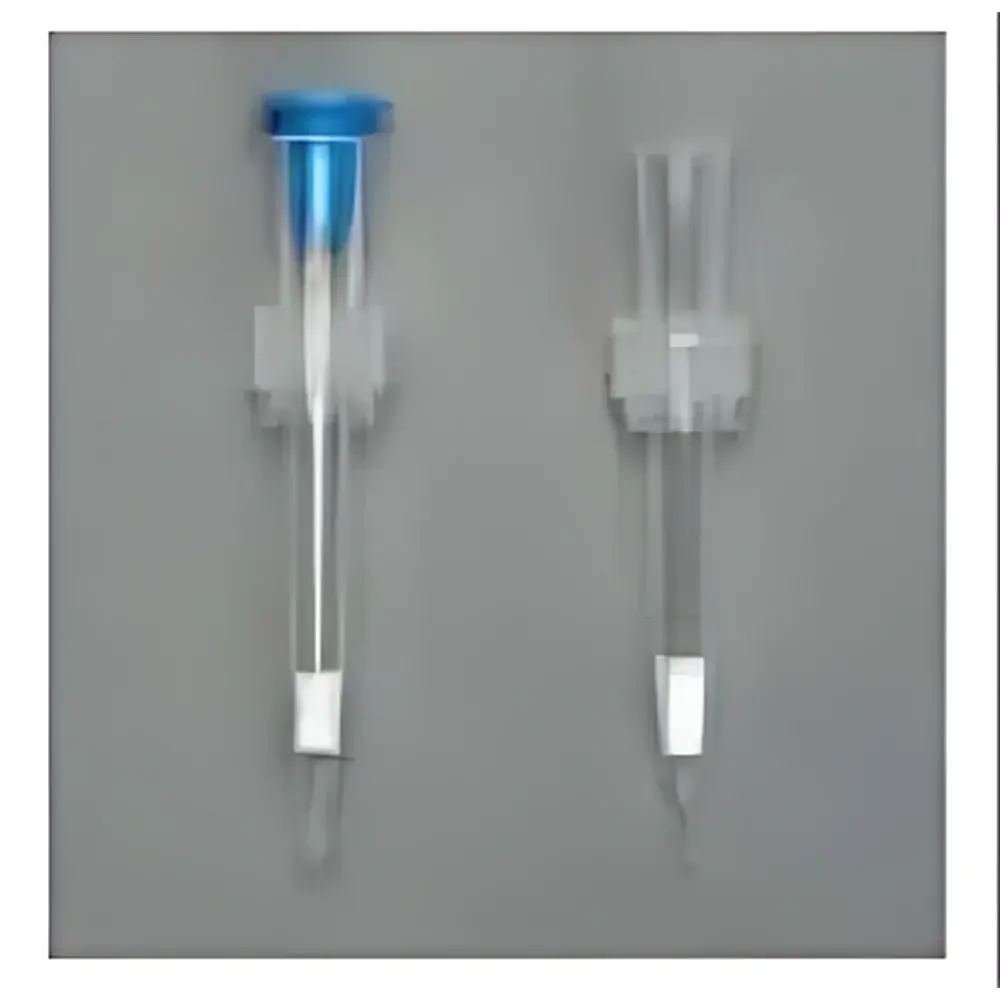
Ultra-Micro/Micro SpinColumnTM
| Origin | USA |
|---|---|
| Manufacturer Type | Authorized Distributor |
| Origin Category | Imported |
| Model | Ultra-Micro/Micro SpinColumnTM |
| Pricing | Available Upon Request |
| Sample Volume Capacity | 10–25 µL (Ultra-Micro) / 25–75 µL (Micro) |
| Binding Capacity | 3–30 µg/tip (Ultra-Micro) / 5–60 µg/tip (Micro) |
Overview
The Ultra-Micro/Micro SpinColumnTM is a precision-engineered, single-use centrifugal solid-phase extraction device designed for high-efficiency nucleic acid or protein purification from minute biological samples. Based on silica-membrane affinity chromatography principles, the column leverages controlled binding and elution under optimized buffer pH and ionic strength conditions—enabling selective capture of target biomolecules while removing contaminants including salts, metabolites, and residual enzymes. Its dual-format design—Ultra-Micro (10–25 µL input) and Micro (25–75 µL input)—addresses critical throughput and sensitivity requirements in low-input applications such as single-cell lysates, microdissected tissue biopsies, limited clinical specimens (e.g., cerebrospinal fluid, fine-needle aspirates), and pre-NGS library preparation workflows. The device operates without vacuum manifolds or magnetic bead handling, relying solely on standard benchtop microcentrifuges (≥10,000 × g), thereby minimizing equipment dependency and cross-contamination risk.
Key Features
- Two-tier format optimization: Ultra-Micro variant supports ultra-low-volume inputs (10–25 µL) with binding capacity of 3–30 µg per tip; Micro variant accommodates broader input range (25–75 µL) and higher loading (5–60 µg/tip), enabling flexible experimental scaling.
- Silica-based membrane architecture engineered for consistent binding kinetics and minimal nonspecific adsorption—validated across diverse sample matrices including serum, plasma, cell culture supernatants, and enzymatically digested tissue homogenates.
- Pre-sterilized, DNase/RNase-free construction supplied in individual sealed tubes—eliminating need for user sterilization and ensuring compatibility with sensitive downstream assays (e.g., qRT-PCR, digital PCR, capillary electrophoresis).
- Centrifuge-compatible geometry: Optimized column dimensions and filter support ensure uniform flow dynamics and complete eluate recovery (≥95% typical recovery rate for 10–20 µL elution volumes).
- No carryover design: Integrated air-gap barrier between collection tube and spin column base prevents residual liquid transfer during sequential processing—critical for high-throughput diagnostic labs adhering to CLIA and ISO 15189 quality management systems.
Sample Compatibility & Compliance
The Ultra-Micro/Micro SpinColumnTM demonstrates validated performance with human, murine, and non-human primate-derived samples, including whole blood (EDTA/K2-EDTA anticoagulated), saliva, buccal swabs, FFPE-derived DNA extracts, and in vitro transcribed RNA. All components comply with USP Class VI biocompatibility standards and are free of detectable endotoxins (<0.01 EU/mL). Manufacturing follows ISO 13485-certified processes, and documentation packages include Certificate of Analysis (CoA), Certificate of Conformance (CoC), and lot-specific stability data supporting 24-month shelf life at room temperature (15–25°C). The device is compatible with workflows requiring adherence to FDA 21 CFR Part 11-compliant electronic records when integrated into validated LIMS or ELN platforms.
Software & Data Management
While the SpinColumnTM itself is hardware-only and requires no embedded firmware or driver software, its integration into regulated environments is supported through companion digital tools. Optional SOP templates (PDF/Word) aligned with ISO/IEC 17025 and CAP accreditation criteria are provided for method validation—including precision, accuracy, limit of detection (LOD), and carryover assessment protocols. Batch-specific traceability is maintained via 2D barcode-labeled packaging, enabling seamless linkage to laboratory information management systems (LIMS) for audit-ready inventory control and reagent lot tracking. Full documentation meets GLP/GMP record retention requirements for clinical trial sample processing.
Applications
- Purification of genomic DNA and total RNA from micro-volume clinical specimens prior to NGS library construction or targeted amplicon sequencing.
- Concentration and desalting of oligonucleotides, CRISPR gRNAs, and synthetic siRNA prior to transfection or functional screening.
- Removal of phenol, chloroform, or ethanol residuals following organic extraction methods—particularly in forensic toxicology and newborn screening workflows.
- Downstream clean-up of restriction enzyme digests, PCR products, and cDNA synthesis reactions where salt inhibition compromises enzymatic activity.
- Supporting ISO 20387-accredited biobanking operations for standardized processing of rare biospecimens under defined preanalytical variables.
FAQ
What centrifugation parameters are required for optimal performance?
Standard protocol specifies 10,000–12,000 × g for 30–60 seconds at room temperature. Rotor type (fixed-angle vs. swing-bucket) does not affect yield if relative centrifugal force (RCF) and dwell time are maintained.
Can the columns be reused after washing?
No. These are single-use, disposable devices manufactured under strict particulate and nuclease controls; reuse invalidates binding consistency and introduces contamination risk.
Is there lot-to-lot variability in binding capacity?
Each production lot undergoes binding capacity verification using certified reference materials (CRM) traceable to NIST SRM 2374 (Human Genomic DNA); CoA reports ±10% tolerance against nominal values.
Are these columns compatible with automated liquid handlers?
Yes—standard 1.5 mL microcentrifuge tube footprint enables integration with robotic platforms equipped with gripper-based or vacuum-assisted tube handling modules.
Do you provide method development support for novel sample types?
Yes. Technical application scientists offer protocol adaptation services—including buffer optimization, binding/elution time profiling, and interference testing—under confidentiality agreement.