
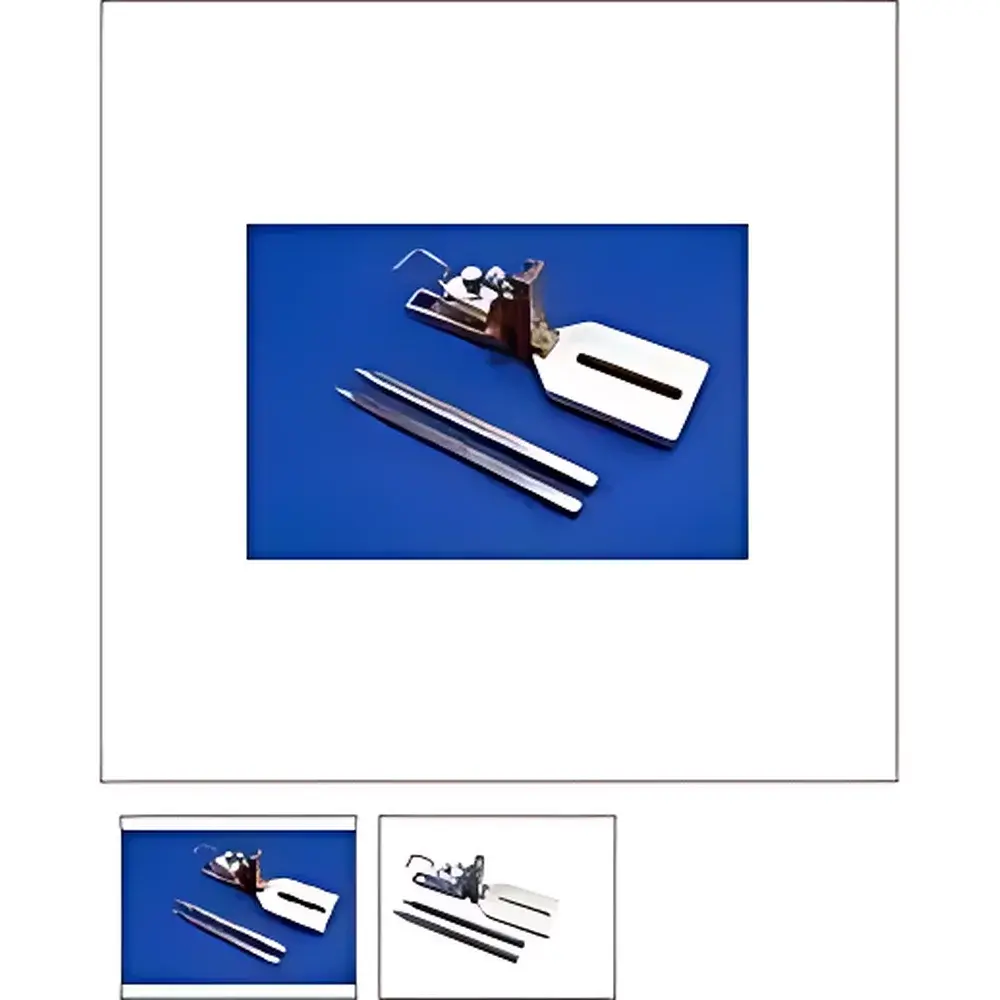
Stoelting Brain Stereotaxic Instrument Accessories & Adapters
| Origin | USA |
|---|---|
| Manufacturer Type | Authorized Distributor |
| Origin Category | Imported |
| Model Range | Multiple Configurations |
| Pricing | Upon Quotation |
Overview
Stoelting brain stereotaxic instrument accessories and adapters are precision-engineered components designed to extend the anatomical targeting accuracy, species versatility, and procedural reproducibility of Stoelting’s modular stereotaxic platforms. These accessories operate on the foundational principle of stereotactic neurosurgery—using a three-dimensional Cartesian coordinate system (anterior–posterior, medial–lateral, dorsal–ventral) referenced to standardized bregma–lambda landmarks—to enable consistent, repeatable intracranial interventions across diverse laboratory animal models. Each adapter is mechanically integrated with the main stereotaxic frame via dovetail (tongue-and-groove) rails, ensuring sub-millimeter positional repeatability and rigid mechanical coupling during microinjection, electrophysiology, optogenetics, or lesioning procedures.
Key Features
- Species-specific head fixation systems engineered for biomechanical fidelity: rat, mouse, guinea pig, cat, non-human primate (NHP), and avian models
- Dovetail-mounted vertical adjustment with ±30 mm travel range and 100 µm resolution for precise dorsal–ventral positioning
- Horizontal (medial–lateral) translation up to 50 mm, compatible with bilateral electrode or cannula implantation protocols
- Laser-etched angular calibration on ear bars (18° and 45° options) to accommodate species-specific temporal bone geometry and minimize skull deformation
- Interchangeable bite plates and incisor clamps with adjustable tension control to maintain consistent skull orientation without compromising airway patency
- Modular clamp system supporting probes, micropipettes, microinjection needles, microdialysis cannulas, and drill bits with outer diameters from 0.2 mm to 12 mm
- Optional motorized AP microdrives (stepper-motor driven) for automated, programmable depth advancement in chronic or high-throughput experiments
Sample Compatibility & Compliance
These accessories support standard laboratory animal models used in neuroscience, behavioral pharmacology, and translational brain research. Rat adapters utilize dual 18° ear bars and an incisor bar as default; 45° ear bars are available for reduced tympanic membrane penetration risk. Mouse adapters prioritize palatal–incisor fixation to prevent cranial vault deformation—critical for neonatal and juvenile subjects where temporal bone thickness is <0.15 mm. Guinea pig adapters integrate extended nasal clamps accommodating longer snouts and use 45° ear bars optimized for lateral skull morphology. Feline and NHP adapters employ orbital rim and dental fixation points aligned with veterinary neuroanatomical atlases (e.g., Paxinos & Watson, Schaltenbrand–Wahren). Avian adapters feature curved beak clamps and angled ear bars conforming to avian craniometric standards. All adapters comply with NIH Guide for the Care and Use of Laboratory Animals and support GLP-compliant experimental documentation when used with traceable calibration logs and SOP-defined mounting protocols.
Software & Data Management
While mechanical adapters operate independently of software, they are fully compatible with Stoelting’s optional digital stereotaxic control modules—including the STOELTING DIGITAL STEREOTAXIC CONTROLLER (DS-1000) and third-party integration via RS-232/USB TTL interfaces. When paired with motorized drives, position data (AP/ML/DV coordinates, depth increments, dwell times) can be logged in CSV or HDF5 format for audit trails. Systems configured for regulated environments (e.g., preclinical CMC studies) may implement FDA 21 CFR Part 11–compliant electronic signatures and user-access-controlled parameter locking through validated LabArchives or Benchling ELN integrations.
Applications
- Intracerebral microinjection of viral vectors, siRNA, or pharmacological agents in transgenic mouse models of neurodegeneration
- Bilateral hippocampal electrode implantation for in vivo LFP/MEA recording in Long-Evans rats
- Chronic microdialysis probe placement in nucleus accumbens of guinea pigs for neurochemical monitoring
- Optogenetic fiber optic cannula implantation in marmoset prefrontal cortex under MRI-guided stereotactic planning
- Avian song system mapping using tungsten microelectrodes in zebra finch HVC and RA nuclei
- Calvarial window preparation and cortical injection in neonatal mouse pups using palatal-only fixation
FAQ
Are these adapters compatible with non-Stoelting stereotaxic frames?
Yes—mechanical compatibility depends on rail interface dimensions. Stoelting dovetail rails follow ANSI/ISO 9001–aligned tolerances; third-party frames with matching 12 mm × 6 mm groove profiles may accept adapters with minor shimming.
Do 18° and 45° ear bars require different surgical approaches?
Yes: 18° bars are intended for deeper insertion into the external auditory meatus and are recommended for adult rats; 45° bars engage the lateral surface of the tympanic bulla and are preferred for mice, guinea pigs, and species with fragile or shallow ear canals.
Can custom clamp diameters be validated for ISO 13485 medical device prototyping?
Stoelting-certified distributors provide dimensional inspection reports and material certifications (e.g., 316L stainless steel, anodized aluminum) suitable for Class I/IIa device development under ISO 14971 risk management frameworks.




