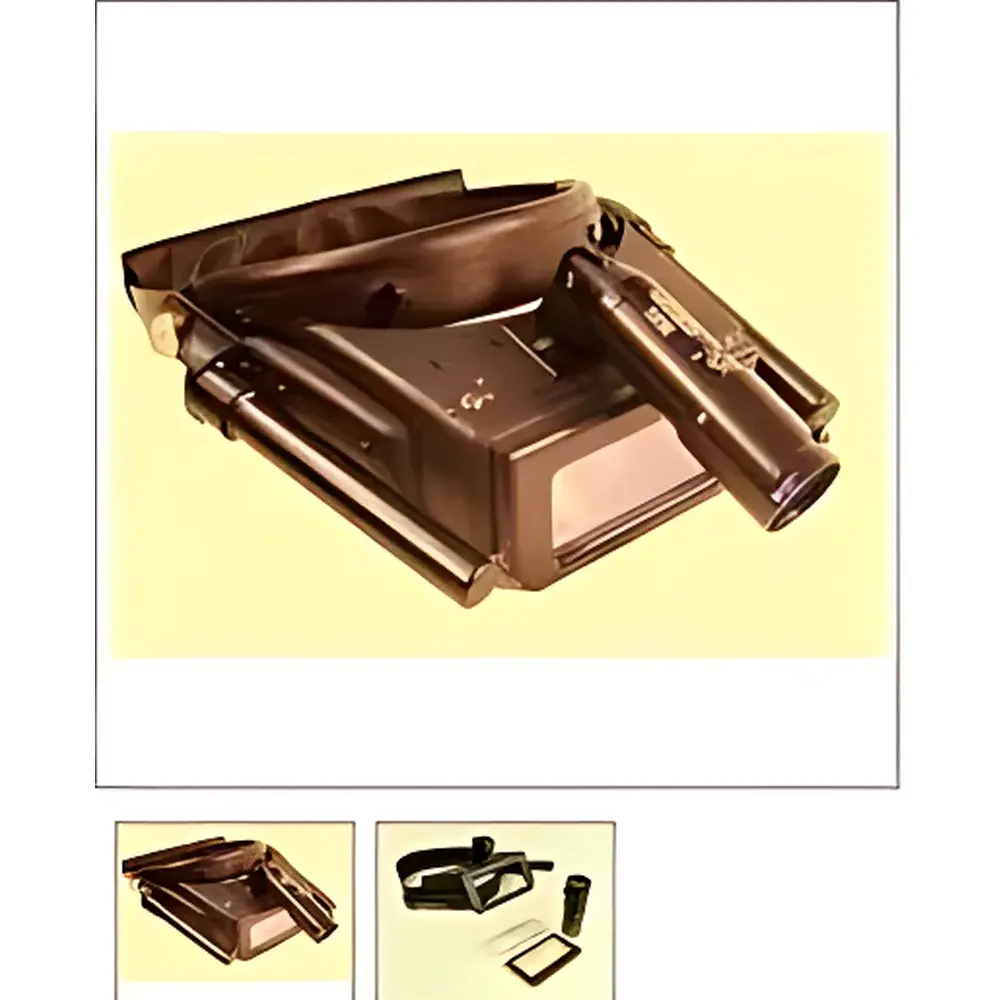
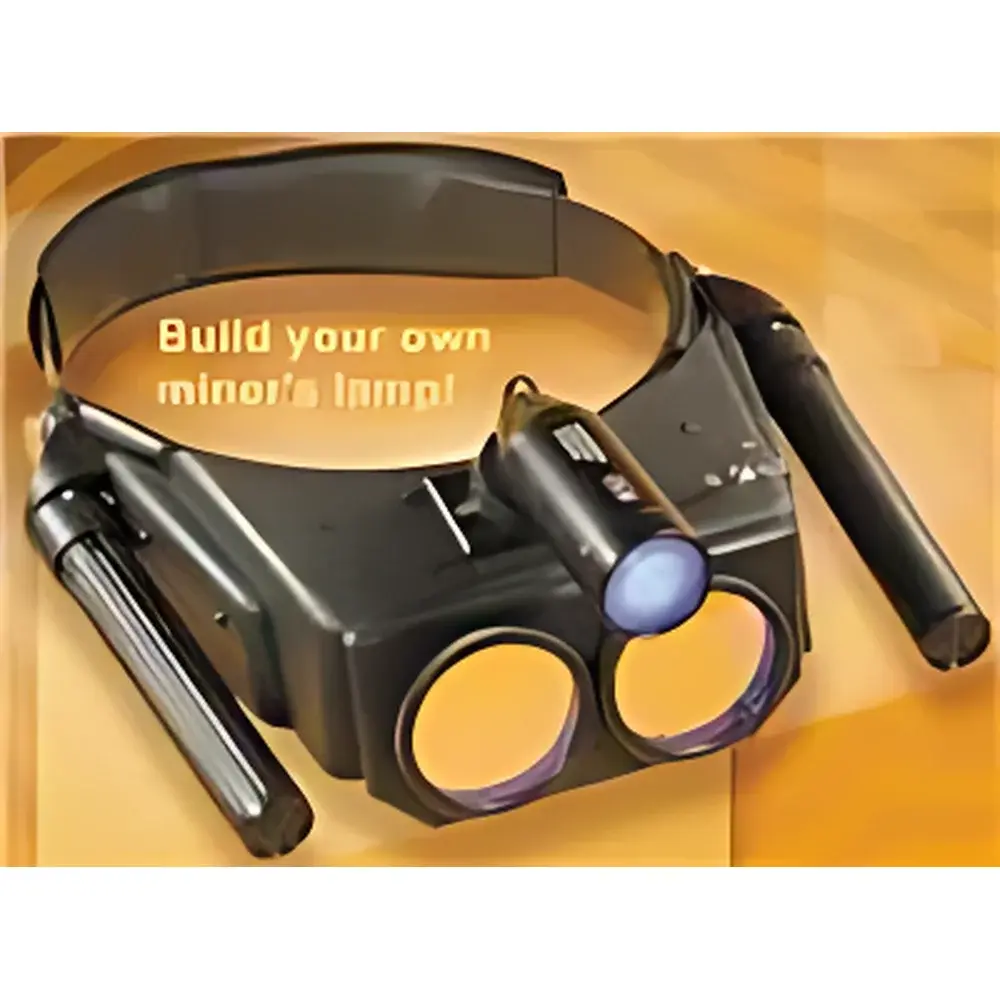
BLS FHS/F-01 Fluorescent Protein Observation Goggles
| Brand | BLS |
|---|---|
| Origin | Imported (Non-Chinese) |
| Manufacturer Type | Authorized Distributor |
| Model | FHS/F-01 |
| Power Source | 4× AA Alkaline Batteries |
| Excitation Light Source | High-Intensity Blue LED Array (440–495 nm) |
| Emission Filter Options | Wideband Barrier Filters (470–660 nm) |
| Optical Design | Adjustable Beam Angle Mechanism |
| Compliance | CE Marked for Laboratory Use |
| Battery Life | Up to 3–4 Months (Typical Intermittent Use) |
Overview
The BLS FHS/F-01 Fluorescent Protein Observation Goggles are a handheld, battery-powered optical detection system engineered for rapid, in situ visualization of fluorescent protein expression in live or fixed biological samples. Unlike benchtop fluorescence microscopes or plate readers, this device operates on the principle of epifluorescence excitation—using narrow-band blue LED illumination (centered at 440–495 nm) to selectively excite common genetically encoded fluorophores, followed by spectral separation via interchangeable barrier filters that transmit only the characteristic emission wavelengths. The goggle’s ergonomic, head-mounted form factor enables hands-free operation during dissection, colony picking, gel documentation, or transgenic screening workflows—making it especially valuable in resource-constrained labs, field-based diagnostics, and teaching environments where portability and immediate visual feedback are critical.
Key Features
- Adjustable mechanical beam-angle mechanism allows precise alignment of excitation light relative to sample orientation—minimizing specular reflection and optimizing signal-to-noise ratio across curved or irregular surfaces.
- Integrated high-luminance LED array comprising seven discrete blue LEDs with peak output at 445 nm, 470 nm, and 485 nm—enabling broad coverage across cyan (CFP), green (GFP), yellow (YFP), and red (RFP) excitation profiles.
- Interchangeable wideband barrier filter set (FS/TEF series) with certified optical density >OD6 at excitation wavelengths—ensuring effective suppression of scattered excitation light while preserving >85% transmission across target emission bands (470–660 nm).
- Dual-side AA battery compartment supports standard alkaline cells; ultra-low standby current (<15 µA) and pulsed LED drive architecture extend operational life to ≥100 hours of cumulative use per set.
- Optically matched eyepiece assembly with anti-reflective coated lenses and adjustable interpupillary distance (58–72 mm)—designed for extended wear without ocular fatigue during multi-hour screening sessions.
Sample Compatibility & Compliance
The FHS/F-01 is validated for direct observation of fluorescent protein expression in agar plates, Petri dishes, tissue culture flasks, SDS-PAGE gels, Western blot membranes, and whole-mount zebrafish or C. elegans specimens. It does not require sample mounting media or immersion oil and is compatible with standard biosafety level 1 (BSL-1) and BSL-2 laboratory practices. All optical components comply with ISO 10110-7:2018 (surface quality of optical elements) and EN 62471:2006 (photobiological safety of lamps and lamp systems). The device carries CE marking under Directive 2014/30/EU (EMC) and 2014/35/EU (LVD), and meets IEC 61010-1:2010 requirements for electrical safety in laboratory equipment.
Software & Data Management
As a purely optical visualization tool, the FHS/F-01 operates without embedded firmware, software drivers, or digital connectivity. No data logging, image capture, or computer interface is provided—consistent with its design intent as a real-time qualitative assessment aid. Users may pair the goggle with external smartphones or DSLRs (via optional C-mount adapter FS/ADP-01) for documentation; however, such configurations fall outside the scope of factory calibration or regulatory validation. For GLP/GMP-aligned workflows, manual observation records—including filter/excitation combination, sample ID, and time/date stamps—are recommended and fully compatible with audit trail requirements under 21 CFR Part 11 when maintained in controlled laboratory notebooks.
Applications
- Routine screening of bacterial, yeast, or mammalian colonies expressing GFP, YFP, CFP, or mCherry variants during cloning and stable line development.
- Quick verification of transfection efficiency and subcellular localization in adherent or suspension cultures prior to fixation and immunostaining.
- Field-deployable detection of reporter gene activity in plant tissues, insect larvae, or aquatic model organisms without electricity-dependent instrumentation.
- Educational demonstration of fluorescence resonance energy transfer (FRET) pairs—e.g., CFP/YFP—using dual-filter sequential observation protocols.
- Quality control of fluorescently labeled reagents, including secondary antibodies and tagged affinity probes, on nitrocellulose or PVDF membranes.
FAQ
Can the FHS/F-01 be used for quantitative fluorescence measurement?
No. This device provides qualitative visual detection only; it lacks photometric calibration, intensity linearity, or spectral deconvolution capabilities required for quantification.
Is the goggle compatible with far-red or near-infrared fluorescent proteins (e.g., mKate2, iRFP)?
Not natively. Its LED spectrum and filter set are optimized for visible-range fluorophores (440–660 nm). Far-red emitters require dedicated 625+ nm excitation sources and long-pass filters not included in the standard configuration.
How often should the barrier filters be cleaned or replaced?
Filters should be cleaned weekly with lens-grade isopropyl alcohol and lint-free wipes. Under normal use, optical performance remains stable for ≥2 years; replacement is recommended only after visible scratches, delamination, or measurable OD reduction below OD5.5 at blocking wavelengths.
Does the device require annual recalibration?
No. As a passive optical system with no active sensors or analog-to-digital conversion, it does not require periodic recalibration. Verification of LED output stability and filter transmission can be performed using NIST-traceable reference standards (e.g., Thorlabs SM1PD1A photodiode + calibrated spectrometer).
Can multiple users share one unit safely?
Yes—provided proper hygiene protocol is followed. The headband is constructed from medical-grade silicone and may be disinfected with 70% ethanol between users. Eyepiece lenses feature removable, autoclavable rubber eyecups (FS/EC-01 accessory kit).