
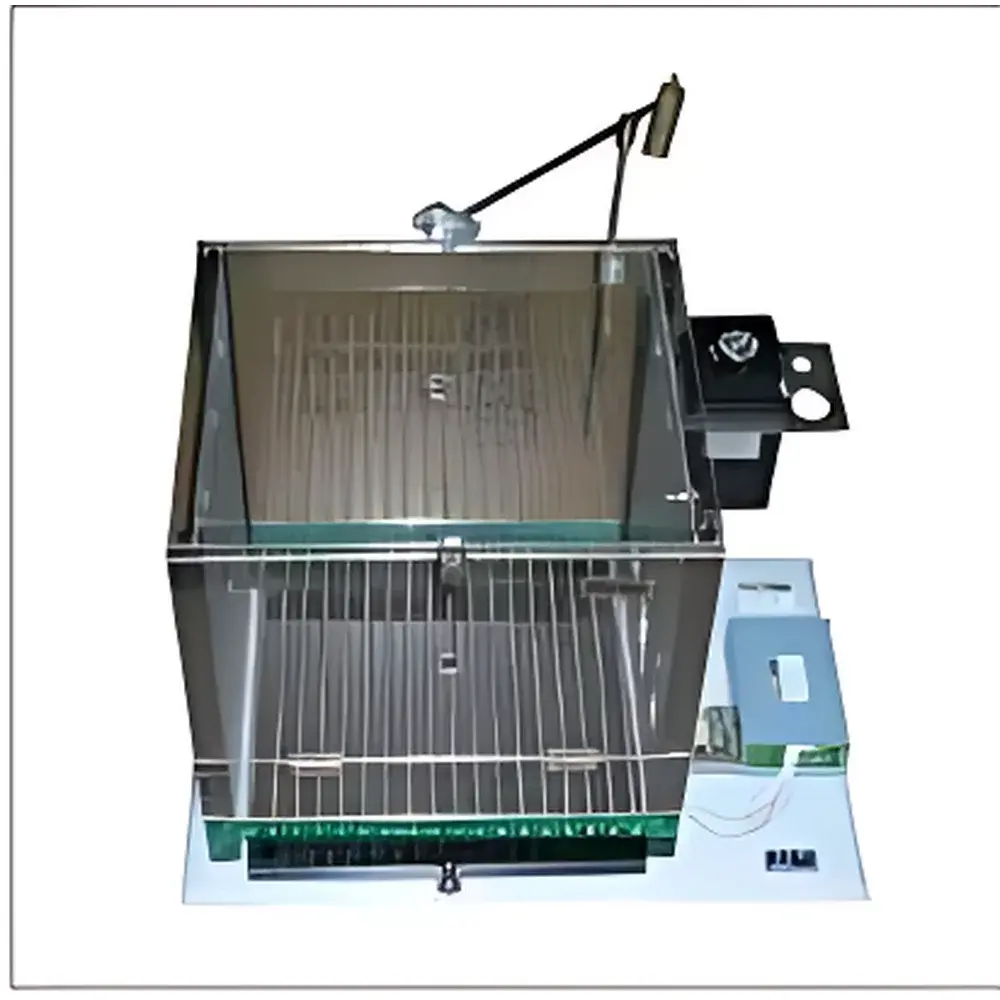
COULBOURN Operant Behavior Systems for Animal Self-Administration Studies
| Brand | COULBOURN |
|---|---|
| Origin | USA |
| Manufacturer Type | Authorized Distributor |
| Product Origin | Imported |
| Model | Operant Behavior Systems |
| Pricing | Available Upon Request |
Overview
The COULBOURN Operant Behavior Systems is a modular, research-grade platform engineered for precise, reproducible self-administration (SA) experiments in rodent models. Designed around the principles of operant conditioning, the system enables investigators to quantify drug-seeking behavior by establishing contingent relationships between discrete operant responses—such as lever pressing or nose-poking—and scheduled delivery of pharmacological reinforcers (e.g., intravenous cocaine, oral ethanol, or intracerebroventricular opioids). The architecture supports both fixed-ratio (FR), progressive-ratio (PR), and variable-interval (VI) reinforcement schedules, facilitating rigorous assessment of motivation, acquisition, extinction, reinstatement, and relapse-like behavior. Its scalable design accommodates longitudinal studies across multiple subjects under standardized environmental control, making it suitable for preclinical addiction research compliant with NIH behavioral neuroscience guidelines and AAALAC-accredited facilities.
Key Features
- Modular cage integration: Supports up to 32 independent operant chambers per controller unit, enabling high-throughput experimental designs without cross-contamination or signal interference.
- Flexible response interface: Each chamber accommodates either 1–2 microswitch-based levers or customizable nose-poke detectors—both calibrated for low-force activation (<0.5 g threshold) and rapid response latency (<10 ms detection window).
- Multi-channel infusion control: Integrated peristaltic or syringe pumps support programmable flow rates (0.1–10 mL/min), volume precision (±1.5% full-scale), and timed bolus delivery synchronized to operant events with sub-second temporal resolution.
- Configurable stimulus modules: Optional LED cue lights, tone generators (1–10 kHz), and contextual chamber lighting allow pairing of discriminative stimuli with reinforcement contingencies—critical for Pavlovian-instrumental transfer paradigms.
- Rugged, IEC 61000-4-compliant electronics: EMI-shielded enclosures, optical isolation between input/output circuits, and redundant watchdog timers ensure stable operation during extended (>72 h) automated sessions.
Sample Compatibility & Compliance
The system is validated for use with Sprague-Dawley and Long-Evans rats (200–500 g), C57BL/6 and DBA/2 mice (20–35 g), and other common laboratory rodents. All hardware components meet UL 61010-1 safety standards for laboratory equipment. Behavioral protocols implemented on this platform align with NIH Guide for the Care and Use of Laboratory Animals, OECD Test Guideline 426 (Neurotoxicity Study), and FDA’s Guidance for Industry on Preclinical Assessment of Abuse Potential. Data acquisition logs include timestamped event records (response, infusion, stimulus onset) required for GLP-compliant audit trails.
Software & Data Management
Control and analysis are performed via COULBOURN’s proprietary Graphic State software—a Windows-based, real-time environment supporting drag-and-drop protocol construction, live waveform visualization, and automated export to CSV, MATLAB (.mat), or HDF5 formats. The software enforces user-level access controls, electronic signatures, and full audit logging per 21 CFR Part 11 requirements. Built-in statistical modules compute key metrics including breakpoints (PR), active/inactive lever discrimination ratios, session stability indices, and within-subject dose-response curves. Raw data files retain metadata (animal ID, session date, pump calibration coefficients, hardware firmware version) to ensure full traceability.
Applications
- Characterization of reinforcing efficacy of novel psychoactive substances (e.g., synthetic cannabinoids, ketamine analogs)
- Evaluation of pharmacotherapies targeting relapse mechanisms (e.g., CRF antagonists, mGluR5 modulators)
- Genetic studies comparing SA phenotypes across transgenic mouse lines (e.g., dopamine transporter knockdown, opioid receptor KO)
- Neurocircuitry mapping using optogenetic/chemogenetic tools integrated with real-time operant feedback
- Development of predictive biomarkers for vulnerability to substance use disorders via baseline behavioral endophenotyping
FAQ
What species and sizes are supported?
The system is optimized for rats (200–500 g) and mice (20–35 g); custom mounting brackets and scaled response interfaces are available for larger rodents (e.g., guinea pigs) upon request.
Can the system integrate with electrophysiology or imaging setups?
Yes—TTL-compatible trigger outputs synchronize operant events with external devices (e.g., patch-clamp amplifiers, fMRI scanners, or calcium imaging systems) with jitter <50 µs.
Is remote monitoring and control possible?
Graphic State supports secure RDP and VNC connections; session logs and real-time performance dashboards can be accessed via institutional VPN with role-based permissions.
How is calibration maintained across long-term studies?
Each pump module includes factory-calibrated flow verification reports; users may perform in-lab volumetric validation using gravimetric methods, with calibration coefficients stored in protocol-specific metadata.
Does the system comply with EU IVDR or ISO 13485 requirements?
While classified as a research instrument (not an IVD device), its design adheres to ISO 14971 risk management principles and incorporates documentation packages supporting ISO 9001 quality system integration.
Related Products




