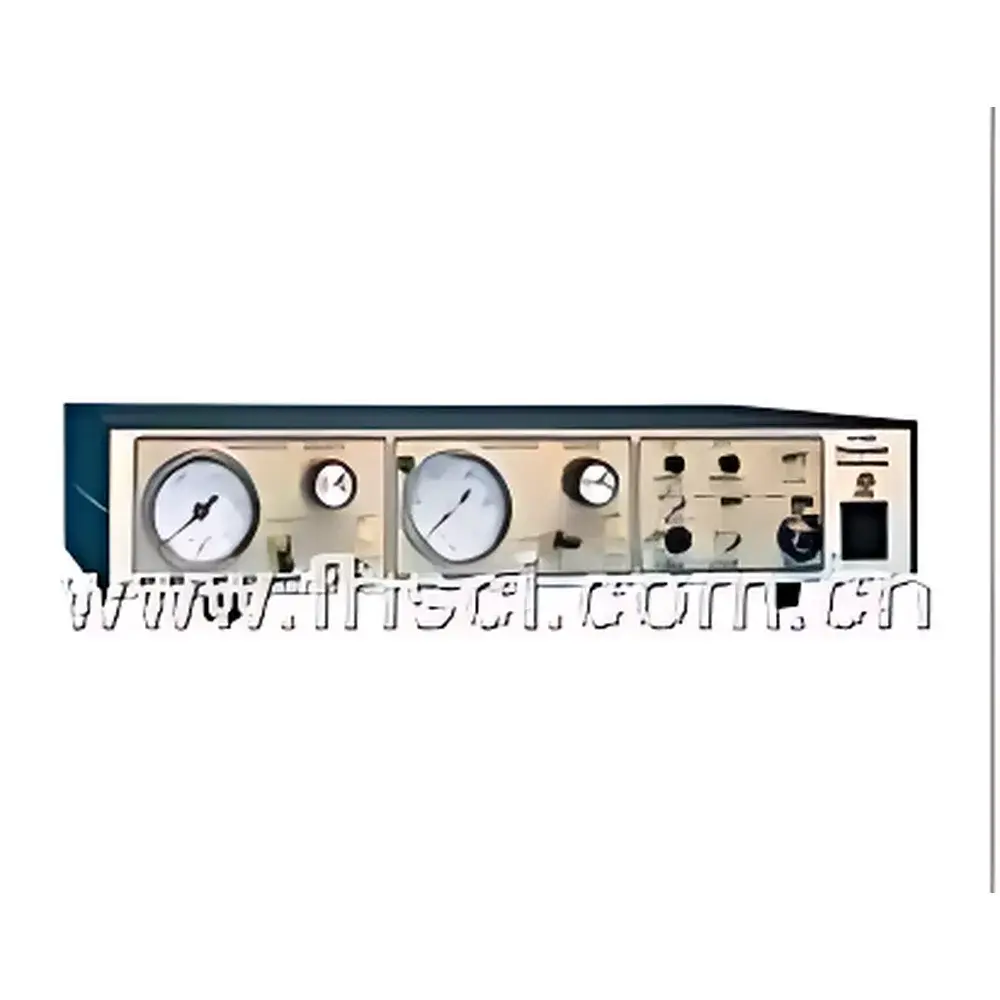
Pneumatic PicoPump PV820
| Origin | USA |
|---|---|
| Manufacturer Type | Distributor |
| Origin Category | Imported |
| Model | PV820 |
| Pricing | Upon Request |
Overview
The World Precision Instruments (WPI) Pneumatic PicoPump PV820 is a precision-engineered microinjection system designed for controlled, low-volume fluid delivery in electrophysiology, patch-clamp, intracellular injection, and single-cell pharmacology applications. Operating on a dual-pressure pneumatic principle, the PV820 delivers discrete, repeatable pressure pulses—ranging from milliseconds to minutes—in both positive (ejection) and negative (vacuum/suction) modes. Its core architecture employs solenoid-actuated valves with fast response times (<10 ms), enabling precise temporal control over picoliter-scale fluid displacement without mechanical contact or thermal perturbation. Unlike syringe-based systems, the PV820 eliminates plunger inertia and backflow artifacts, making it especially suitable for delicate physiological preparations such as oocyte injection, neuronal dendrite targeting, and subcellular perfusion in live-tissue slice recordings.
Key Features
- Dual independent pressure channels: Ejection pressure (0.3–90 psi) and holding pressure (0–90 psi), each regulated via front-panel 20-position precision dials with LED indicators
- Vacuum channel (0–150 psi input, adjustable suction output) for pipette filling, cell positioning, and anti-dripping maintenance during idle periods
- Three activation modes: Manual front-panel trigger, foot switch interface, and TTL-compatible 5 V logic input (compatible with DAQ systems, Arduino, or electrophysiology timing controllers)
- Programmable pulse duration: Adjustable from 10 ms to >10 min, with high reproducibility across repeated cycles under constant supply pressure
- Integrated pressure relief elbow for rapid atmospheric venting; vacuum-to-atmosphere transition enabled via dedicated front-panel toggle
- Robust aluminum chassis with ESD-safe surface finish and DIN-rail mounting capability for integration into rig-based neuroscience or physiology workstations
Sample Compatibility & Compliance
The PV820 interfaces seamlessly with standard borosilicate or quartz micropipettes (tip diameters 0.5–5 µm), glass capillaries, and custom-fabricated microfluidic probes. It supports both continuous and pulsed delivery into adherent cells, suspended cells, embryos, and brain slices. The device complies with IEC 61000-4 electromagnetic compatibility standards and meets UL/CSA Class I electrical safety requirements. While not certified for clinical diagnostic use under FDA 21 CFR Part 820, the PV820 is routinely employed in GLP-compliant preclinical research environments where traceable pressure calibration and audit-ready operation logs are maintained using external data acquisition systems.
Software & Data Management
The PV820 operates as a standalone analog-controlled instrument and does not require proprietary software. All operational parameters—including ejection pressure, holding pressure, vacuum level, and pulse timing—are set manually via calibrated front-panel controls with real-time LED feedback. For synchronized experimental automation, its TTL input accepts externally generated logic pulses (5 V CMOS/TTL compatible), allowing tight integration with MATLAB, Python-controlled DAQ platforms (e.g., National Instruments USB-6009), or commercial electrophysiology suites (e.g., pCLAMP, Spike2). Pressure outputs can be monitored via optional analog voltage outputs (0–5 V, scaled linearly per psi) for closed-loop validation or real-time logging.
Applications
- Intracellular injection of dyes, tracers, antibodies, or CRISPR-Cas9 ribonucleoprotein complexes into neurons, oocytes, or stem cells
- Localized drug or neurotransmitter uncaging in brain slices with spatial and temporal precision
- Maintenance of positive holding pressure during whole-cell patch-clamp to prevent seal rupture
- Controlled aspiration of cytoplasmic contents for single-cell metabolomics sampling
- Calibration and validation of microfluidic perfusion systems requiring picoliter-level flow stability
- High-throughput microinjection in developmental biology workflows involving C. elegans, zebrafish embryos, or Drosophila larvae
FAQ
What is the minimum controllable pulse duration?
The shortest reliable ejection pulse is 10 ms, limited by solenoid valve dynamics and supply line compliance. Sub-millisecond resolution is not supported.
Can the PV820 be used with oil-immersion objectives or inverted microscopes?
Yes—the compact form factor (14 × 10 × 5 cm) and low acoustic noise profile allow direct placement on microscope stages or within enclosed rigs without vibration coupling.
Is pressure calibration traceable to NIST standards?
WPI provides factory calibration certificates referencing ANSI/NCSL Z540-1. End users may perform field verification using a calibrated digital pressure transducer connected to the output port.
Does the PV820 support bidirectional fluid handling (e.g., inject + aspirate in one cycle)?
Yes—via sequential TTL triggering or manual front-panel sequencing, users can alternate between ejection, holding, and vacuum phases within a single experimental protocol.
What compressed gas sources are compatible?
Dry, oil-free nitrogen or compressed air at 0–150 psi input pressure. A laboratory-grade inline filter (0.01 µm) and regulator are recommended upstream to ensure long-term valve reliability.