Open Field Test System for Animal Behavior Research
| Origin | USA |
|---|---|
| Manufacturer Type | Distributor |
| Origin Category | Imported |
| Pricing | Upon Request |
Overview
The Open Field Test System is a validated, modular behavioral phenotyping platform engineered for quantitative assessment of locomotor activity, exploratory behavior, anxiety-like responses, and spontaneous movement patterns in rodents and other small laboratory animals. Based on computer-vision–driven video tracking and spatial coordinate mapping, the system implements standardized ethological paradigms—including open field testing, light–dark box assays, hole-board exploration, conditioned place preference (CPP), and home-cage monitoring—within a unified software architecture. Designed to meet the reproducibility requirements of preclinical neuroscience, pharmacology, and translational behavioral genetics studies, the system operates under controlled environmental conditions (light intensity, ambient noise, temperature) and supports temporal synchronization with external physiological recording devices (e.g., EEG, EMG, telemetry).
Key Features
- Multi-station scalability: A single host PC can concurrently manage up to 16 independent test arenas via synchronized USB-3 or GigE cameras, enabling high-throughput behavioral screening without compromising frame-rate fidelity.
- Real-time spatial analytics: Delivers sub-pixel position tracking (≤0.1 mm resolution at 30 fps) with configurable zone definition (center/periphery, quadrants, custom polygons), allowing granular quantification of time-in-zone, distance traveled, velocity profiles, rearing events, and thigmotaxis indices.
- Multi-assay protocol library: Preconfigured modules for standardized tests—including OFT (open field test), LDB (light–dark box), HB (hole-board), CPP (conditioned place preference), and long-term home-cage activity monitoring—with automated trial initiation, stimulus delivery triggers, and session logging.
- Behavioral event annotation: Supports manual or AI-assisted labeling of discrete behaviors (e.g., grooming, freezing, head-dipping, rearing) using time-stamped event markers aligned to trajectory data.
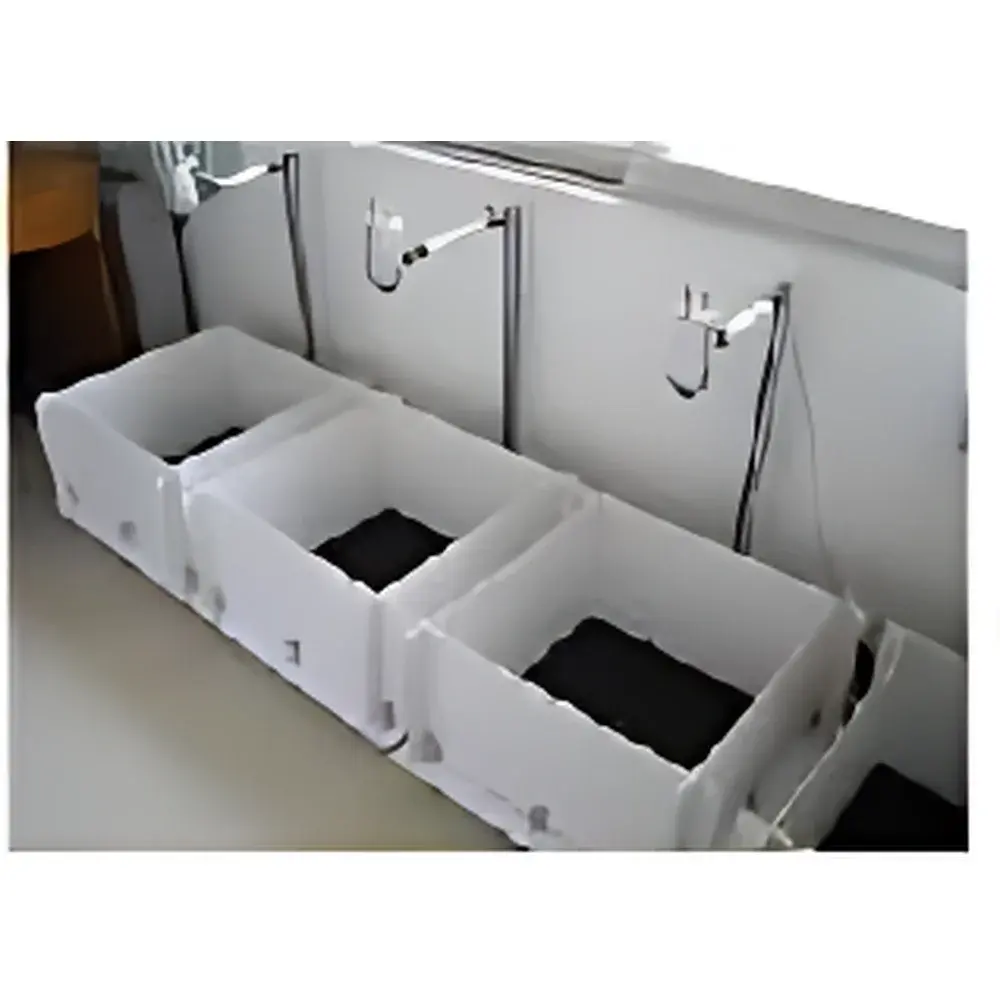
- Hardware-agnostic design: Compatible with standard acrylic or opaque plexiglass arenas (20 × 20 cm to 60 × 60 cm), infrared backlighting, LED illumination arrays, and third-party stimulus controllers (tone generators, odor dispensers, optogenetic drivers).
Sample Compatibility & Compliance
The system is validated for use with mice (C57BL/6, BALB/c, CD-1), rats (Sprague-Dawley, Wistar), and juvenile zebrafish (in shallow-water configurations). All behavioral protocols adhere to internationally recognized guidelines including the NIH Guide for the Care and Use of Laboratory Animals, the European Directive 2010/63/EU, and the ARRIVE 2.0 reporting standards. Data acquisition workflows support audit-ready metadata tagging (animal ID, strain, sex, age, treatment group, experimenter, date/time, hardware calibration logs), ensuring traceability for GLP-compliant studies and regulatory submissions.
Software & Data Management
The proprietary analysis suite runs on Windows 10/11 (64-bit) and features a role-based user interface with configurable access levels. Raw video and trajectory data are stored in HDF5 format with embedded timestamps and camera calibration parameters. Export options include CSV (for statistical packages such as R, Python pandas, SPSS), MATLAB .mat, and JSON-LD for FAIR-compliant data sharing. The software includes built-in tools for batch processing, outlier detection (via Mahalanobis distance filtering), and inter-rater reliability metrics (Cohen’s kappa for manual scoring validation). Full compliance with FDA 21 CFR Part 11 is supported through electronic signatures, audit trails, and password-protected configuration lockdowns.
Applications
- Neuropharmacology: Dose–response evaluation of anxiolytics, stimulants, sedatives, and antipsychotics using validated endpoints (e.g., center time %, total distance, latency to first entry).
- Genetic model characterization: Phenotypic profiling of transgenic, knockout, or CRISPR-edited lines across developmental stages and circadian cycles.
- Toxicology screening: Detection of subtle motor deficits or hyperactivity induced by environmental toxins or nanomaterials.
- Chronic disease modeling: Longitudinal tracking of behavioral decline in models of neurodegeneration (e.g., Alzheimer’s, Parkinson’s) or metabolic dysfunction.
- Reproducibility initiatives: Standardized cross-laboratory behavioral phenotyping under SOP-driven protocols to reduce inter-site variability.
FAQ
What camera specifications are recommended for optimal tracking performance?
We recommend monochrome USB3 or GigE cameras with global shutter, ≥1280 × 1024 resolution, and ≥30 fps native frame rate. Infrared-sensitive models are required for dark-phase or low-light assays.
Can the system integrate with existing electrophysiology or optogenetics setups?
Yes—hardware trigger I/O ports (TTL-compatible) enable precise synchronization with neural recording systems (e.g., Intan, Neuralynx) and laser stimulation controllers (e.g., Prizmatix, Doric). Timestamp alignment accuracy is ≤1 ms.
Is cloud-based data backup or remote monitoring supported?
Local network deployment is standard; optional secure FTP or SFTP upload to institutional servers is available. Cloud-hosted analysis is not offered due to data sovereignty and animal ethics compliance requirements.
Does the software support automated detection of complex behaviors like grooming or social interaction?
Basic event detection (rearing, freezing, head-dipping) is included. Advanced pose estimation (e.g., DeepLabCut integration) and multi-animal tracking require optional module licensing and validation per experimental cohort.
What calibration procedures ensure measurement consistency across labs?
Each installation includes arena-specific pixel-to-mm mapping using certified calibration grids, lens distortion correction, and periodic drift-check routines. NIST-traceable reference objects are provided for longitudinal verification.