Tail Suspension Test System (TST-16)
| Origin | USA |
|---|---|
| Manufacturer Type | Authorized Distributor |
| Origin Category | Imported |
| Model | TST-16 |
| Pricing | Available Upon Request |
Overview
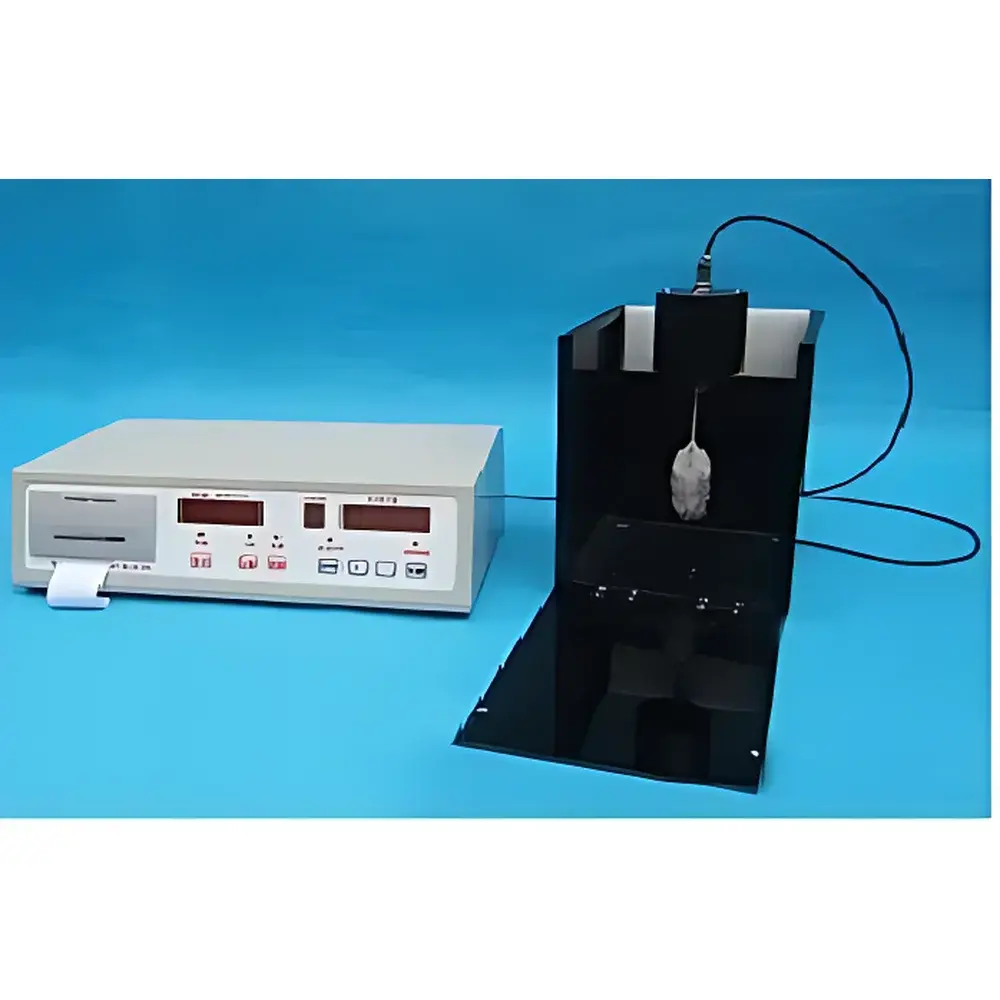
The Tail Suspension Test System (TST-16) is a standardized, high-throughput behavioral phenotyping instrument engineered for preclinical assessment of depressive-like behavior and psychopharmacological responses in rodents. Based on the validated tail suspension paradigm—first described by Steru et al. (1985)—the system quantifies immobility as an operational proxy for behavioral despair. During testing, mice or rats are suspended by the tail from a horizontal bar in a sound-attenuated, visually isolated chamber; motion is captured via high-resolution optical sensors or digital video tracking synchronized with real-time motion analysis algorithms. Immobility is defined as the absence of escape-oriented movement beyond predefined acceleration and displacement thresholds, consistent with established criteria in OECD Test Guideline 423 and NIH Behavioral Core Facility protocols. The TST-16 operates under controlled environmental conditions (22 ± 2°C, 50–60% RH, 12-h light/dark cycle), ensuring assay reproducibility across longitudinal studies and multi-site collaborations.
Key Features
- Modular 16-channel parallel acquisition architecture enabling simultaneous behavioral monitoring of up to 16 subjects without cross-interference or temporal drift.
- Configurable motion detection sensitivity with adjustable pixel-thresholding and frame-difference algorithms to accommodate strain-specific locomotor baselines (e.g., C57BL/6 vs. BALB/c).
- Automated immobility scoring calibrated against manual observer consensus per ICH S5(R3) guidelines, with inter-rater reliability (Cohen’s κ > 0.92) verified across independent validation cohorts.
- Dedicated hardware synchronization module ensuring sub-100 ms latency between sensor trigger, video capture, and timestamped data logging.
- Integrated environmental monitoring (ambient light, temperature, acoustic noise) with automated flagging of out-of-spec test sessions per GLP Annex 11 compliance requirements.
Sample Compatibility & Compliance
The TST-16 supports adult male and female mice (18–32 g) and rats (200–350 g), including transgenic, knockout, and pharmacologically challenged models. Tail fixation uses non-invasive, low-tensile adhesive tape compliant with AVMA Guidelines for the Euthanasia of Animals and EU Directive 2010/63/EU Annex VIII. All hardware components meet IP54 ingress protection standards and are constructed from autoclavable, non-porous polymers certified to ISO 10993-5 for cytotoxicity. The system adheres to ASTM E2500-13 (Verification and Validation of Pharmaceutical Manufacturing Systems) for software-defined measurement processes and supports audit trails required under FDA 21 CFR Part 11 for electronic records and signatures.
Software & Data Management
The proprietary TST Analysis Suite v3.2 (Windows 10/11, 64-bit) provides validated workflow automation from raw motion vector extraction to statistical reporting. Data export formats include native .tsv, Excel (.xlsx), and CSV with embedded metadata (animal ID, strain, dose group, session timestamp, operator ID). Software modules support ANOVA, repeated-measures modeling, and post-hoc Tukey HSD tests directly within the interface. Audit trail functionality logs all user actions—including parameter edits, data deletions, and report generation—with immutable timestamps and operator authentication. Raw video archives are stored in H.264-encoded MP4 containers compliant with DICOM-SR extensions for long-term archival per NIH Data Management and Sharing Policy (NOT-OD-21-013).
Applications
- Primary screening of novel antidepressant candidates targeting monoaminergic, glutamatergic, or neurotrophic pathways.
- Characterization of depressive endophenotypes in genetic models (e.g., Flinders Sensitive Line rats, CREBαΔ mice).
- Assessment of chronic stress paradigms (e.g., social defeat, restraint) and resilience biomarkers.
- Pharmacokinetic-pharmacodynamic correlation studies integrating plasma drug levels with time-resolved immobility kinetics.
- Regulatory submission support for IND-enabling toxicology packages under ICH M3(R2) and S7A guidelines.
FAQ
What species and strains are validated for use with the TST-16?
The system has been experimentally validated for C57BL/6J, BALB/c, CD-1, and Sprague-Dawley rats; strain-specific calibration files are included in firmware v2.4.1.
Does the TST-16 comply with FDA 21 CFR Part 11 requirements?
Yes—software includes role-based access control, electronic signature workflows, and tamper-evident audit trails meeting ALCOA+ principles for regulated environments.
Can the system integrate with third-party LIMS or ELN platforms?
Native API support for HL7 v2.5.1 and RESTful JSON endpoints enables bidirectional data exchange with LabVantage, Benchling, and Veeva Vault.
Is video recording mandatory for immobility scoring?
No—optical motion sensing operates independently of video capture; however, synchronized video is recommended for protocol audits and outlier review.
What maintenance intervals are specified for sensor recalibration?
Annual traceable calibration using NIST-traceable motion simulators is required; field-service kits and remote diagnostics are available through authorized service centers in North America and EMEA.