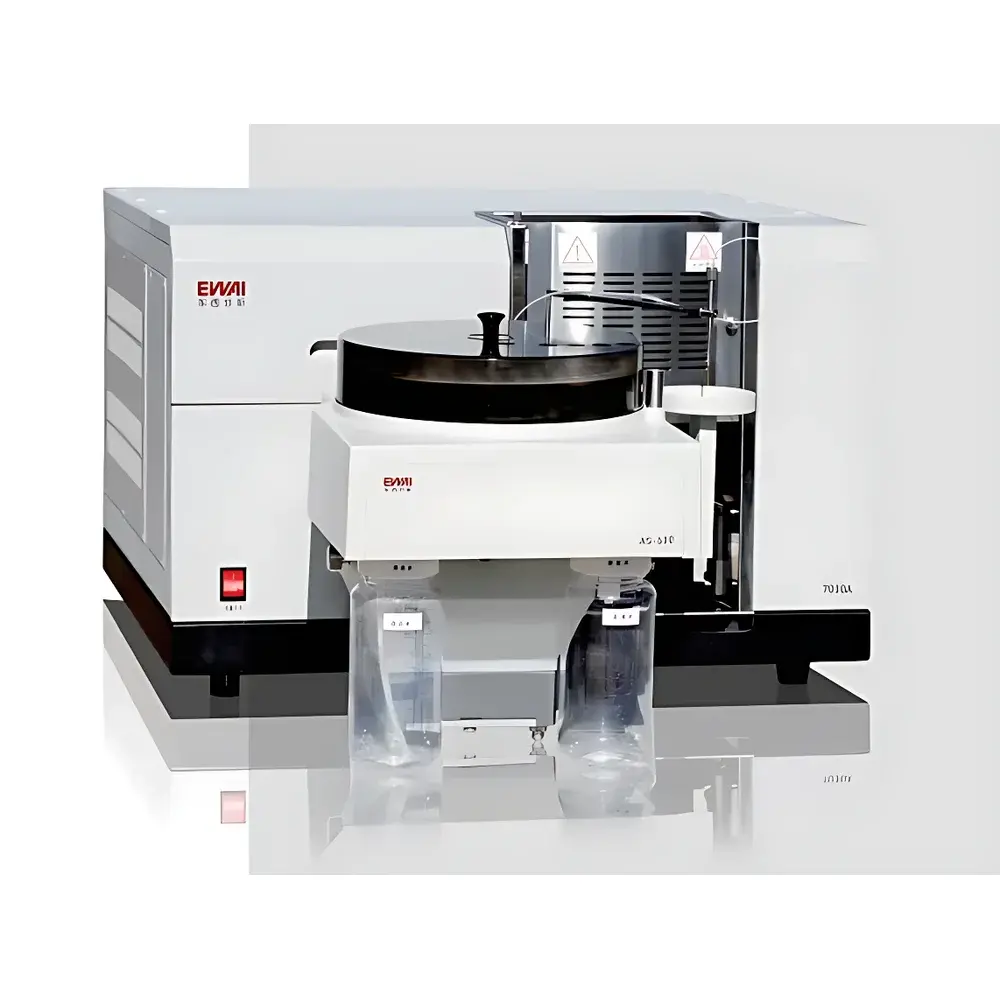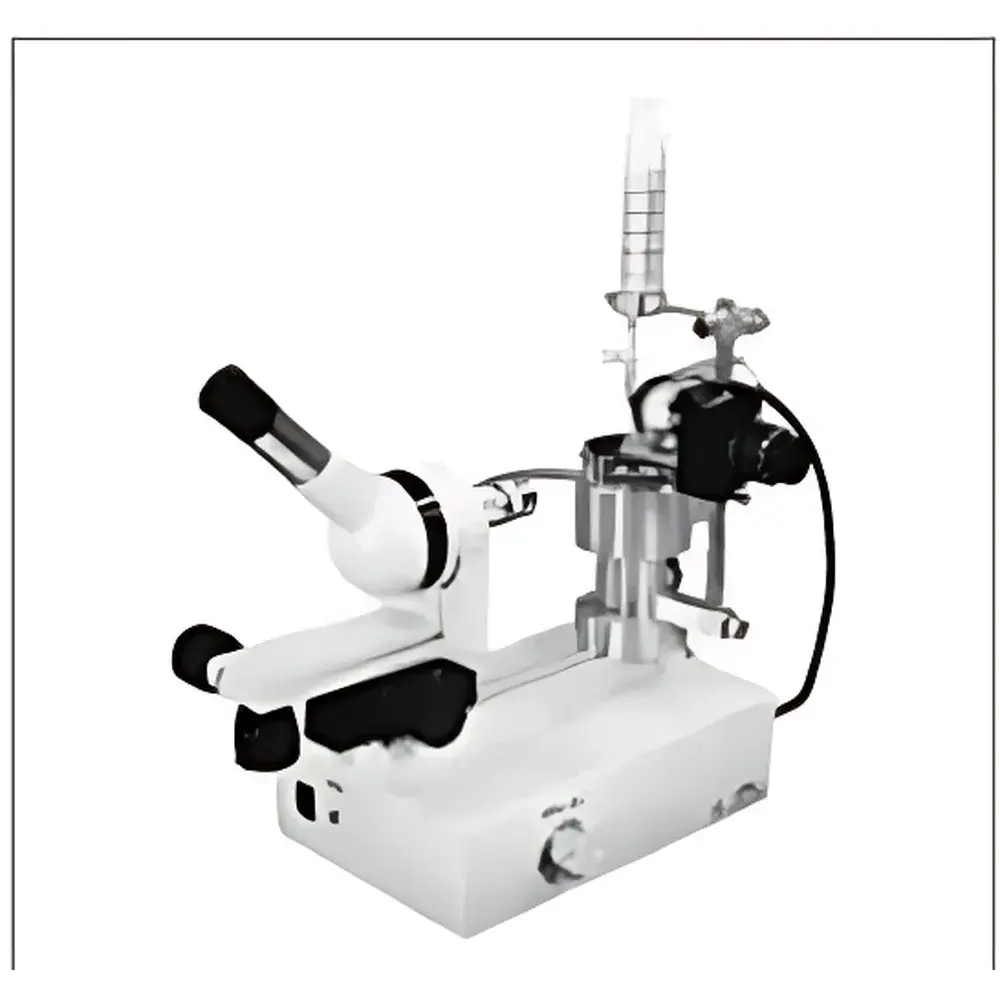
Sutter EG-400 Microelectrode Grinder
| Brand | Sutter |
|---|---|
| Origin | USA |
| Model | EG-400 |
| Motor Speed | 50–2000 rpm |
| Electrode Manipulator Travel | 47 mm (vertical) |
| Microscope Travel | X: 7 mm, Y: 30 mm, Z: 8 mm |
| Magnification | 30× (10× eyepiece × 3× objective) |
| Capillary Outer Diameter Range | 1.0–1.5 mm |
Overview
The Sutter EG-400 Microelectrode Grinder is a precision-engineered benchtop instrument designed for the reproducible fabrication and sharpening of glass micropipettes used in intracellular electrophysiology, patch-clamp recording, microinjection, and single-cell neurophysiology applications. It operates on a controlled mechanical grinding principle—employing a rotating abrasive disk driven by a variable-speed DC motor, combined with precise three-axis manual positioning of the capillary relative to the grinding surface. Real-time visual feedback is enabled via an integrated stereomicroscope system, allowing users to monitor electrode-to-disk contact geometry, tip formation dynamics, and debris accumulation during operation. The EG-400 is not a consumable-based or disposable tool; rather, it is a long-term laboratory asset engineered for high repeatability, mechanical stability across speed ranges, and compatibility with standard borosilicate and quartz capillaries.
Key Features
- Variable-speed DC motor (50–2000 rpm) delivering consistent torque and minimal vibration across the full operational range—critical for minimizing thermal deformation and preserving glass integrity during grinding.
- Dedicated vertical micro-manipulator with coarse and fine adjustment knobs, offering 47 mm total travel and sub-micron positional resolution for controlled electrode approach and dwell time modulation.
- Integrated stereomicroscope (30× magnification: 10× wide-field eyepiece + 3× objective) with independent X–Y–Z translation (7 mm × 30 mm × 8 mm), enabling precise alignment of capillary tip to grinding zone centerline.
- Angular calibration scale mounted directly on the electrode holder, facilitating repeatable bevel angle setup (e.g., 0°–45°) essential for optimizing seal formation in whole-cell patch-clamp experiments.
- Onboard deionized water delivery and gravity-fed drainage system to continuously flush grinding residue, prevent clogging of capillary tips, and suppress static charge buildup that may deflect fine glass shavings.
- Rigid aluminum alloy frame with vibration-damped base, ensuring mechanical isolation from bench-level disturbances during extended grinding cycles.
Sample Compatibility & Compliance
The EG-400 accommodates standard pulled or unbent glass capillaries with outer diameters between 1.0 mm and 1.5 mm—including filamented and non-filamented borosilicate (e.g., BF150-86-10, GC150TF-10) and fused silica types. It does not support metal electrodes or carbon fiber probes. While the instrument itself carries no regulatory certification (e.g., FDA 510(k), CE IVD), its design adheres to general laboratory safety standards per ANSI Z87.1 (eye protection), UL 61010-1 (electrical safety), and ISO 13485-aligned manufacturing practices as applied by Sutter Instrument Co. All components are compatible with standard cleanroom-grade deionized water and common aqueous grinding slurries (e.g., alumina or silicon carbide suspensions at ≤1 µm particle size). No hazardous materials are embedded in structural assemblies.
Software & Data Management
The EG-400 is a fully manual, analog-operated instrument with no embedded firmware, touchscreen interface, or digital control software. Consequently, it requires no driver installation, operating system compatibility verification, or cybersecurity protocols. This architecture eliminates risks associated with firmware obsolescence, OS migration failure, or audit trail gaps—making it inherently compliant with GLP and GMP environments where documentation of physical parameter settings (e.g., rpm dial position, angular scale reading, water flow rate estimation) is recorded manually in bound lab notebooks or validated electronic lab notebooks (ELNs). Users retain complete traceability over every grinding parameter without dependency on proprietary software updates or vendor cloud services.
Applications
- Preparation of low-resistance intracellular recording electrodes for sharp-electrode impalement in neurons, oocytes, and plant cells.
- Fabrication of beveled patch pipettes to enhance gigaseal success rates in voltage-clamp and current-clamp configurations.
- Sharpening of injection pipettes for embryonic microinjection, CRISPR-Cas9 delivery, and dye loading protocols.
- Custom tip geometry development for scanning ion conductance microscopy (SICM) and nanopore sensing platforms.
- Teaching laboratories requiring robust, serviceable instrumentation for undergraduate and graduate neurophysiology training modules.
FAQ
Does the EG-400 support automated tip shaping or programmable grinding profiles?
No. The EG-400 is a manually operated instrument. All positioning, speed selection, and timing are user-controlled via mechanical dials and knobs.
Can quartz capillaries be ground using this system?
Yes—provided they fall within the specified outer diameter range (1.0–1.5 mm) and are mounted securely in the holder. Quartz requires slower initial grinding speeds (≤500 rpm) and finer abrasives to avoid chipping.
Is microscope illumination included?
Yes—the integrated stereomicroscope includes adjustable LED ring illumination with intensity control, optimized for transmitted and reflected light observation of glass–abrasive interactions.
What maintenance is required for long-term reliability?
Routine cleaning of the grinding disk, water channels, and microscope optics using lint-free wipes and isopropyl alcohol; periodic inspection of motor brushes (service interval ~5,000 hours); and recalibration of the protractor scale using a certified angle gauge annually.
Is technical support available outside the United States?
Yes—Sutter Instrument Co. provides global application engineering support through authorized regional distributors, including documentation in English, German, Japanese, and Chinese, and remote troubleshooting via secure screen-sharing sessions.