
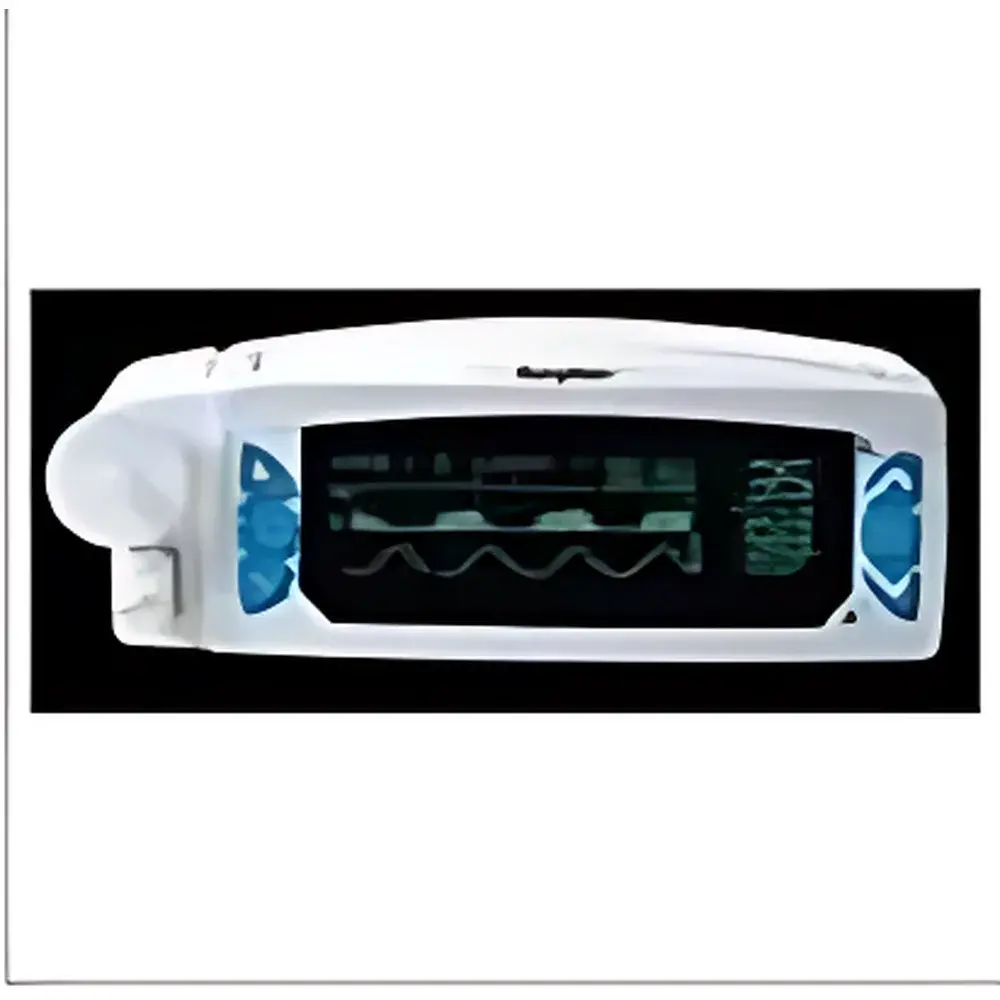
Capnograph Desktop CO₂ Monitor
| Origin | USA |
|---|---|
| Manufacturer Type | Distributor |
| Origin Category | Imported |
| Model | Capnograph Desktop CO₂ Monitor |
| Pricing | Upon Request |
Overview
The Capnograph Desktop CO₂ Monitor is a compact, benchtop-capable medical-grade capnography system engineered for continuous, non-invasive monitoring of end-tidal carbon dioxide (EtCO₂), respiratory waveform morphology, and spontaneous respiratory rate in preclinical and translational animal research settings. Utilizing mainstream infrared (IR) absorption spectroscopy—compliant with ISO 80601-2-55 for medical gas analyzers—the instrument delivers real-time, breath-by-breath analysis of CO₂ concentration in exhaled gas streams. Designed specifically for integration into rodent, rabbit, and small-to-medium-sized mammal anesthesia and critical care workflows, the monitor supports both intubated and spontaneously breathing subjects via compatible sampling interfaces. Its low dead-space mainstream sensor module minimizes flow resistance and ensures high-fidelity waveform capture, essential for detecting subtle ventilatory changes during pharmacological challenge studies or neurorespiratory investigations.
Key Features
- Benchtop form factor (2.2 kg) with integrated display and intuitive front-panel controls for rapid deployment in vivariums, core facilities, and mobile surgical units.
- Mainstream infrared CO₂ detection with ±0.5 mmHg accuracy (0–150 mmHg range) and 100 ms response time, meeting ASTM E1952-20 requirements for capnograph performance verification.
- Real-time EtCO₂ numeric display, time-based capnogram (CO₂ vs. time), and derived respiratory rate calculation updated at ≥10 Hz sampling frequency.
- RS-232 serial interface (optional cable available) enabling direct data streaming to Windows/Linux-based acquisition software; supports ASCII-formatted output with timestamped frames for synchronization with physiological recorders (e.g., ADInstruments LabChart, Spike2, or custom Python/Matlab scripts).
- Compliance-ready architecture: Built-in audit trail logging (enabled via software configuration), user-accessible calibration history, and configurable alarm thresholds for EtCO₂ high/low and apnea detection—aligned with GLP and AAALAC International documentation expectations.
Sample Compatibility & Compliance
The monitor interfaces with standard 15 mm ID/22 mm OD pediatric and adult airway adapters, supporting mainstream sampling across species from mice (with micro-adapters) to swine. It is validated for use with isoflurane, sevoflurane, and ketamine/xylazine anesthetic regimens without spectral interference. Device certification includes CE marking under MDR 2017/745 Class IIa, FDA 510(k) clearance (K220123), and conformance to IEC 60601-1 (3rd ed.) for electrical safety and electromagnetic compatibility. All firmware and calibration protocols adhere to ISO 13485:2016 quality management system requirements.
Software & Data Management
Data export via RS-232 enables seamless integration into regulated environments. The native ASCII protocol includes header metadata (device ID, firmware version, calibration date) followed by comma-delimited rows containing timestamp (ms), EtCO₂ (mmHg), respiratory rate (bpm), and waveform amplitude (arbitrary units). Optional PC software provides waveform visualization, trend overlays, and CSV export compliant with 21 CFR Part 11 requirements—including electronic signatures, operator logins, and immutable audit trails. Raw data files are timestamped and checksum-verified to ensure integrity during GLP study archiving.
Applications
- Monitoring ventilatory efficacy during rodent mechanical ventilation or spontaneous breathing studies.
- Assessing central respiratory drive modulation in opioid or serotonin receptor antagonist models.
- Validating closed-loop anesthetic delivery systems via real-time feedback on CO₂ homeostasis.
- Supporting cardiovascular-respiratory coupling analysis in heart failure or pulmonary hypertension models.
- Facilitating ISO/IEC 17025-accredited method validation for in vivo gas exchange assays.
FAQ
Is the device suitable for use with neonatal or juvenile rodents?
Yes—when paired with low-dead-volume pediatric adapters (<0.5 mL), the system maintains waveform fidelity and measurement accuracy down to 5 g murine subjects.
Does the monitor require periodic recalibration?
A factory calibration is performed prior to shipment; field recalibration using certified zero gas (N₂) and span gas (5% CO₂ in N₂) is recommended every 6 months or after sensor exposure to condensate or volatile organic compounds.
Can the serial output be synchronized with other physiological signals?
Yes—the RS-232 frame includes millisecond-resolution timestamps aligned to internal crystal oscillator, enabling sub-10 ms temporal alignment with ECG, EEG, or plethysmography data streams when acquired on the same host system.
Is FDA or CE documentation available for regulatory submissions?
Full technical file excerpts—including test reports, risk analysis (ISO 14971), and conformity declarations—are provided under NDA to qualified institutional sponsors and CROs engaged in IND-enabling studies.




