
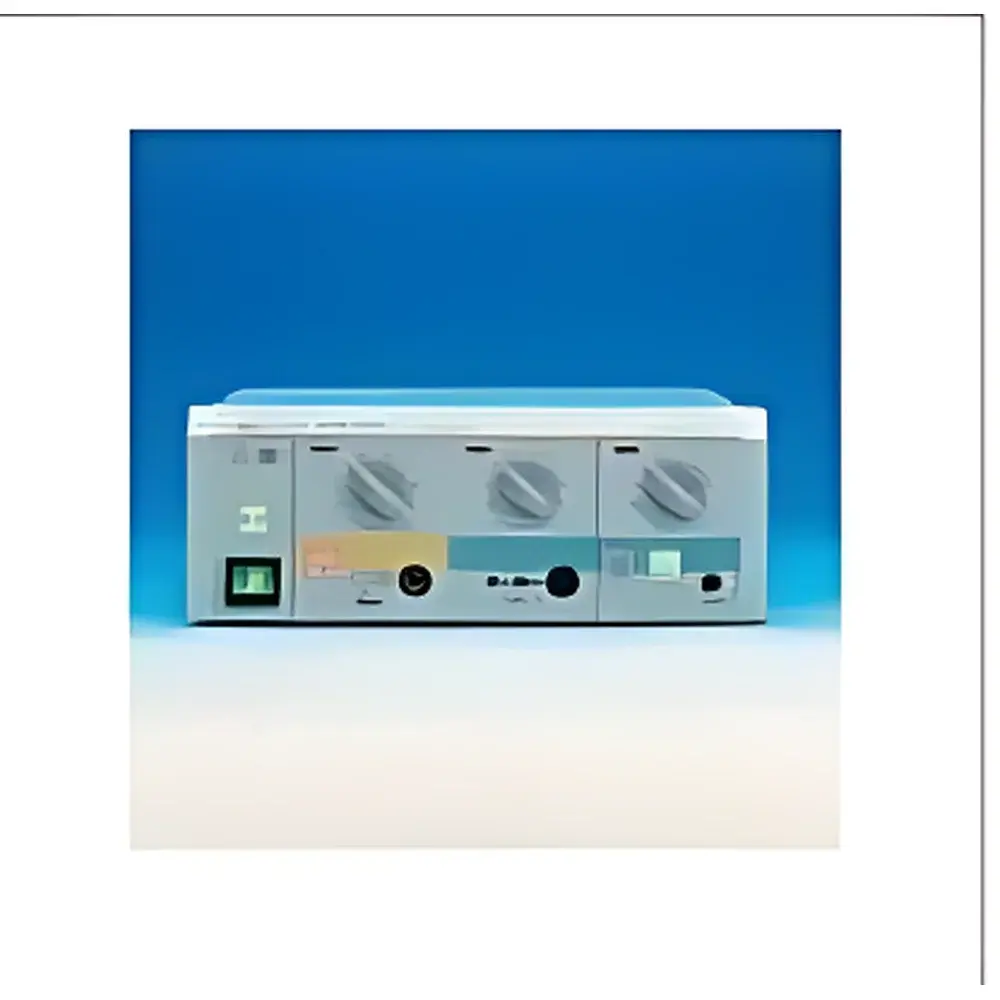
Harvard Apparatus Martin ME 102 Portable High-Frequency Electrosurgical Unit
| Brand | Harvard Apparatus |
|---|---|
| Origin | USA |
| Manufacturer Type | Authorized Distributor |
| Origin Category | Imported |
| Model | Martin ME 102 |
| Pricing | Upon Request |
Overview
The Harvard Apparatus Martin ME 102 is a portable, dual-channel high-frequency electrosurgical unit engineered for precision and flexibility in preclinical surgical research. It operates on the principle of resistive heating induced by high-frequency alternating current (typically 300 kHz–3 MHz), enabling controlled tissue cutting and coagulation through localized Joule heating. Unlike diagnostic or clinical-grade systems intended for human use, the ME 102 is specifically designed for acute and chronic in vivo procedures in rodent, rabbit, porcine, and other laboratory animal models. Its compact form factor, battery-compatible operation (with optional external DC input), and dual independent output channels support rapid setup in surgical suites, mobile vivariums, or field-based experimental environments. The unit complies with IEC 60601-1 general safety requirements for medical electrical equipment and incorporates isolation circuitry to minimize leakage current—critical for maintaining physiological stability during neurosurgical, cardiovascular, or oncology-related interventions.
Key Features
- Dual independent RF output channels: one monopolar generator and one bipolar generator, each with dedicated power control and mode selection.
- Two selectable output modes per channel: High-Output Mode (optimized for rapid incision in dense or highly vascularized tissues) and Low-Output Mode (designed for delicate dissection, microvascular coagulation, or neural tissue preservation).
- Bipolar coagulation via standard insulated bipolar forceps: energy delivery is confined strictly between the two electrode tips, limiting thermal spread to ≤1.2 mm lateral to the grasp zone—minimizing collateral damage to adjacent structures.
- Monopolar functionality supports both cutting (fulguration) and blended coagulation using standard reusable or disposable active electrodes and a dispersive return electrode pad.
- Footswitch-compatible interface (standard 2-pole configuration) enables hands-free activation; manual toggle switch also provided for benchtop or constrained-space use.
- Real-time LED indicators for active channel status, output mode, and system readiness; audible tone confirms mode transition and activation.
- Robust aluminum chassis with IP22-rated enclosure for dust resistance and limited drip protection—suitable for ISO Class 7 cleanroom-adjacent lab environments.
Sample Compatibility & Compliance
The Martin ME 102 is validated for use across common laboratory species including Mus musculus (C57BL/6, BALB/c), Rattus norvegicus (Sprague-Dawley, Wistar), Oryctolagus cuniculus, and Sus scrofa. Electrode compatibility includes standard 1.6 mm and 2.4 mm diameter monopolar pencils, as well as 5 mm and 10 mm jaw-length bipolar forceps (e.g., Fine Science Tools #18000-XX series). All output waveforms meet ANSI/AAMI ES60601-2-2:2019 requirements for electrosurgical equipment. Device documentation supports GLP-compliant study reporting, including traceable firmware versioning (v2.1+), calibration log fields, and audit-ready operational records when integrated with Harvard Apparatus AcqKnowledge or third-party LabChart-compatible data acquisition systems.
Software & Data Management
While the ME 102 operates as a standalone analog-controlled unit without embedded digital recording, it features a TTL-compatible sync output (BNC) for precise temporal alignment with physiological monitoring systems (e.g., ADInstruments PowerLab, Noldus EthoVision XT, or Spike2). Output activation timestamps can be logged alongside ECG, LFP, or laser Doppler flow signals to correlate electrosurgical events with hemodynamic or neurophysiological responses. Firmware updates are performed via USB-C service port using Harvard Apparatus’ certified Field Service Utility (FSU v4.3+), which maintains full revision history and cryptographic signature verification. No cloud connectivity or remote access capabilities are implemented—ensuring data sovereignty and compliance with institutional IT security policies governing animal research infrastructure.
Applications
- Acute terminal surgery: craniotomy, thoracotomy, nephrectomy, and hepatic resection in murine and lapine models.
- Vascular surgery: microdissection of carotid arteries, femoral vein ligation, and arteriovenous fistula creation with minimal thermal injury.
- Neuroscience: lesion generation in hippocampal or cortical regions with submillimeter spatial fidelity; intraoperative electrocorticography (ECoG) compatibility during awake-behaving protocols.
- Oncology: tumor resection margin control in orthotopic glioblastoma or mammary carcinoma models; intraoperative assessment of bleeding control efficacy.
- Teaching laboratories: standardized electrosurgery training modules aligned with FELASA and AALAS certification curricula for animal technologists and principal investigators.
FAQ
Is the Martin ME 102 FDA-cleared for human use?
No. This device is classified as a research-use-only (RUO) instrument under 21 CFR §809.3 and is not intended for clinical application in humans.
Can the ME 102 be used with grounded surgical tables or conductive flooring?
Yes—its isolated output architecture and <10 µA earth leakage current ensure safe operation in standard vivarium settings without requiring special grounding infrastructure.
What maintenance intervals are recommended?
Annual verification of output accuracy (±5% at 20 W, 50 Ω load) and insulation resistance (>10 MΩ) is advised per Harvard Apparatus Technical Bulletin TB-ME102-REV4.
Are replacement electrodes and accessories available through Harvard Apparatus?
Yes—original-specification monopolar pencils, bipolar forceps, return electrode pads, and sterilizable cable assemblies are stocked and distributed globally via authorized channels.
Does the unit support variable duty cycle modulation?
No. The ME 102 delivers continuous sinusoidal RF output; pulsed or blended waveform generation is not implemented in this model.





