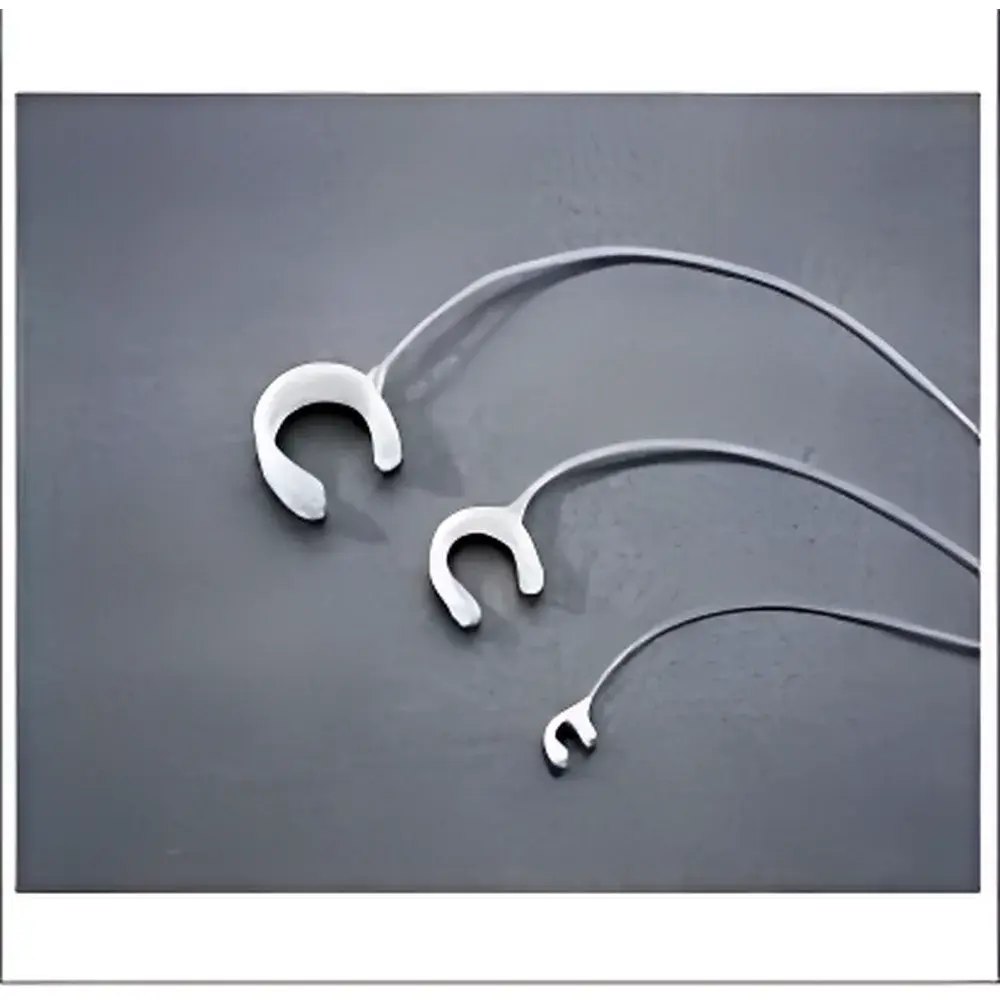
Vascular and Organ Occluder
| Origin | USA |
|---|---|
| Manufacturer Type | Distributor |
| Origin Category | Imported |
| Model | 3 |
| Pricing | Upon Request |
Overview
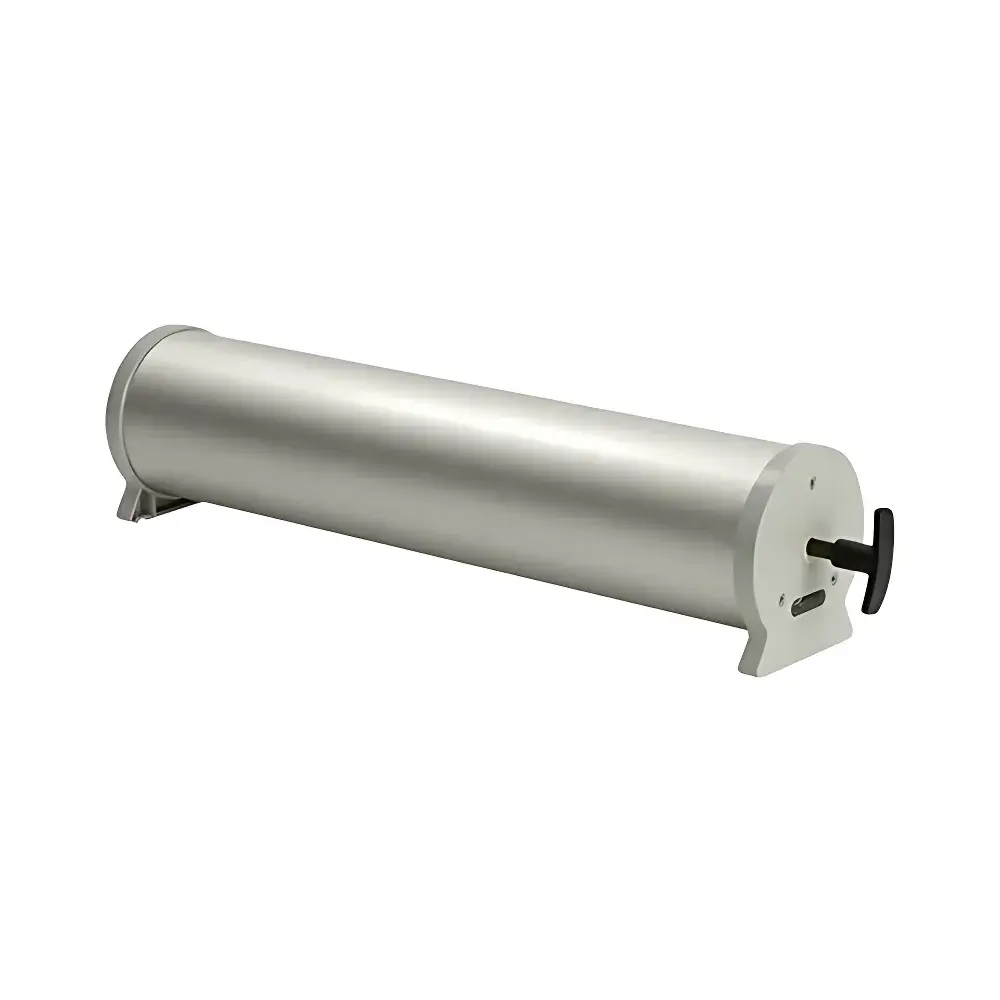
The Vascular and Organ Occluder is a precision-engineered, non-permanent mechanical occlusion device designed for acute, reversible, and minimally invasive constriction of blood vessels or soft-tissue organs in preclinical research settings. It operates on a pneumatic/hydraulic actuation principle: a compliant, open-loop silicone elastomer ring—positioned circumferentially around the target structure—is inflated or fluid-filled via an integrated lumen catheter, inducing controlled radial compression until complete luminal occlusion is achieved. Deflation or aspiration reverses the effect instantly, restoring native perfusion or physiological function without thermal injury, suturing, or permanent tissue alteration. This mechanism avoids the limitations of electrocautery, ligature, or clip-based methods—particularly critical in longitudinal hemodynamic, pharmacokinetic, or ischemia-reperfusion studies where repeatable, titratable, and temporally precise occlusion is essential.
Key Features
- Bio-inert, medical-grade silicone elastomer construction—certified per ISO 10993-5 (cytotoxicity) and USP Class VI—ensures biocompatibility for in vivo use in rodents, rabbits, and large animal models.
- Modular design with interchangeable occlusion rings: inner diameters ranging from 0.8 mm to 8.0 mm and wall thicknesses from 0.3 mm to 1.2 mm accommodate microvascular (e.g., coronary artery branches), medium-caliber (e.g., carotid, femoral), and organ-level applications (e.g., renal pedicle, hepatic hilum).
- Low-profile, single-lumen catheter (length options: 15 cm, 30 cm, 45 cm) with Luer-lock interface enables seamless integration with standard syringe pumps or pressure-controlled infusion systems.
- Linear pressure–occlusion response curve validated across 0–120 kPa inflation range; occlusion onset occurs at ≤15 kPa, enabling fine-grained control over partial vs. complete flow arrest.
- Autoclavable (steam sterilization at 121°C, 15 psi, 20 min) and compatible with ethylene oxide (EtO) and gamma irradiation—supporting GLP-compliant surgical protocols.
Sample Compatibility & Compliance
The device is validated for use in intact, anesthetized mammalian preparations—including murine, porcine, and canine models—during acute surgical interventions. It complies with ISO 13485:2016 quality management system requirements for medical devices and meets the material safety stipulations of FDA 21 CFR Part 820. Biocompatibility testing includes ISO 10993-1 (biological evaluation framework), ISO 10993-10 (irritation/sensitization), and ISO 10993-11 (hemocompatibility). While not intended for human clinical use, its design adheres to principles outlined in ASTM F2503 (labeling of medical devices) and supports audit-ready documentation for institutional animal care and use committees (IACUC) and ethics review boards.
Software & Data Management
As a standalone mechanical instrument, the occluder requires no embedded firmware or proprietary software. However, it is fully interoperable with third-party data acquisition platforms—including ADInstruments LabChart, BIOPAC AcqKnowledge, and National Instruments DAQmx—when paired with analog pressure transducers or flow probes. Real-time occlusion status can be logged via synchronized pressure-channel triggers, enabling timestamped correlation with physiological metrics (e.g., arterial pressure, ECG, cortical perfusion). All configuration parameters—including ring size, catheter length, and actuation pressure thresholds—are documented in standardized electronic lab notebooks (ELN) templates aligned with ALCOA+ principles (Attributable, Legible, Contemporaneous, Original, Accurate, Complete, Consistent, Enduring, Available).
Applications
- Transient coronary artery occlusion in rodent myocardial infarction models (e.g., 30-min ischemia/2-h reperfusion protocols).
- Controlled hepatic inflow occlusion (Pringle maneuver simulation) during liver metabolism or drug clearance studies.
- Renal artery clamping for acute kidney injury (AKI) modeling with graded duration and pressure modulation.
- Reversible cerebral vessel occlusion in stroke models (e.g., MCAO without filament insertion).
- Functional assessment of collateral circulation via sequential occlusion of feeding arteries in tumor xenograft or wound-healing models.
FAQ
Is this device approved for human use?
No. It is designated exclusively for preclinical research in laboratory animals under IACUC-approved protocols.
Can the occlusion ring be reused after sterilization?
Yes—provided it shows no visible deformation, cracking, or loss of elasticity post-sterilization; visual inspection and functional pressure testing are required before each reuse.
What is the maximum recommended inflation pressure?
120 kPa (17.4 psi); exceeding this may cause irreversible ring deformation or catheter delamination.
Does the device support partial (sub-occlusive) flow modulation?
Yes—by regulating applied pressure within the 15–100 kPa range, users can achieve graded reductions in vessel cross-sectional area, enabling quantitative hemodynamic perturbation studies.
Are custom ring geometries available?
Yes—OEM engineering support is offered for application-specific designs, including elliptical profiles, asymmetric cross-sections, and multi-segment inflation chambers—subject to minimum order quantities and validation timelines.