
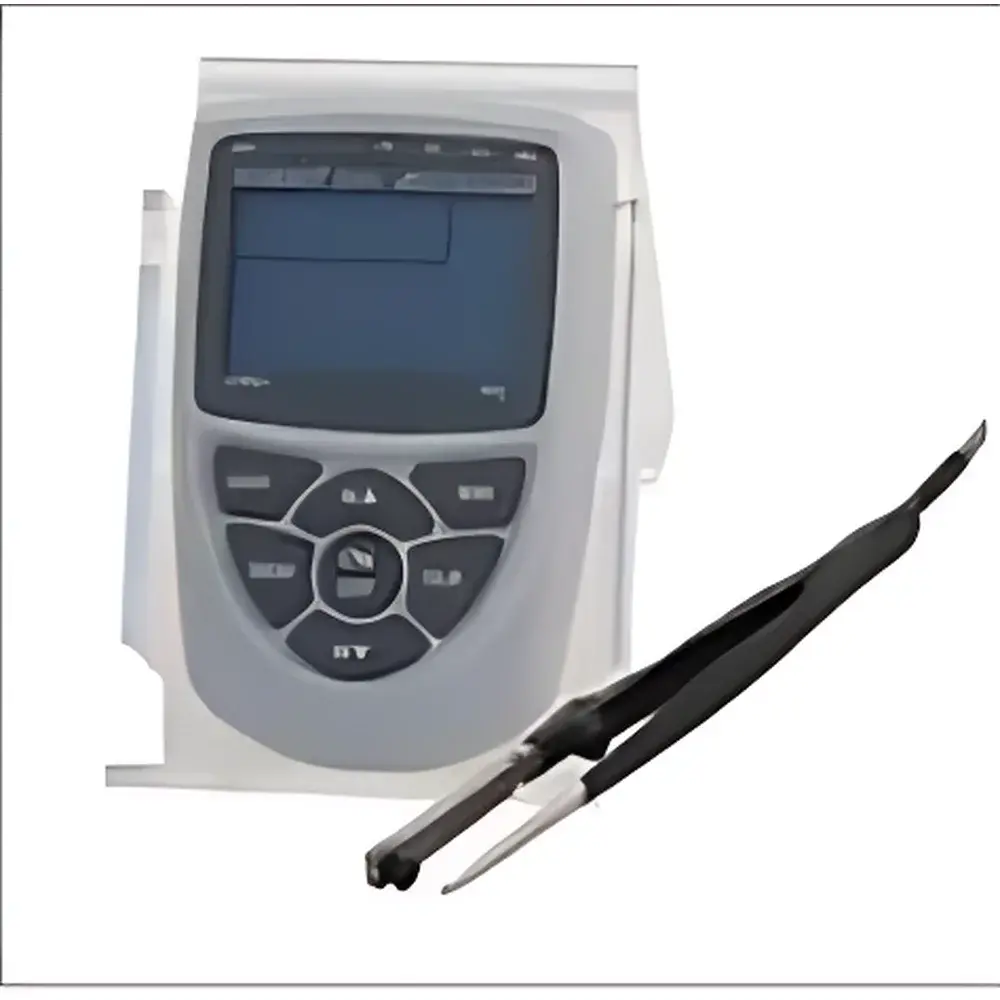
IITC Pincher Pressure Analgesiometer Model 2450
| Brand | IITC |
|---|---|
| Origin | USA |
| Model | 2450 |
| Measurement Resolution | 0.01 g |
| Actuation Method | Foot-pedal zeroing |
| Output | Real-time digital display of withdrawal threshold and peak force |
| Animal Compatibility | Rats and mice |
| Primary Assay Type | Mechanical nociceptive threshold testing (Randall-Selitto alternative) |
Overview
The IITC Pincher Pressure Analgesiometer Model 2450 is a precision-engineered, non-invasive instrument designed for quantitative assessment of mechanical nociceptive thresholds in rodent models. It operates on the principle of controlled, linearly increasing compressive force applied to the hind paw or tail base—providing an objective, operator-independent metric for pain sensitivity. As a validated alternative to the classical Randall-Selitto assay, the Model 2450 eliminates subjective interpretation of vocalization or limb withdrawal by delivering calibrated, digitally recorded force values with 0.01 g resolution. Its design adheres to the ethical imperatives of the 3Rs (Replacement, Reduction, Refinement), minimizing handling stress and procedural variability while maintaining high inter- and intra-subject reproducibility. The device is widely adopted in preclinical pharmacology, neuropharmacology, and translational pain research where longitudinal tracking of mechanical allodynia or hyperalgesia is required under GLP-compliant experimental protocols.
Key Features
- Digital force transduction system with ±0.01 g resolution and real-time display of both withdrawal threshold and peak applied force
- Foot-pedal–activated zeroing function—eliminates manual calibration drift and ensures consistent baseline across sessions
- Adjustable compression rate and dwell time to accommodate species-specific biomechanical responses (e.g., rat vs. mouse paw compliance)
- Ergonomic pinch-head geometry engineered to distribute pressure uniformly across the plantar surface, reducing localized tissue deformation artifacts
- Modular construction compatible with standard stereotaxic frames and restraint systems for integration into multimodal electrophysiology or imaging workflows
- No consumables or disposable components—designed for >10,000 repeat measurements with metrological stability verified per ISO/IEC 17025 traceable calibration procedures
Sample Compatibility & Compliance
The Model 2450 supports standardized nociception testing in Sprague-Dawley and Wistar rats (150–500 g) and C57BL/6, BALB/c, and CD-1 mice (18–35 g). It complies with NIH Office of Laboratory Animal Welfare (OLAW) guidelines for minimally stressful behavioral phenotyping and meets methodological criteria outlined in IASP (International Association for the Study of Pain) taxonomy for evoked mechanical testing. Data output conforms to ALMA (Animal Laboratory Metadata Architecture) v2.1 schema, facilitating audit-ready documentation for FDA pre-IND submissions and EMA scientific advice dossiers. The instrument’s force calibration certificate is issued by an A2LA-accredited laboratory and includes uncertainty budgets compliant with ISO/IEC 17025:2017.
Software & Data Management
While the Model 2450 operates as a standalone hardware platform with embedded digital readout, it integrates seamlessly with third-party acquisition systems via TTL-triggered analog voltage output (0–5 V proportional to applied force). Raw force-time traces can be synchronized with EMG, EEG, or fNIRS signals using National Instruments DAQmx or Spike2-compatible timing modules. Exported CSV files include timestamped metadata (animal ID, session date, operator ID, ambient temperature/humidity), enabling automated ingestion into LIMS platforms such as LabVantage or Benchling. Audit trails—including foot-pedal zeroing events and force limit overrides—are logged locally and support 21 CFR Part 11–compliant electronic records when paired with validated software wrappers.
Applications
- Longitudinal evaluation of analgesic efficacy in opioid, NSAID, and novel biologic therapeutics
- Functional recovery assessment following sciatic nerve crush or chronic constriction injury (CCI)
- Validation of thrombotic models induced by mechanical compression (e.g., venous stasis assays)
- Correlative analysis of mechanical nociception with in vivo electrophysiological endpoints (e.g., dorsal horn neuronal firing rates during graded pinch)
- Phenotyping of genetically modified murine lines exhibiting altered mechanosensory transduction (e.g., Piezo2 KO, Nav1.7 mutants)
- Standardized endpoint measurement in OECD TG 407 (repeated-dose toxicity) and TG 425 (acute dermal toxicity) studies requiring pain-related behavioral observation
FAQ
Is the Model 2450 suitable for use with unrestrained animals?
No—it requires brief, gentle physical restraint consistent with AVMA Guidelines for the Euthanasia of Animals and NIH Guide for Care and Use of Laboratory Animals. Restraint duration is limited to <90 seconds per measurement to minimize acute stress confounds.
Can the device be calibrated in-house?
Yes—calibration is performed using NIST-traceable deadweight standards; full procedure documentation and tolerance limits are provided in the IITC Service Manual Rev. 4.2.
Does the instrument meet ISO 13485 requirements for medical device testing?
While not classified as a medical device, its metrological architecture satisfies ISO 13485:2016 clause 7.6 (Control of monitoring and measuring equipment) for preclinical safety assessment instrumentation.
What is the recommended maintenance interval?
Biannual verification of force transducer linearity and pedal switch latency is advised; annual full recalibration is recommended for GLP-regulated studies.
Is training provided with purchase?
Yes—IITC offers remote SOP development support and on-site operator certification aligned with AAALAC International accreditation standards.




