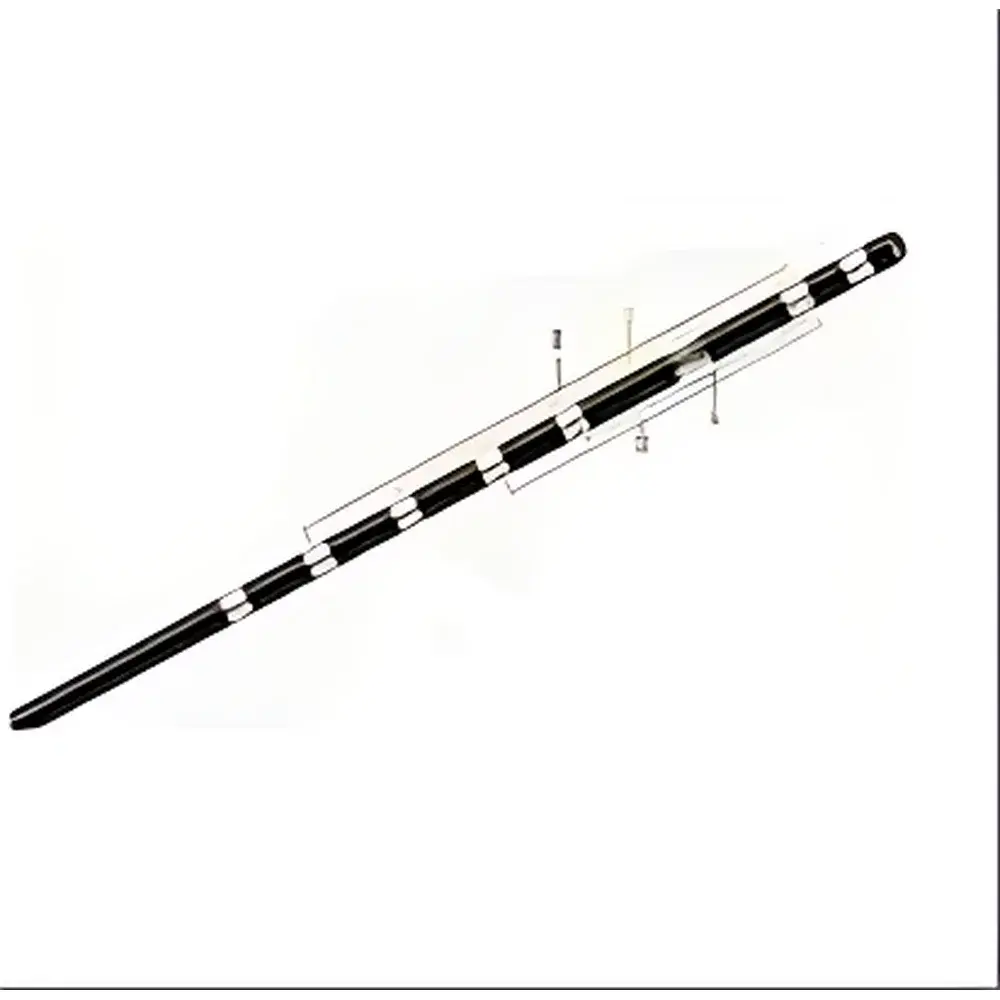
Scisense VSL Variable-Segment-Length Pressure-Volume Catheter for Rodent Cardiac Research
| Origin | USA |
|---|---|
| Manufacturer Type | Authorized Distributor |
| Origin Category | Imported |
| Model | VSL |
| Pricing | Available Upon Request |
Overview
The Scisense VSL (Variable-Segment-Length) Pressure–Volume (PV) Catheter is a purpose-engineered intracardiac microcatheter system designed specifically for high-fidelity, real-time hemodynamic assessment in rodent models—including mice, rats, and rabbits—under both in vivo and ex vivo working-heart preparations. Unlike conventional fixed-segment PV catheters, the VSL architecture incorporates four independently configurable conductance segments (S1–S4) proximal to the distal pressure sensor, enabling precise anatomical alignment across dynamic ventricular geometries. This adaptability is critical in longitudinal studies of cardiac remodeling—such as post-myocardial infarction, diabetic cardiomyopathy, or dilated heart failure—where progressive changes in ventricular chamber dimensions render fixed-electrode spacing suboptimal for accurate volume calibration and spatial resolution. The catheter operates on the principle of conductance volumetry: intraventricular blood volume is derived from electrical conductance measured between adjacent electrode rings, corrected for parallel conductance (via hypertonic saline injection or dual-frequency methods) and calibrated using known geometric assumptions (e.g., cylindrical or ellipsoidal chamber approximation). Pressure is simultaneously acquired via an integrated solid-state micromachined sensor, ensuring phase-synchronized PV loop generation with temporal resolution ≤1 ms.
Key Features
- Four discrete, user-selectable electrode segment lengths (S1–S4) allow dynamic reconfiguration to match evolving ventricular anatomy across disease progression or developmental stages.
- Integrated high-stability MEMS pressure sensor (range: 0–300 mmHg; accuracy: ±0.5 mmHg typical) co-located with conductance electrodes for true time-synchronized PV acquisition.
- Optimized for use with physiologically relevant perfusates—including Krebs-Henseleit buffer, Tyrode’s solution, and blood-substitute media—with broad conductivity tolerance (0.8–2.2 mS/cm).
- Onboard gain adjustment and offset compensation ensure linear signal response across voltage output range (±5 V analog), preventing saturation even at high-volume states (e.g., dilated ventricles).
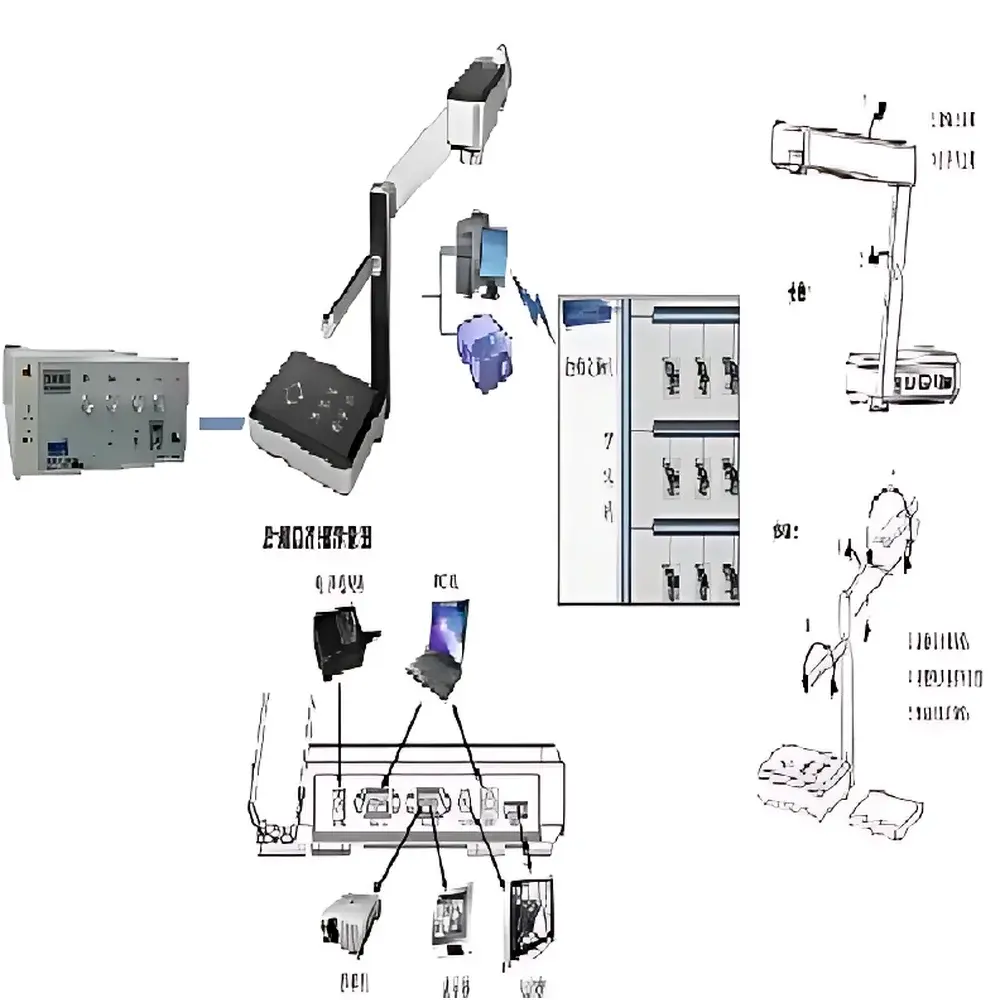
- FV898 Control Unit provides hardware-level electrode selection, signal conditioning (low-noise amplification, 0.1–1 kHz bandpass filtering), and programmable output scaling—fully compatible with standard data acquisition platforms (e.g., ADInstruments PowerLab, National Instruments DAQmx, Spike2).
Sample Compatibility & Compliance
The VSL catheter is validated for acute and chronic implantation in adult C57BL/6, CD-1, and Sprague-Dawley rodents (body weight 20–500 g), with minimal hemodynamic perturbation (<5% baseline CO change upon insertion). It supports Langendorff and working-heart isolated preparations per standardized AHA/ACC guidelines for ex vivo cardiac physiology. All materials comply with ISO 10993-5 (cytotoxicity) and ISO 10993-10 (sensitization/irritation) biocompatibility requirements. System-level validation includes traceable calibration against NIST-traceable pressure standards and conductance reference solutions. Data integrity protocols align with GLP-compliant workflows, supporting audit-ready metadata tagging (timestamp, electrode ID, gain setting, perfusate conductivity) when interfaced with compliant acquisition software.
Software & Data Management
The FV898 control unit delivers analog outputs compatible with third-party acquisition systems supporting IEEE 1451.2 or BNC-triggered synchronization. While Scisense does not bundle proprietary analysis software, raw PV data streams are structured in standard binary or ASCII formats (e.g., .mat, .csv) with header metadata—enabling direct import into MATLAB, Python (NumPy/Pandas), or commercial platforms such as LabChart (ADInstruments) and WinDaq (DATAQ). Volume computation follows the standard conductance equation: V = α × (L² / G) – Vp, where α is the empirical field correction factor (determined empirically per preparation), L is inter-electrode distance, G is measured conductance, and Vp is parallel conductance. Exported PV loops include beat-by-beat end-systolic and end-diastolic points, facilitating calculation of ESPVR, EDPVR, dP/dtmax/min, stroke work, and preload-recruitable stroke work (PRSW).
Applications
- Longitudinal assessment of ventricular remodeling in transgenic, diet-induced, or surgically induced rodent models of heart failure.
- Pharmacological intervention studies requiring beat-to-beat PV loop analysis (e.g., β-adrenergic modulation, SERCA2a gene therapy, sodium-glucose cotransporter inhibition).
- Ex vivo mechanistic studies isolating intrinsic myocardial performance from neurohumoral, renal, and systemic vascular confounders.
- Validation of non-invasive imaging modalities (e.g., high-frequency ultrasound, MRI) against gold-standard invasive PV metrics.
- Development and benchmarking of computational cardiac models requiring experimentally derived elastance curves and diastolic stiffness parameters.
FAQ
Can the VSL catheter be used in both in vivo and ex vivo preparations?
Yes—validated for acute in vivo left ventricular insertion via carotid or apical access, and for stable integration into Langendorff or working-heart isolated preparations.
Is parallel conductance correction supported?
Yes—compatible with standard hypertonic saline bolus methodology and dual-frequency conductance techniques for robust Vp estimation.
What is the minimum recommended electrode spacing for murine applications?
S1 segment (shortest configurable length) is optimized for mouse hearts (LV cavity diameter ~3–4 mm); full configurability ensures optimal ring placement across species and disease states.
Does the system support FDA 21 CFR Part 11 compliance?
The hardware itself is not Part 11–certified; however, when integrated with validated third-party acquisition and analysis platforms meeting Part 11 requirements (e.g., LabChart with audit trail enabled), full electronic record integrity can be achieved.
Are replacement catheters sterilizable?
VSL catheters are supplied sterile (EO gas) and intended for single-use per IACUC-approved protocols; autoclaving or chemical reprocessing is not recommended and voids calibration validity.