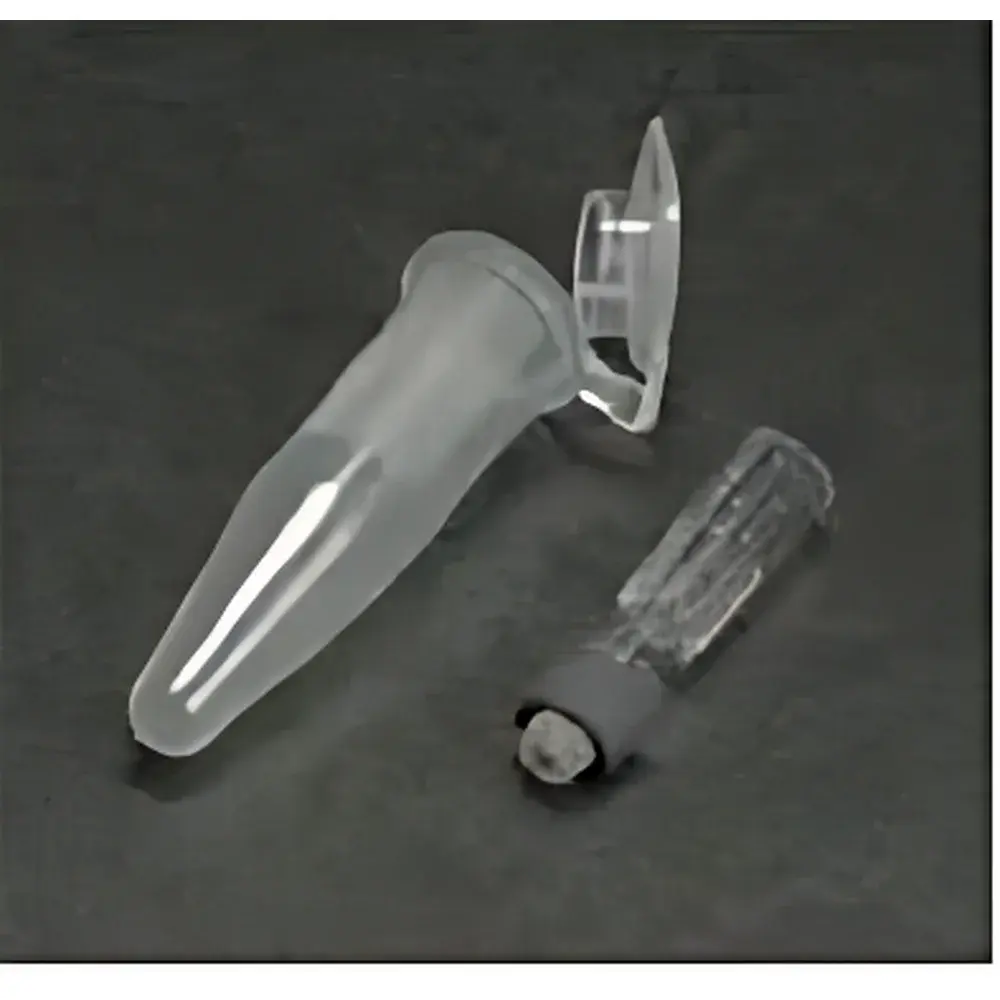
Ultra-Micro Dispo DIALYZERTM
| Origin | USA |
|---|---|
| Manufacturer Type | Distributor |
| Origin Category | Imported |
| Model | Ultra-Micro Dispo DIALYZERTM |
| Pricing | Upon Request |
Overview
The Ultra-Micro Dispo DIALYZERTM is a single-use, ultra-low-volume dialysis device engineered for precise molecular separation in highly constrained sample environments. Designed around the principle of equilibrium dialysis—where analytes diffuse across a semi-permeable membrane based on concentration gradients—the device enables passive, buffer-exchange-driven purification or desalting of minute biological samples without mechanical stress or centrifugal force. Its compact, self-contained architecture eliminates the need for external holders, clamps, or stirrers, making it ideal for applications where sample integrity, minimal handling, and contamination control are critical—such as proteomics, metabolomics, and early-stage drug discovery workflows involving precious clinical isolates or low-yield recombinant proteins.
Key Features
- Ultra-micro sample capacity: accommodates 1–5 µL volumes—optimized for scarce or irreplaceable specimens including cerebrospinal fluid (CSF), microdissected tissue lysates, and single-cell supernatants.
- Integrated design: fits directly into standard 1.5 mL microcentrifuge tubes with screw caps, enabling seamless placement in refrigerated or ambient incubators and compatibility with common orbital shakers.
- Pre-hydrated, low-binding regenerated cellulose membrane (MWCO: 10 kDa typical; nominal range 3.5–14 kDa depending on manufacturer lot and buffer conditions) ensures rapid equilibration and minimal protein adsorption.
- Disposable construction eliminates cross-contamination risk and eliminates cleaning validation requirements—supporting GLP-compliant workflows and reducing turnaround time between runs.
- No assembly required: pre-sterilized (gamma-irradiated) and ready-to-use out of the sealed pouch, minimizing operator variability and training overhead.
Sample Compatibility & Compliance
The Ultra-Micro Dispo DIALYZERTM is compatible with aqueous buffers across pH 4–9 and ionic strengths up to 500 mM NaCl. It has been validated for use with peptides, small-molecule drugs, nucleotides, and proteins ≤10 kDa molecular weight under equilibrium conditions. While not intended for high-pressure or continuous-flow applications, its performance aligns with ASTM E2913-21 (Standard Guide for Dialysis Device Characterization) and supports method development compliant with ICH Q5C (Quality of Biotechnological Products: Stability Testing). The device meets ISO 13485:2016 requirements for medical device accessories used in diagnostic sample preparation, and its gamma sterilization documentation satisfies FDA 21 CFR Part 820 traceability standards.
Software & Data Management
As a passive, non-instrumented device, the Ultra-Micro Dispo DIALYZERTM does not incorporate embedded electronics or require proprietary software. Experimental parameters—including dialysis time, temperature, buffer composition, and agitation speed—are defined and recorded manually or via laboratory information management systems (LIMS) such as LabVantage or Thermo Fisher SampleManager. For audit readiness, users are advised to document membrane lot numbers, expiration dates, and batch-specific MWCO verification reports (available upon request from the distributor) in accordance with 21 CFR Part 11-compliant electronic record practices. The device supports full traceability when integrated into SOPs referencing ISO/IEC 17025:2017 clause 7.7 (Sampling) and CLSI EP26-A guidelines for microvolume sample handling.
Applications
- Buffer exchange of nanogram-scale antibody fragments prior to SPR or BLI analysis.
- Removal of unreacted dyes or crosslinkers from labeled oligonucleotides in CRISPR guide RNA characterization.
- Desalting of enzymatically digested peptides before LC-MS/MS injection—reducing ion suppression and improving signal-to-noise ratios.
- Equilibrium studies of ligand–receptor binding kinetics using radiolabeled or fluorescent tracers in neuropharmacology assays.
- Preparative cleanup of exosome-derived miRNA extracts prior to qRT-PCR quantification.
FAQ
What is the recommended dialysis duration for optimal recovery of a 5 kDa peptide from 3 µL of PBS buffer?
Typical equilibration occurs within 2–4 hours at 4 °C with gentle agitation (15–20 rpm); full exchange (>95% removal of low-MW solutes) is achieved within 16–24 hours.
Can the device be reused after sterilization?
No—this is a single-use, gamma-irradiated product. Reuse compromises membrane integrity, introduces carryover risk, and voids compliance with ISO 13485 and CLIA preanalytical standards.
Is the membrane certified endotoxin-free?
Yes—each production lot undergoes LAL testing per USP , with endotoxin levels confirmed ≤0.5 EU/mL.
Does the device support centrifugal dialysis?
No—it is designed exclusively for static or agitated equilibrium dialysis; centrifugal forces may deform the housing or cause membrane delamination.
How should expired units be disposed of?
As non-hazardous biomedical waste per local regulations; no sharps or chemical disposal protocols apply.