
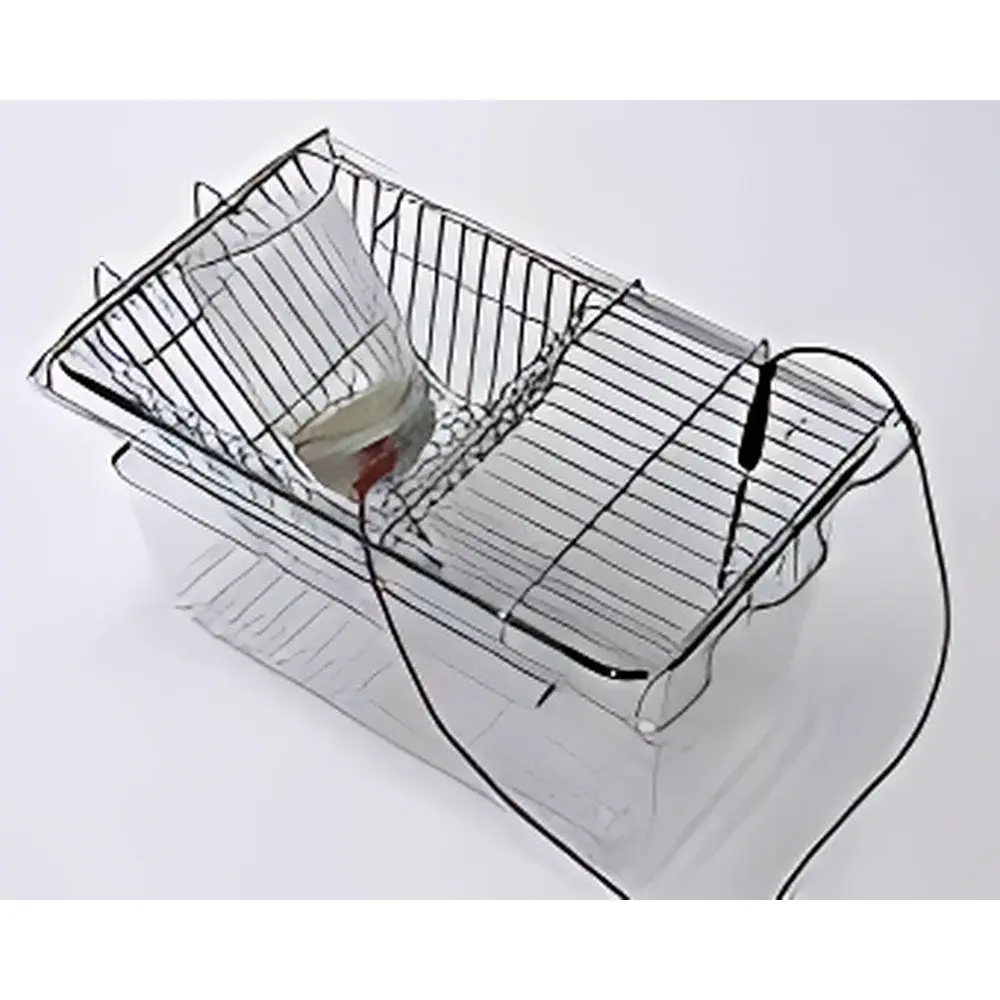
Vogel Conflict Test System
| Origin | USA |
|---|---|
| Manufacturer Type | Authorized Distributor |
| Origin Category | Imported |
| Model | Vogel Test |
| Pricing | Available Upon Request |
Overview
The Vogel Conflict Test System is a standardized, ethologically grounded behavioral assay designed to quantify anxiety-like responses in rodents through a well-defined operant conflict paradigm. It implements the classic Vogel conflict procedure—where thirsty animals are required to lick a water spout to obtain hydration, but each lick triggers a mild, controllable foot shock. This creates an approach-avoidance conflict: the motivation to drink (thirst drive) competes with the aversion to punishment (electric shock). The system quantifies anxiety by measuring suppression of licking behavior under punished conditions, providing a validated, pharmacologically sensitive endpoint for evaluating anxiolytic drug efficacy. Engineered for precision and reproducibility, the system supports controlled delivery of calibrated current pulses (typically 0.2–0.3 mA, 0.5–1.0 s duration), precise timing resolution (±10 ms), and real-time behavioral event logging. It is widely adopted in preclinical neuroscience, psychopharmacology, and CNS drug discovery pipelines.
Key Features
- Programmable conflict protocol: Independent control of shock intensity, duration, inter-shock interval, and shock-to-lick ratio (e.g., 1 shock per 1–20 licks)
- High-resolution event detection: Microswitch- or capacitive-sensing spout monitors individual licks with millisecond timestamping
- Automated session management: Configurable total test duration (typically 3–10 min), pre-test acclimation period, and post-session cooldown
- Integrated shock delivery unit: Constant-current output with safety cutoffs, isolated ground, and compliance with IEC 61000-4-5 surge immunity standards
- Modular hardware architecture: Scalable from single-cage to multi-unit rack-mount configurations (up to 16 parallel stations)
- Calibration traceability: Onboard self-test routines and documented calibration procedures aligned with ISO/IEC 17025 guidelines
Sample Compatibility & Compliance
The system is optimized for use with adult male and female Sprague-Dawley or C57BL/6 mice and rats (20–35 g mice; 200–300 g rats). Cage dimensions and spout positioning conform to NIH Guide for the Care and Use of Laboratory Animals and AAALAC International accreditation requirements. All electrical components meet UL 61010-1 and EN 61010-1 safety standards for laboratory equipment. Data acquisition and experimental protocols support GLP-compliant study execution, including full audit trail generation, user access controls, and electronic signature capability per FDA 21 CFR Part 11 when paired with validated software modules.
Software & Data Management
The proprietary acquisition and analysis software provides real-time visualization of lick events, shock triggers, and cumulative suppression ratios. It enables batch configuration of multiple subjects, automatic export of raw timestamps (CSV), and direct integration with Microsoft Excel via OLE automation—populating preformatted worksheets with lick counts, shock counts, latency to first lick, and percent suppression relative to non-punished baseline sessions. Data files include embedded metadata (operator ID, animal ID, date/time, protocol version), ensuring FAIR (Findable, Accessible, Interoperable, Reusable) data principles. Software validation documentation (IQ/OQ/PQ protocols) is available upon request for regulated environments.
Applications
- Evaluation of novel GABAA modulators, serotonin receptor ligands, and neuropeptide-based anxiolytics
- Dose-response characterization and ED50 determination in early-stage CNS compound screening
- Investigation of sex differences and circadian modulation of anxiety-related behavior
- Validation of genetic models (e.g., CRF-overexpressing, 5-HTT knockout) against pharmacological benchmarks
- Combination studies assessing interaction between anxiolytics and sedatives or stimulants
- Supporting IND-enabling toxicology and behavioral safety pharmacology packages (ICH S7A/S7B)
FAQ
What species and strains are validated for use with this system?
The system has been experimentally validated for use with Sprague-Dawley rats, Wistar rats, and C57BL/6, BALB/c, and CD-1 mice. Strain-specific baseline suppression levels and optimal shock parameters are provided in the technical manual.
Is the shock delivery calibrated and traceable to national standards?
Yes—each unit includes factory calibration certificates traceable to NIST standards. Users can perform routine verification using the included test load and multimeter interface.
Can the system be integrated into existing LabVIEW or Python-based behavioral suites?
Yes—TCP/IP and serial (RS-232) communication protocols are supported, with full API documentation and example scripts for LabVIEW, MATLAB, and Python (PySerial, asyncio).




