
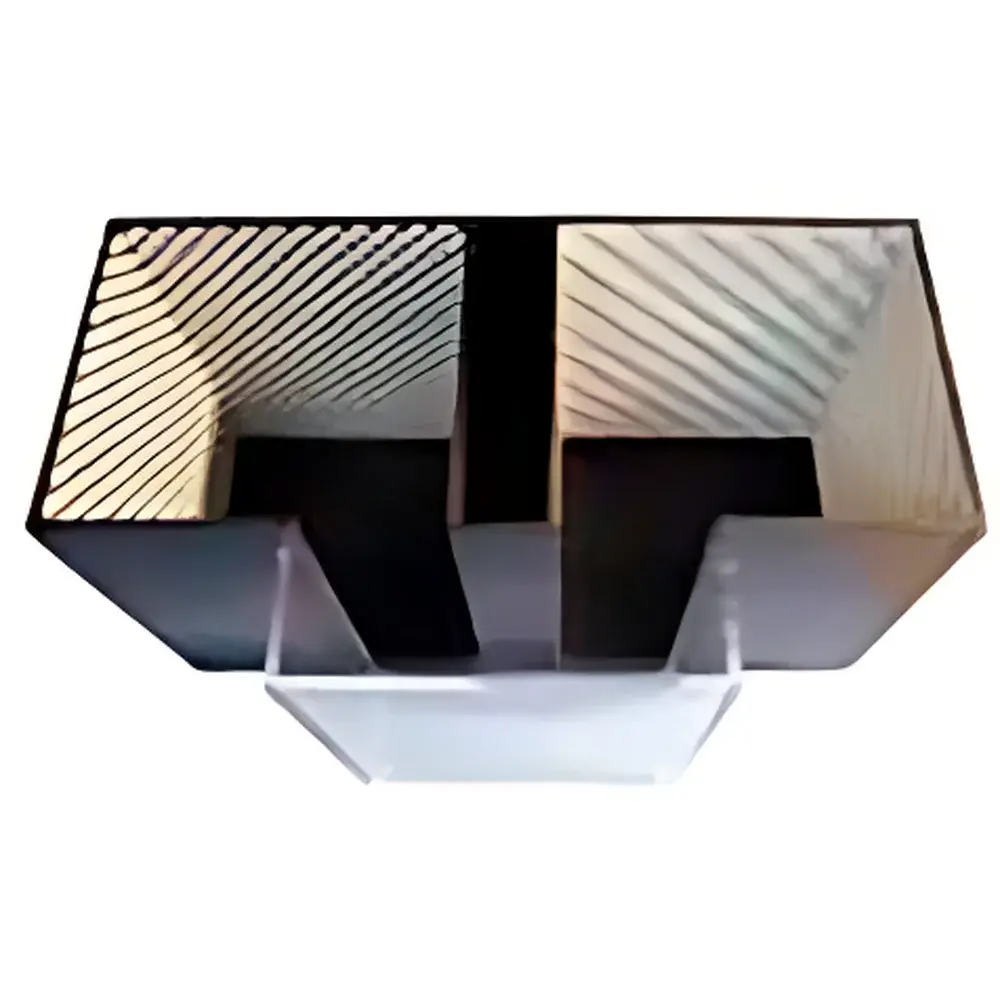
Panlab Harvard Apparatus LE895/6/7/8 Spatial Cue-Based Conditioned Place Preference (CPP) Chamber System
| Brand | Harvard Apparatus |
|---|---|
| Origin | USA |
| Model | LE895/6/7/8 |
| Detection Method | Video Tracking (SMART 3.0) or Load-Cell-Based Gravimetric Sensing (PPCWIN) |
| Max Concurrent Units | 8 chambers per PC |
| Rat Chamber Assembly | 88 × 47 × 1125 px (L×W×H) |
| Compartment | 40 × 34 × 1125 px |
| Passage | 25 × 13 × 1125 px |
| Mouse Chamber Assembly | 46 × 27 × 625 px |
| Compartment | 20 × 18 × 625 px |
| Passage | 20 × 7 × 625 px |
| Construction | Optical-grade acrylic |
| Configurable Cues | Interchangeable wall textures/colors, modular floor substrates (tactile/visual), repositionable 3D spatial dividers |
Overview
The Panlab Harvard Apparatus LE895/6/7/8 Spatial Cue-Based Conditioned Place Preference (CPP) Chamber System is an engineered behavioral assay platform designed to eliminate methodological confounds inherent in conventional three-compartment CPP apparatuses. Unlike traditional designs—where a narrow central compartment serves both as start zone and transitional corridor—the LE-series relocates the transition zone externally, outside the primary conditioning compartments. This architectural innovation removes ambiguity during initial orientation and minimizes uncontrolled dwell time in neutral zones, thereby enhancing temporal resolution of preference behavior and improving statistical power in pharmacological and neurobehavioral studies. The system operates on ethologically grounded principles: rodents rely on multimodal spatial cues—including visual contrast, tactile surface properties, and geometric configuration—to form associative memories. By enabling systematic manipulation of these cue dimensions across discrete environments, the LE895/6/7/8 supports rigorous experimental control over contextual encoding, making it particularly suitable for investigating neural mechanisms underlying drug reward, aversion, memory reconsolidation, and cue-induced relapse.
Key Features
- Externally positioned transition corridor with translucent acrylic walls, ensuring ambient illumination and discouraging prolonged immobility during inter-compartment movement
- Modular cue architecture: interchangeable wall panels (textured, patterned, chromatically distinct), swappable floor substrates (smooth, grooved, granular), and reconfigurable 3D spatial dividers to vary enclosure geometry
- Dual-detection modality support: high-resolution video tracking via SMART 3.0 software (with dedicated CPP module) or load-cell-based gravimetric monitoring via PPCWIN software
- Scalable multi-unit operation: up to eight independent chambers synchronized and monitored from a single host PC
- Optical-grade acrylic construction ensures optical clarity for overhead or lateral video acquisition and mechanical durability under repeated cleaning protocols
- Species-specific dimensional configurations validated for both rat (LE895/896) and mouse (LE897/898) models, with precise compartment proportions optimized for natural exploratory gait and postural sampling
Sample Compatibility & Compliance
The LE895/6/7/8 system is validated for use with laboratory rats (e.g., Sprague-Dawley, Wistar) and mice (e.g., C57BL/6, BALB/c). All chamber components comply with ASTM F2145-22 standards for animal housing materials, including UV stability, non-toxicity, and resistance to common disinfectants (e.g., 70% ethanol, quaternary ammonium compounds). The modular design facilitates adherence to institutional animal care and use committee (IACUC) requirements for environmental enrichment and procedural standardization. Data acquisition workflows—particularly when using SMART 3.0—are compatible with GLP-compliant audit trails, timestamped metadata logging, and export formats (CSV, HDF5) suitable for integration into electronic lab notebooks (ELNs) and regulatory submissions.
Software & Data Management
Two complementary software platforms are supported. SMART 3.0 provides frame-by-frame video analysis with sub-pixel object detection, automated zone definition, and real-time trajectory mapping. Its CPP module computes primary endpoints—including time spent per compartment, latency to first entry, number of entries, and preference score ([(Time in Drug-paired Zone − Time in Saline-paired Zone) / Total Session Time] × 100)—with configurable thresholds for movement detection and zone boundary smoothing. PPCWIN, used with gravimetric chambers, records weight displacement signals at ≥10 Hz sampling rate, translating force differentials into occupancy events with millisecond-level temporal precision. Both systems generate FAIR-compliant datasets (Findable, Accessible, Interoperable, Reusable), support batch processing across multiple sessions, and allow user-defined export templates aligned with NIH Behavioral Assessment Core reporting guidelines.
Applications
- Pharmacological validation of novel therapeutics targeting opioid, psychostimulant, or cannabinoid reward pathways
- Investigation of extinction learning and cue-induced reinstatement in addiction models
- Assessment of hippocampal- and prefrontal cortex-dependent contextual memory modulation
- Evaluation of neurodevelopmental or neurodegenerative interventions on spatial discrimination capacity
- High-throughput screening of genetic knockouts or chemogenetic manipulations affecting affective valence processing
- Methodological refinement of CPP paradigms to reduce inter-laboratory variability through standardized cue parametrization
FAQ
How does the external transition design improve data validity compared to traditional CPP boxes?
It eliminates ambiguous start-state orientation and reduces spontaneous immobility in neutral zones—two major sources of variance that inflate within-subject error and obscure true preference magnitude.
Can wall textures and floor substrates be sterilized between subjects without degradation?
Yes—acrylic panels and polymer floor inserts withstand repeated exposure to 70% ethanol, hydrogen peroxide vapor, and EPA-registered veterinary disinfectants without measurable optical or tactile property drift.
Is synchronization across eight chambers deterministic or probabilistic?
All chambers operate under shared hardware clock synchronization via USB 3.0 hub timing arbitration, ensuring sub-millisecond inter-chamber temporal alignment for cohort-level analysis.
Does SMART 3.0 support automated detection of rearing or grooming behaviors alongside zone occupancy?
Yes—customizable pose estimation modules (requiring optional top-down dual-camera setup) enable concurrent scoring of vertical activity, head-tracking, and fine motor patterns within each compartment.
Are calibration protocols included for gravimetric sensitivity verification?
PPCWIN includes built-in step-weight calibration routines traceable to NIST-certified mass standards, with automated drift compensation over extended session durations.





