
Inhalation Exposure System Control Software
| Origin | Germany |
|---|---|
| Manufacturer Type | Distributor |
| Import Status | Imported |
| Model | Inhalation Exposure System Control Software |
| Pricing | Upon Request |
Overview
The Inhalation Exposure System Control Software is a dedicated, PC-based control and monitoring platform engineered for precision operation of modular inhalation exposure chambers used in preclinical toxicology, pharmacology, and respiratory health research. Designed to interface with standardized rodent or small-animal exposure units—including nose-only, whole-body, and head-only configurations—the software implements real-time closed-loop control of critical aerosol delivery parameters via serial or USB communication with integrated mass flow controllers (MFCs), pressure sensors, and environmental monitors. It operates on the principle of synchronized temporal dosing, enabling reproducible delivery of gaseous, vapor-phase, or aerosolized test agents—including nanoparticles, volatile organic compounds (VOCs), pharmaceutical aerosols, and combustion-derived particulates—under defined atmospheric conditions (temperature, relative humidity, static pressure). The architecture supports GLP-compliant study execution by enforcing parameter locking, user authentication, and audit-trail-enabled session logging.
Key Features
- Multi-unit orchestration: Simultaneous control and real-time monitoring of up to five independent exposure chambers from a single host PC, with individual chamber configuration and status visualization.
- Intuitive experimental workflow: Drag-and-drop timeline editor for defining exposure profiles—including ramp-up, steady-state, and washout phases—with granular time resolution down to 1 second.
- Parameter configurability: Direct setting and validation of flow rates (standard liters per minute, SLPM), exposure duration, duty cycle, aerosol concentration setpoints (e.g., mg/m³, ppm, or particle number/cm³), and environmental thresholds.
- Integrated system diagnostics: Self-test menu verifying hardware handshake integrity, sensor calibration status, communication latency, actuator responsiveness, and MFC zero-point stability—generating a timestamped diagnostic report compliant with ISO/IEC 17025 verification requirements.
- Fail-safe operation: Automatic emergency shutdown triggered by out-of-spec environmental deviations (e.g., O₂ 0.5%, chamber overpressure > ±50 Pa) with event-triggered data snapshot and alarm logging.
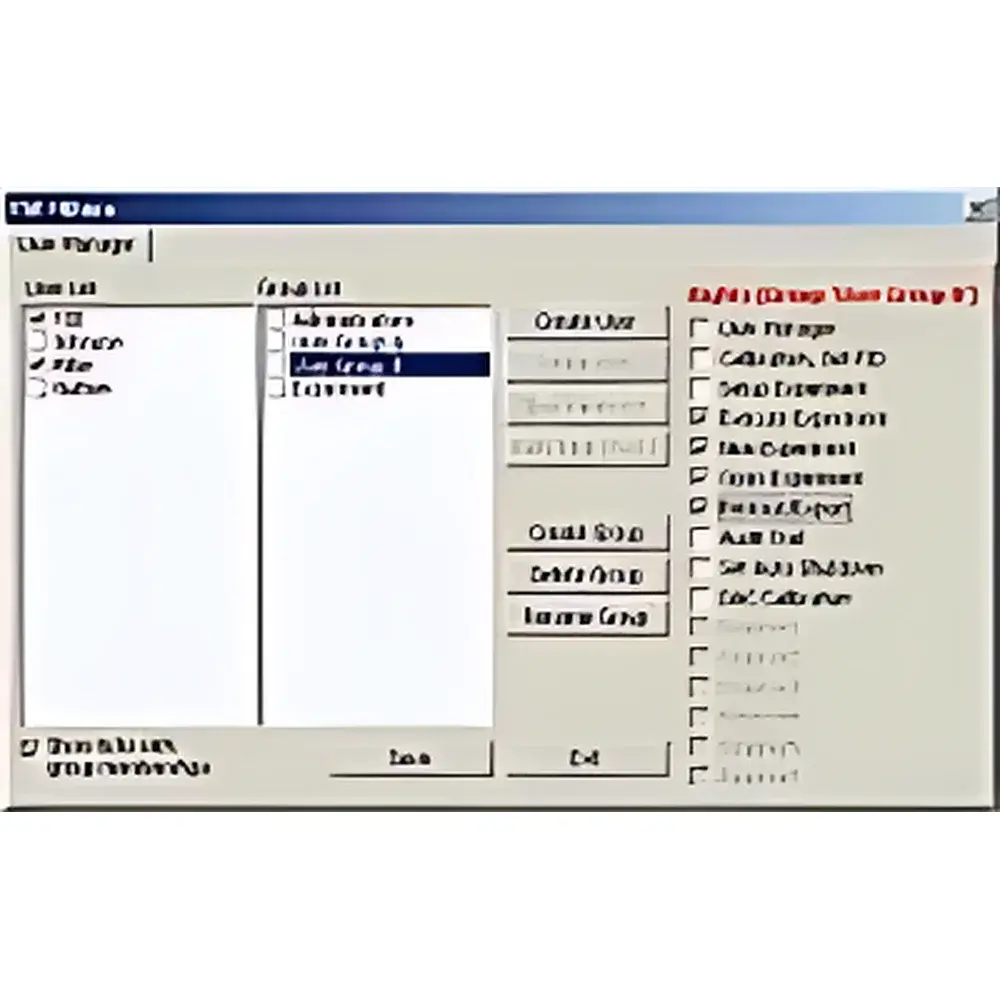
- Role-based access control: Three-tier user permissions (Operator, Supervisor, Administrator) aligned with FDA 21 CFR Part 11 requirements, including electronic signatures, password complexity enforcement, and session timeout policies.
Sample Compatibility & Compliance
The software is validated for use with standard OECD 412, OECD 413, and ASTM E1718-compliant inhalation exposure hardware platforms. It accommodates diverse test article physical states—including liquid nebulizers (e.g., jet or ultrasonic), vapor generators (e.g., thermal desorption units), and dry powder dispersion systems (e.g., rotating drum or fluidized bed)—with corresponding unit conversion libraries embedded for mass-based (µg/g), volumetric (ppm, ppb), and particle-count metrics. All exposure protocols adhere to GLP principles as defined in OECD Series on Principles of Good Laboratory Practice, supporting full traceability from raw sensor output to final exposure dose calculation. Data files are generated in vendor-neutral CSV and XML formats, with optional export to LIMS-compatible schemas (ASTM E1467-22).
Software & Data Management
Data acquisition occurs at 10 Hz minimum sampling frequency per monitored channel (flow, pressure, temperature, RH, agent concentration), stored locally in encrypted SQLite databases with SHA-256 hash integrity verification. Each experimental session generates a machine-readable metadata header containing operator ID, protocol version, chamber ID, calibration certificate IDs, and environmental baseline values. Audit trails record all parameter modifications, user logins/logouts, diagnostic runs, and manual overrides with immutable timestamps and IP address attribution. Optional integration with enterprise data management systems is supported via RESTful API endpoints adhering to HL7 FHIR R4 standards for biomedical device interoperability.
Applications
- Regulatory inhalation toxicity studies (acute, subchronic, chronic) per OECD Test Guidelines 403, 412, and 413.
- Inhalable drug formulation development, including bioavailability and pulmonary deposition modeling.
- Nanomaterial safety assessment under ISO/TR 16193 and EN 62601 frameworks.
- Environmental health research on urban air pollutants (e.g., diesel exhaust, PM₂.₅, ozone co-exposures).
- Viral aerosol transmission modeling using surrogate pathogens under BSL-2 containment conditions.
- Respiratory sensitization screening (e.g., murine models for toluene diisocyanate or house dust mite allergens).
FAQ
Is the software compatible with third-party exposure chambers?
Yes—provided the chamber manufacturer supplies documented ASCII-based serial command protocols or DLL/API interfaces meeting IEC 61508 functional safety guidelines.
Does the software support 21 CFR Part 11 compliance out of the box?
It includes all technical controls required for Part 11 compliance (electronic signatures, audit trail, system validation documentation); however, site-specific procedural SOPs and validation reports must be implemented by the end user.
Can exposure protocols be exported and shared across laboratories?
Protocols are saved as portable .expconfig files containing all parameter definitions, timing logic, and calibration references—enabling cross-site reproducibility when paired with identical hardware firmware versions.
What operating systems are supported?
Windows 10 Pro (64-bit) and Windows 11 Enterprise (64-bit), with .NET Framework 4.8 and Visual C++ Redistributable 2019 installed; virtualized deployment is permitted only on VMware vSphere 7.0+ with approved hypervisor lockdown configurations.
Is remote monitoring available during exposure runs?
Real-time dashboards can be accessed remotely via secure HTTPS tunneling; however, remote parameter modification requires dual-factor authentication and is disabled by default in GLP mode.






