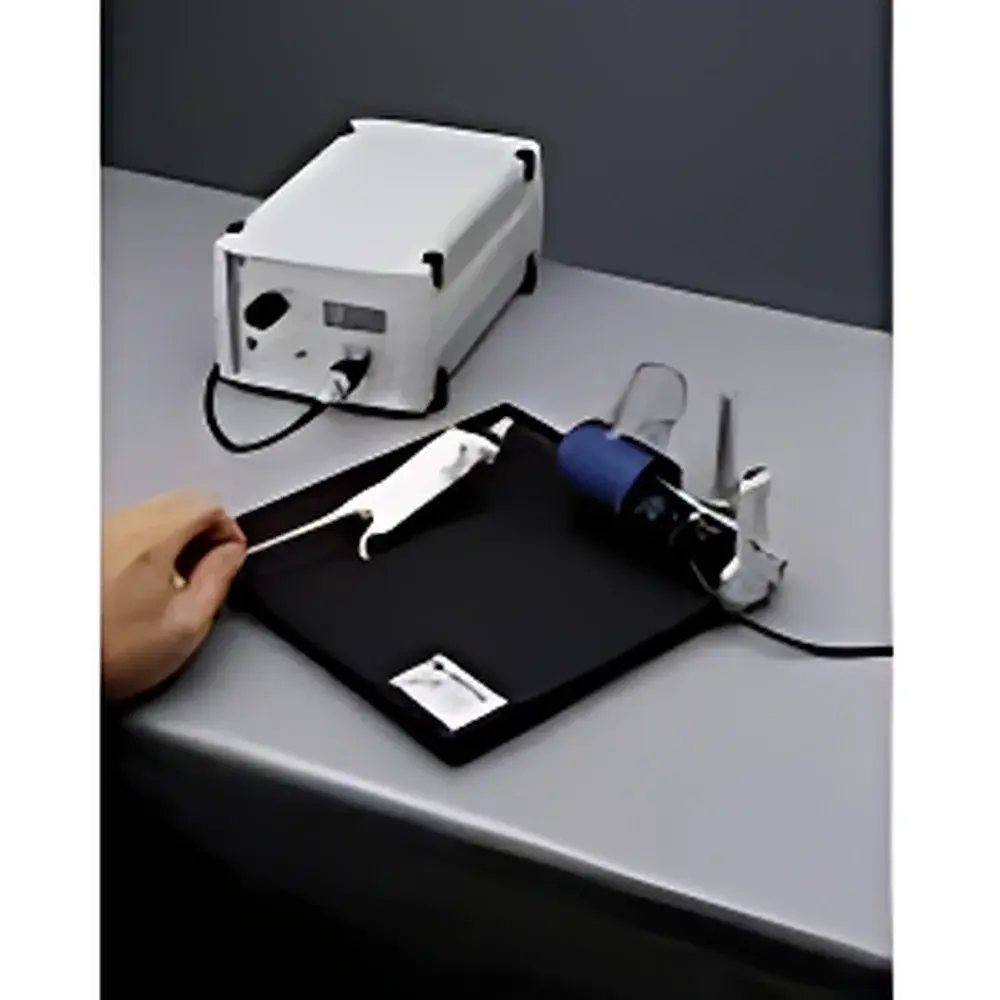
TSE Systems Grip Strength Meter for Rodents
| Origin | Germany |
|---|---|
| Supplier Type | Authorized Distributor |
| Import Status | Imported |
| Model | TSE-7300G |
| Pricing | Available Upon Request |
Overview
The TSE Systems Grip Strength Meter for Rodents is a precision-engineered biomechanical testing instrument designed to quantify forelimb or combined forelimb–hindlimb grip force in mice and rats. It operates on the principle of dynamic tensile resistance measurement: the animal is positioned over a textured Perspex base plate and instinctively grasps a standardized horizontal trapeze or bar; a calibrated, motorized or manually applied linear pull force is then applied in the caudal direction until grip failure occurs. The system captures the maximal isometric force exerted prior to release—recorded as peak grip strength in grams-force (gf) or newtons (N). This endpoint reflects integrated neuromuscular function, including motor neuron output, neuromuscular junction integrity, skeletal muscle contractility, and sensorimotor coordination. As such, it serves as a validated, non-invasive functional biomarker in preclinical pharmacology, toxicology, neurodegeneration, sarcopenia, and rehabilitation research.
Key Features
- Modular, adjustable-height force transducer with ±0.5% full-scale linearity and temperature-compensated strain-gauge technology
- Dual grip configurations: standardized stainless-steel trapeze (for forelimb-only assessment) and parallel bar (for bilateral forelimb or four-limb testing)
- Black sand-blasted Perspex base plate with anti-slip surface texture and integrated upright support structure for consistent animal positioning
- Digital peak preamplifier with LCD display, zero-reset function, and real-time analog output (0–5 V) for external data acquisition systems
- Integrated calibration port compliant with ISO 9001 traceable standards; factory-calibrated using NIST-traceable dead-weight loads
- Robust mechanical architecture designed for repeated daily use in GLP-compliant vivarium environments
Sample Compatibility & Compliance
The system supports standard laboratory rodent strains (C57BL/6, BALB/c, Sprague-Dawley, Wistar) across age ranges from 6 weeks to 24 months. Weight-compatible range: 15–500 g. All components meet EU Directive 2014/30/EU (EMC) and 2014/35/EU (LVD); CE-marked per Medical Device Regulation (MDR) Annex VIII Class I. Data acquisition workflows are compatible with 21 CFR Part 11–compliant software platforms when paired with validated third-party DAQ modules. Test protocols align with OECD Test Guideline 426 (Neurotoxicity Study) and ASTM E2879-22 (Standard Practice for Rodent Forelimb Grip Strength Measurement).
Software & Data Management
While the standalone unit features embedded peak-hold electronics and local display, integration with TSE’s optional GripMaster Pro software enables automated trial logging, cohort-based statistical analysis (ANOVA, repeated-measures), and export to CSV, Excel, or XML formats. Audit trails record operator ID, timestamp, calibration status, and raw analog signal metadata—supporting GLP/GMP audit readiness. Data files include embedded instrument firmware version, serial number, and user-defined test parameters (e.g., pull speed, dwell time, inter-trial interval), ensuring full traceability per ISO/IEC 17025 requirements.
Applications
- Preclinical evaluation of neuromuscular therapeutics (e.g., myostatin inhibitors, SMN-enhancing compounds)
- Toxicity screening for peripheral neuropathy or myopathy induced by chemotherapeutics or environmental toxins
- Longitudinal monitoring of disease progression in ALS, SMA, Duchenne muscular dystrophy, and Parkinson’s models
- Assessment of age-related sarcopenia and interventions targeting mitochondrial biogenesis or proteostasis
- Functional validation of spinal cord injury recovery, peripheral nerve regeneration, or tendon repair models
- Quality control of breeding colonies where grip strength serves as an early phenotypic indicator of neurological deficits
FAQ
What species and age groups are supported?
Mice (15–40 g) and rats (100–500 g), typically aged 6–24 weeks for acute studies and up to 24 months for aging models. Juvenile animals require protocol adaptation to minimize stress-induced variability.
Is calibration required before each experiment?
Daily zero-check is recommended; full recalibration is required every 90 days or after mechanical impact, per ISO/IEC 17025 Clause 6.5.2. Calibration certificates are supplied with each unit.
Can grip strength be measured repeatedly in the same animal without fatigue bias?
Yes—standard protocols specify ≥5-minute rest between trials and a maximum of 3–5 valid trials per session to maintain physiological relevance and avoid central fatigue confounders.
Does the system comply with FDA or EMA regulatory submission requirements?
Raw data outputs and audit logs meet ALCOA+ principles (Attributable, Legible, Contemporaneous, Original, Accurate, Complete, Consistent, Enduring, Available); full validation packages available upon request for IND/NDA-enabling studies.
How is grip failure objectively defined?
Grip failure is detected as the instantaneous drop in analog force signal exceeding 20% of peak amplitude within 20 ms—automatically captured and timestamped by the peak preamplifier’s hardware threshold circuitry.