
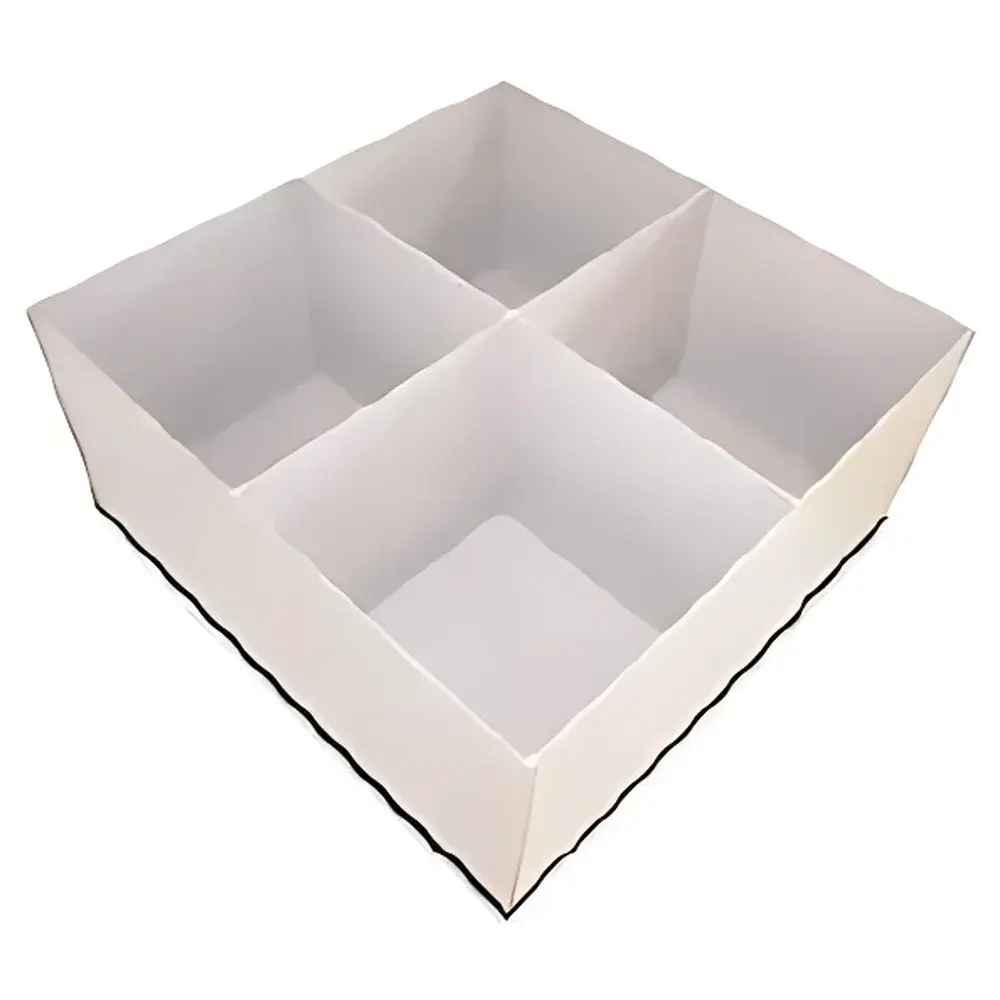
Harvard Apparatus LE830 Open Field Test Chamber
| Brand | Harvard Apparatus |
|---|---|
| Origin | USA |
| Manufacturer Type | Authorized Distributor |
| Import Status | Imported |
| Model | LE830 |
| Price Range | USD 1,400 – 7,000 (FOB) |
| Chamber Dimensions (H × W × D) | 16 × 25 × 18 cm |
| Construction Material | Optical-grade acrylic panels with stainless steel and white/transparent polymer inserts |
| Electric Shock Stimulus | 0–3 mA (square-wave, constant-current), programmable duration 0–10 s, foot-switch actuated |
| Required Ancillary Systems | HD video acquisition system (e.g., 60 fps USB3 camera with IR illumination), SMART 3.0 Behavioral Tracking Software (v3.0 or later) |
Overview
The Harvard Apparatus LE830 Open Field Test Chamber is a rigorously engineered platform for quantifying spontaneous locomotor activity, exploratory behavior, anxiety-related responses, and habituation kinetics in rodent models. Designed in accordance with standardized ethological paradigms—particularly those defined by the NIH Office of Laboratory Animal Welfare (OLAW) and the European Directive 2010/63/EU—the LE830 implements the classical open field assay based on thigmotaxis measurement, center-periphery zone discrimination, and velocity-based trajectory analysis. Its modular acrylic construction ensures optical clarity (>92% transmittance at 550 nm), electromagnetic neutrality, and chemical resistance to common disinfectants (e.g., 70% ethanol, 1% sodium hypochlorite), enabling reliable integration into GLP-compliant behavioral phenotyping workflows. The chamber operates as a passive arena: no embedded sensors or actuators are integrated into the base; instead, it functions exclusively as a calibrated physical environment synchronized with external high-resolution video capture and computational tracking.
Key Features
- Modular, tool-free assembly using precision-machined acrylic panels and stainless-steel alignment clamps—ensures repeatable dimensional fidelity across multiple units and longitudinal studies.
- Non-porous, static-dissipative surface finish minimizes olfactory cue retention and electrostatic interference during infrared (IR)-assisted video recording.
- Dual-material floor configuration: interchangeable inserts (white polymer for contrast-based tracking; transparent acrylic for backlighting setups) support both visible-light and IR-illuminated acquisition modalities.
- Integrated foot-switch interface for operator-controlled aversive stimulation—enabling ethologically relevant fear-conditioning extensions (e.g., shock-paired open field variants per protocols adapted from Blanchard & Blanchard, 1988).
- CE-marked power supply and isolated stimulus circuitry compliant with IEC 61000-4-5 surge immunity and IEC 60601-1 leakage current limits (<10 µA).
- Designed for compatibility with third-party calibration grids (NIST-traceable 2 cm grid overlays) to support pixel-to-mm spatial calibration validation.
Sample Compatibility & Compliance
The LE830 accommodates adult mice (C57BL/6, BALB/c, CD-1) and juvenile rats (Sprague-Dawley, Wistar; up to 300 g). Its 25 × 18 cm floor area satisfies minimum enclosure dimensions recommended by the Guide for the Care and Use of Laboratory Animals (NRC, 2011) for unrestrained ambulation assays. All materials meet USP Class VI biocompatibility requirements and are autoclavable (121°C, 15 psi, 20 min) without warping or haze formation. The system conforms to ISO 17025 documentation standards when deployed within accredited behavioral testing laboratories; raw video files and SMART 3.0 export logs (CSV, HDF5) retain full metadata including timestamp, session ID, operator initials, and hardware configuration checksums—supporting audit readiness under FDA 21 CFR Part 11 and EU Annex 11 requirements.
Software & Data Management
The LE830 requires synchronization with SMART 3.0 Behavioral Tracking Software (v3.0.12+), which provides automated detection of centroid position, nose-point orientation, rearing events, freezing bouts (>1.5 s immobility), and zone-transition matrices. SMART 3.0 supports batch processing of ≥500 video files via CLI scripting, exports FAERS-compatible event logs, and generates publication-ready plots (velocity heatmaps, thigmotaxis ratio time-series, path tortuosity indices). Data output adheres to MIABIS 2.0 metadata schema, and encrypted SQLite databases include built-in audit trails recording all parameter modifications, user logins, and software version rollbacks.
Applications
- Baseline locomotor profiling in transgenic knockouts (e.g., dopamine transporter KO mice).
- Anxiolytic/anxiogenic drug screening (benzodiazepine dose-response, CRF receptor antagonists).
- Neuroinflammation-induced behavioral deficits (LPS challenge models).
- Habituation memory assessment across repeated exposures (inter-trial interval analysis).
- Validation of optogenetic/chemogenetic circuit manipulations (e.g., vHPC→mPFC inhibition effects on center avoidance).
- Multi-center preclinical trial harmonization (leveraging SMART 3.0’s cross-platform calibration module).
FAQ
Is the LE830 compatible with automated home-cage monitoring systems?
No—the LE830 is a dedicated acute test arena and lacks integrated telemetry or cage-mounting interfaces. It is intended for discrete, time-limited sessions (typically 5–10 min) under controlled lighting and acoustic conditions.
Can SMART 3.0 analyze data from non-LE830 arenas?
Yes—SMART 3.0 accepts any calibrated rectangular arena; users define custom dimensions and zone geometries during setup. However, only LE830-configured templates guarantee out-of-the-box compliance with NIH BTRR standard operating procedures.
Does the electric shock module meet animal welfare guidelines for aversive stimuli?
Yes—stimulus parameters (0–3 mA, square-wave, <10 ms rise time) align with AVMA Guidelines on Euthanasia (2020) Appendix A thresholds for transient nociceptive induction, and require IACUC-approved protocol justification prior to use.



