Panlab LE7900 Incapacitance Tester for Rodent and Rabbit Nociception Assessment
| Brand | Harvard Apparatus |
|---|---|
| Origin | USA |
| Model | LE7900 |
| Touchscreen Resolution | 0.05 g |
| Averaging Time | 1–300 s |
| Max Load Capacity | 2000 g |
| Controller Dimensions | 17 × 25 × 10 cm |
| Weight Units | g / N / lb |
| Data Storage | 200 entries |
| Animal Compatibility | Mouse, Rat, Rabbit (with optional kit) |
| Software | SeDaCom (Excel export supported) |
Overview
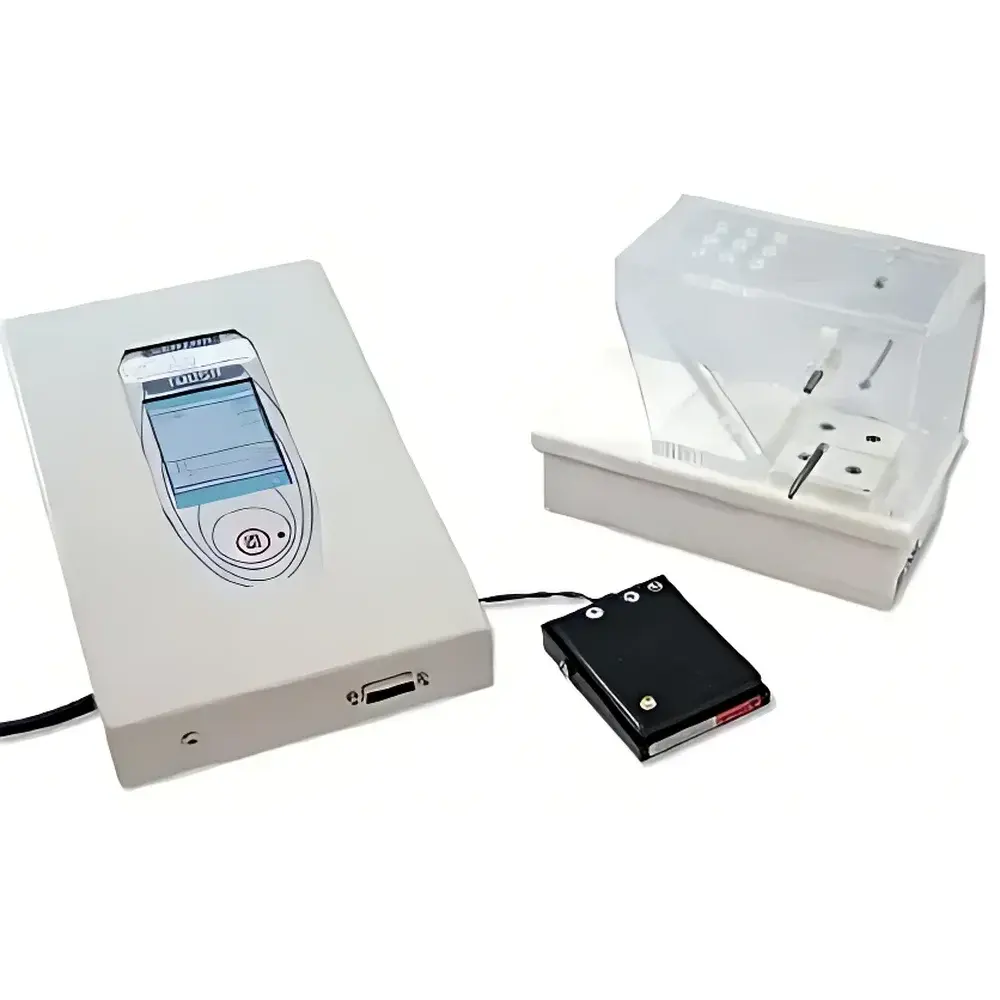
The Panlab LE7900 Incapacitance Tester is a precision-engineered, non-invasive instrument designed for quantitative assessment of spontaneous weight-bearing asymmetry in rodents and rabbits—serving as an objective behavioral correlate of unilateral inflammatory or neuropathic pain. Unlike mechanical allodynia/hyperalgesia assays (e.g., Randall–Selitto test), which apply external noxious pressure to elicit reflexive withdrawal, the LE7900 operates on the principle of *voluntary postural redistribution*: animals naturally shift weight away from an affected hind limb in response to ongoing pain, without external provocation. This ethically aligned methodology aligns with the 3Rs (Replacement, Reduction, Refinement) framework and supports compliance with institutional animal care and use committee (IACUC) protocols and EU Directive 2010/63/EU. The system employs dual high-resolution load cells (0.05 g resolution) mounted beneath a custom-designed enclosure, enabling real-time, simultaneous measurement of vertical force distribution across both hind paws during quiet standing.
Key Features
- Dual-load-cell architecture with independent calibration and drift-compensated signal processing for high reproducibility across repeated trials.
- Intuitive 7-inch capacitive touchscreen interface with preconfigured acquisition protocols—including user-defined averaging windows (1–300 s) to accommodate variable animal stability and minimize motion artifact.
- Modular animal housing system: standardized enclosures optimized for mouse (20–35 g) and rat (150–300 g) body mass ranges; optional rabbit adaptation kit (LE7900-RB) includes extended platform geometry and reinforced structural support.
- Integrated footswitch control for hands-free initiation and termination of data acquisition—critical for minimizing experimenter-induced stress during behavioral testing.
- Onboard memory stores up to 200 complete trial records (timestamped, per-animal, per-limb force values), supporting offline review prior to export.
- Unit flexibility: real-time display and export in grams (g), newtons (N), or pounds (lb), facilitating cross-study comparability and integration with biomechanical modeling workflows.
Sample Compatibility & Compliance
The LE7900 is validated for use with Sprague-Dawley and Wistar rats, C57BL/6 and BALB/c mice, and New Zealand White rabbits (with RB kit). Enclosure design ensures consistent hindlimb positioning and minimizes forelimb interference through tapered front-wall geometry and adjustable rear barrier height. All hardware components comply with IEC 61000-4 electromagnetic compatibility standards. The device supports GLP-aligned data integrity: SeDaCom software generates audit-trail-enabled files compliant with FDA 21 CFR Part 11 requirements when deployed on validated Windows systems (Windows 10/11 LTSB). Protocol documentation, calibration logs, and raw trial metadata are retained within each exported Excel dataset (.xlsx), ensuring traceability for regulatory submissions or peer-reviewed publication.
Software & Data Management
Data acquisition and analysis are managed via SeDaCom v3.x, a dedicated Windows-based application developed by Panlab (Harvard Bioscience). SeDaCom provides synchronized visualization of left/right force traces, automatic detection of stable standing epochs, and calculation of key metrics—including % weight-bearing asymmetry [(R−L)/(R+L)×100], absolute force differential (ΔF), and inter-trial coefficient of variation (CV%). Batch analysis mode enables statistical aggregation across cohorts (n ≥ 3), computing group means, standard deviations, and confidence intervals directly within the GUI. Export functions generate fully formatted Excel workbooks containing raw time-series data, summary statistics, and embedded metadata (animal ID, date/time, operator, protocol name). No cloud dependency: all processing occurs locally, preserving data sovereignty and meeting institutional IT security policies.
Applications
- Longitudinal evaluation of anti-nociceptive drug efficacy in chronic constriction injury (CCI), spared nerve injury (SNI), and complete Freund’s adjuvant (CFA)-induced inflammation models.
- Phenotypic characterization of genetically modified rodent lines exhibiting altered pain sensitivity or motor coordination deficits.
- Validation of novel analgesic delivery systems (e.g., sustained-release hydrogels, nanoparticle carriers) where traditional reflex-based endpoints may lack sensitivity.
- Preclinical safety assessment of CNS-active compounds where sedation or motor impairment could confound reflex-based pain scoring.
- Cross-species translational studies incorporating rabbit models of osteoarthritic pain, leveraging the LE7900-RB configuration for comparative biomechanical profiling.
FAQ
Is the LE7900 suitable for longitudinal studies requiring repeated measurements over days or weeks?
Yes—the non-invasive nature and absence of forced stimulation enable daily testing without habituation bias or cumulative stress effects. Calibration verification is recommended before each session using certified test weights.
Can the system distinguish between motor deficit and pain-related weight-bearing asymmetry?
Not independently; however, concurrent use with open-field locomotion or rotarod performance data allows differential interpretation. Asymmetry persisting in absence of gross motor impairment strongly indicates nociceptive origin.
Does SeDaCom support automated statistical testing (e.g., repeated-measures ANOVA)?
No—SeDaCom outputs structured Excel files compatible with GraphPad Prism, SPSS, or R. Statistical inference must be performed externally using domain-appropriate models.
What maintenance is required for long-term accuracy?
Annual recalibration by an authorized service provider is recommended. Daily zeroing and weekly load-cell verification with 500 g and 1500 g reference masses ensure measurement fidelity.
Is the LE7900 compatible with third-party video-tracking systems for multimodal behavioral phenotyping?
Yes—TTL synchronization output (BNC port) enables precise temporal alignment with high-speed videography (e.g., DeepLabCut, EthoVision XT) for integrated gait and weight-bearing analysis.