
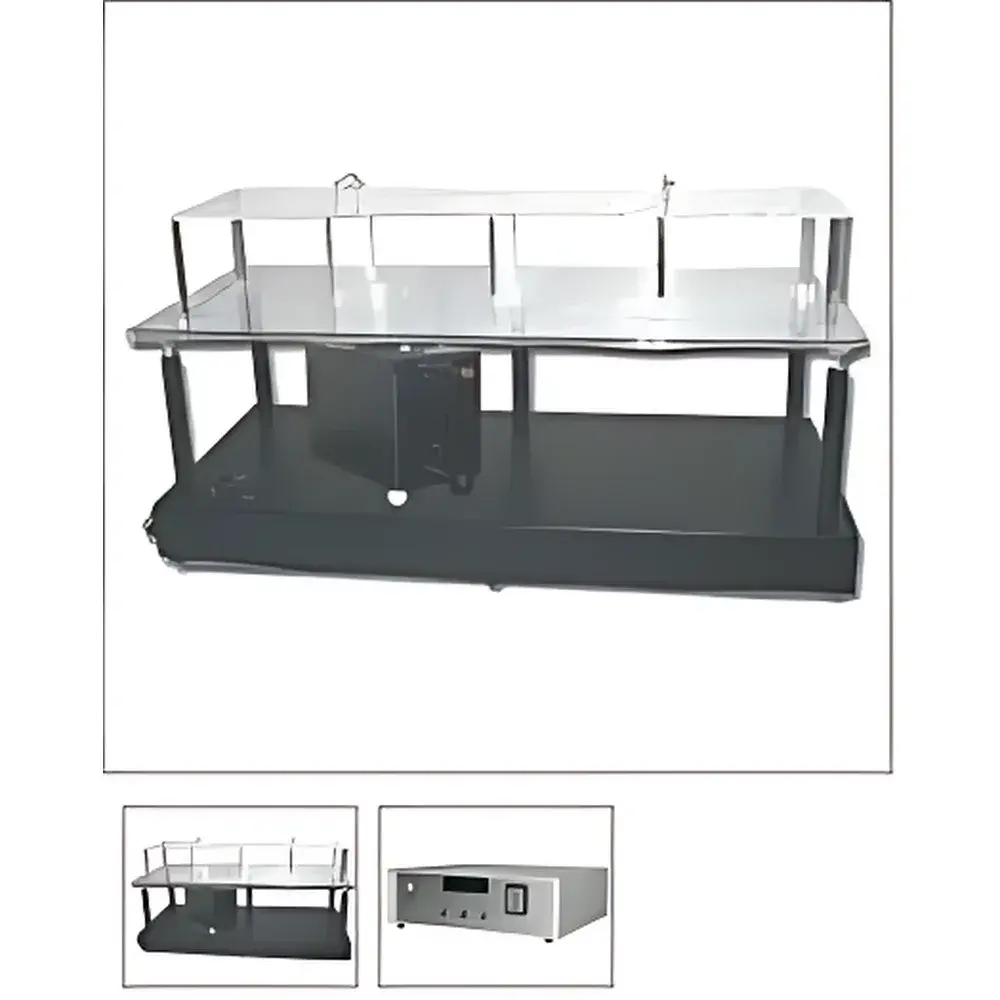
Ugo Basile Model 390/390G Plantar Analgesia Meter (Hargreaves Test Apparatus)
| Brand | Ugo Basile |
|---|---|
| Country of Origin | Italy |
| Model | 390/390G |
| Heating Range | 0–250 °C (±1% accuracy) |
| Focused Beam Size | 4 × 6 mm |
| Paw Withdrawal Latency Resolution | 0.01 s (manual stop) |
| Input Interface | Numeric keypad, push-button, and footswitch |
| Dimensions | 45.7 × 45.7 cm (18″ × 18″) |
| Data Output | Printer + RS-232 to PC |
Overview
The Ugo Basile Model 390/390G Plantar Analgesia Meter is a precision-engineered instrument designed for quantitative assessment of thermal nociception in unrestrained rodents using the Hargreaves method. It applies a focused radiant heat stimulus to the plantar surface of the hind paw while the animal remains freely mobile on a transparent glass surface—eliminating restraint-induced stress, adrenal activation, and associated confounding effects on pain threshold measurement. The device operates on the principle of radiant heat-induced paw withdrawal latency (PWL), a validated, non-invasive endpoint widely accepted in preclinical analgesic pharmacology and neuropathic pain modeling. Unlike manual or force-based assays (e.g., Randall-Selitto), the 390/390G delivers consistent, spatially defined thermal energy without physical contact, enabling high inter- and intra-subject reproducibility across longitudinal studies.
Key Features
- Unrestrained testing platform: Animals move freely during stimulation, minimizing handling artifacts and baseline adrenocortical interference.
- Dual-paw capability: Supports bilateral assessment—left and right paws serve as internal controls, enhancing statistical power and reducing inter-animal variability.
- Precise thermal control: Adjustable heating range from 0 to 250 °C with ±1% accuracy; calibrated infrared source produces a stable, collimated beam (4 × 6 mm footprint) for uniform stimulus delivery.
- High-resolution timing: Paw withdrawal latency measured to 0.01-second resolution via manual stop (button, keypad, or footswitch), supporting rigorous behavioral endpoint definition.
- Ergonomic observation system: Integrated adjustable rear-view mirror enables real-time visualization of paw positioning without disturbing animal posture or test environment.
- Configurable pre-warming stage: Optional heated glass plate (30–40 °C) standardizes baseline paw temperature—critical for reducing inter-session latency variance in chronic models.
- Full parameter programmability: Numeric keypad allows entry of subject ID, max temperature, cutoff time, date/time stamp, and auto-shutoff duration (preventing tissue damage).
- Integrated data handling: Results exportable via built-in thermal printer or RS-232 serial interface for integration into LIMS or custom analysis pipelines.
Sample Compatibility & Compliance
The 390/390G is validated for use with Sprague-Dawley and Wistar rats (up to 6 per session) and C57BL/6 or CD-1 mice (up to 12 per session). Its open-field design accommodates natural exploratory behavior and eliminates acclimation bias common in forced-position assays. The system complies with internationally recognized guidelines for humane rodent nociception testing, including recommendations outlined in the NIH Guide for the Care and Use of Laboratory Animals and the European Directive 2010/63/EU. All thermal cutoff parameters are configurable to meet institutional Animal Care and Use Committee (IACUC) or Ethics Committee requirements. The device supports GLP-aligned documentation practices through timestamped, subject-identified data logs and optional audit-trail-enabled software extensions.
Software & Data Management
While the base 390/390G operates as a standalone unit with embedded firmware, its RS-232 output enables bidirectional communication with third-party acquisition platforms (e.g., MATLAB, Python-based behavioral suites, or commercial LIMS). Raw latency values, subject IDs, timestamps, and cutoff events are transmitted in ASCII format for direct ingestion into statistical environments (R, GraphPad Prism, SAS). When paired with Ugo Basile’s optional Bioseb Data Acquisition Suite, users gain access to automated trial sequencing, randomized paw selection, real-time latency histograms, and export-ready CSV/Excel reports compliant with FDA 21 CFR Part 11 requirements—including electronic signatures, user authentication, and immutable audit trails.
Applications
This instrument is routinely deployed in academic and industrial neuroscience, pharmacology, and toxicology laboratories for: evaluating opioid and non-opioid analgesic efficacy; characterizing hyperalgesia and allodynia in diabetic, chemotherapeutic, or nerve injury models; screening novel TRPV1 modulators; assessing central sensitization dynamics; and validating genetic knockouts or RNAi-mediated targets in pain pathways. Its ability to support repeated measures within the same animal—without inducing thermal sensitization—makes it especially suitable for dose-titration studies, circadian pain rhythm analysis, and multi-day therapeutic intervention protocols.
FAQ
Is the 390/390G compatible with both rats and mice?
Yes—the platform accommodates up to six adult rats or twelve adult mice per session, with adjustable beam focus and cutoff thresholds optimized for species-specific thermal sensitivity.
How does the device prevent tissue damage during prolonged exposure?
A user-defined automatic cutoff timer terminates heating after a preset duration (e.g., 20–30 s), independent of withdrawal response, ensuring strict adherence to ethical thermal safety limits.
Can latency data be synchronized with video recording systems?
Yes—external TTL trigger outputs (optional accessory) allow frame-accurate alignment of withdrawal onset with high-speed video capture for kinematic validation of response quality.
What calibration standards are recommended for routine maintenance?
Ugo Basile provides NIST-traceable thermal calibration kits; annual verification against reference blackbody sources is advised per ISO/IEC 17025 laboratory accreditation requirements.
Does the system support Good Laboratory Practice (GLP) documentation workflows?
When used with certified software modules, the 390/390G meets ALAC, OECD, and FDA GLP criteria for raw data integrity, operator traceability, and electronic record retention.





