
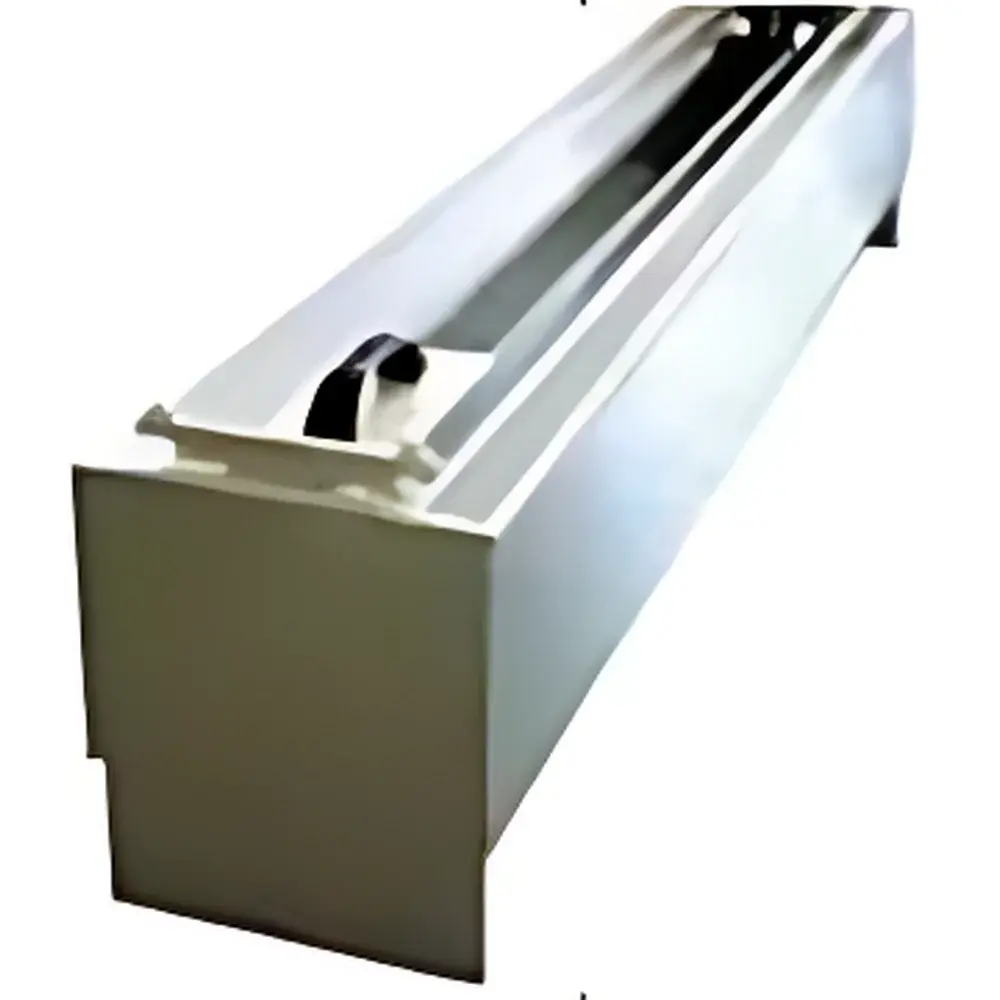
Bioseb BIO-FMA Automated Misstep Analyzer
| Brand | Harvard Apparatus |
|---|---|
| Origin | USA |
| Manufacturer Type | Authorized Distributor |
| Origin Category | Imported |
| Model | BIO-FMA |
| Price Range | USD 1,400 – 7,000 |
| Data Acquisition Rate | 10 ms |
| Sensor Count | 154 (dual infrared arrays, 77 per side) |
| Dimensions (L×W×H) | 124 × 28 × 20 cm |
| Runway Width | 80 mm (rat), 50 mm (mouse), interchangeable |
| Bar Spacing | Adjustable from 25 px to 75 px (≈0.6–1.9 mm, software-calibrated pixel-to-mm mapping) |
| Bar Height | Adjustable |
| Start Box Illumination | Cold-white LED flash, software-controllable intensity and timing |
| Interface | USB 2.0 |
| Power Supply | Standard AC adapter (100–240 V, 50/60 Hz) |
Overview
The Bioseb BIO-FMA Automated Misstep Analyzer is a purpose-built, high-temporal-resolution behavioral phenotyping instrument engineered for objective quantification of locomotor incoordination in rodents. It operates on the principle of real-time, contactless detection of paw placement errors during voluntary ambulation across a calibrated, elevated ladder runway. Unlike conventional gait analysis systems that rely on video-based motion capture or force-sensitive platforms, the BIO-FMA employs dual synchronized infrared (IR) sensor arrays—154 discrete photointerrupters arranged along both lateral edges of the runway—to detect precise spatial and temporal deviations in forelimb and hindlimb placement. Each misstep—defined as a failure to fully contact a rung—is registered with 10-ms temporal resolution, enabling robust discrimination between transient slips, partial supports, and full misses. The system leverages innate rodent aversion to bright light (start zone illumination) and preference for dark, enclosed spaces (end-zone shelter) to elicit consistent, motivated forward locomotion without food/water restriction or electric shock reinforcement—ensuring ethologically valid behavior and minimizing stress-induced confounds.
Key Features
- Automated, stimulus-driven assay protocol: Cold-white LED start-box illumination and dark goal chamber drive reliable, high-motivation traversal without operant conditioning.
- Modular runway design: Interchangeable rat (80 mm) and mouse (50 mm) track inserts ensure species-specific biomechanical relevance and experimental flexibility.
- Adjustable challenge parameters: Rung spacing (software-calibrated pixel-adjustable from 25 px to 75 px) and vertical rung height are independently configurable to titrate task difficulty across disease models or longitudinal studies.
- Independent limb discrimination: Dual IR arrays enable unambiguous classification of forepaw vs. hindpaw missteps, supporting differential analysis of corticospinal vs. cerebellar motor deficits.
- Integrated error taxonomy: System automatically computes misstep count per limb, tail-contact events (indicative of balance loss or compensatory dragging), mean traversal time, and normalized error rate (missteps per meter).
- USB 2.0 interface with deterministic latency: Ensures time-synchronized data streaming to host PC; compatible with Windows-based acquisition and analysis software compliant with FDA 21 CFR Part 11 audit trail requirements.
Sample Compatibility & Compliance
The BIO-FMA is validated for use with C57BL/6, BALB/c, CD-1, and Sprague-Dawley rodents (male/female, 6–24 weeks). Its non-invasive, low-stress paradigm meets the principles of the 3Rs (Replacement, Reduction, Refinement) and aligns with AAALAC International accreditation standards for humane behavioral testing. Data output formats (CSV, HDF5) support traceability and interoperability with institutional LIMS and electronic lab notebooks. The device conforms to IEC 61000-6-3 (EMC emissions) and IEC 61000-6-2 (immunity), and its optical components comply with IEC 62471 (photobiological safety) for Class 1 LED sources.
Software & Data Management
The proprietary Bioseb AcqView™ software provides real-time visualization of sensor activation maps, synchronized event logging, and automated report generation. All raw timestamps, limb assignments, and error classifications are stored with immutable metadata (operator ID, session timestamp, calibration profile, animal ID). Audit trails record user actions—including parameter edits, data exports, and report approvals—in accordance with GLP and GCP documentation requirements. Export modules support direct integration into MATLAB, Python (via pandas), and GraphPad Prism for advanced statistical modeling (e.g., ANOVA with repeated measures, ROC curve analysis for diagnostic sensitivity).
Applications
The BIO-FMA is routinely deployed in preclinical neuroscience research to quantify motor deficits in genetically modified models (e.g., SCA1, Lurcher, MPTP-treated mice) and acquired pathologies including traumatic brain injury (TBI), spinal cord injury (SCI), alcohol-induced cerebellar degeneration, and Parkinsonian dopaminergic depletion. Its high test-retest reliability (ICC > 0.92 in published validation studies) makes it suitable for pharmacodynamic assessment of neuroprotective compounds and dose-response characterization in toxicology screening. The system is cited in peer-reviewed literature adhering to ARRIVE 2.0 guidelines and is referenced in NIH-funded grants investigating ataxia mechanisms and rehabilitation biomarkers.
FAQ
How does the BIO-FMA differentiate forepaw from hindpaw missteps?
It uses spatially offset dual IR arrays: forepaw events trigger sensors located in the anterior two-thirds of the runway, while hindpaw events activate posterior sensors—validated via high-speed video correlation.
Can the system be used for longitudinal studies across multiple time points?
Yes—the adjustable rung spacing and standardized illumination protocol minimize learning effects; intra-animal CV% for misstep rate is <8% across 5 weekly sessions.
Is calibration required before each experiment?
No—factory-calibrated sensor thresholds and automatic baseline drift compensation eliminate daily recalibration; only periodic verification using the included alignment jig is recommended every 6 months.
Does the software support multi-user role-based access control?
Yes—AcqView™ implements Windows Active Directory integration with configurable permissions for data acquisition, analysis, export, and audit log review.
What regulatory documentation is provided for GLP-compliant labs?
A full IQ/OQ/PQ protocol package, software validation summary (including 21 CFR Part 11 compliance statement), and sensor linearity certification are supplied with each unit.



