
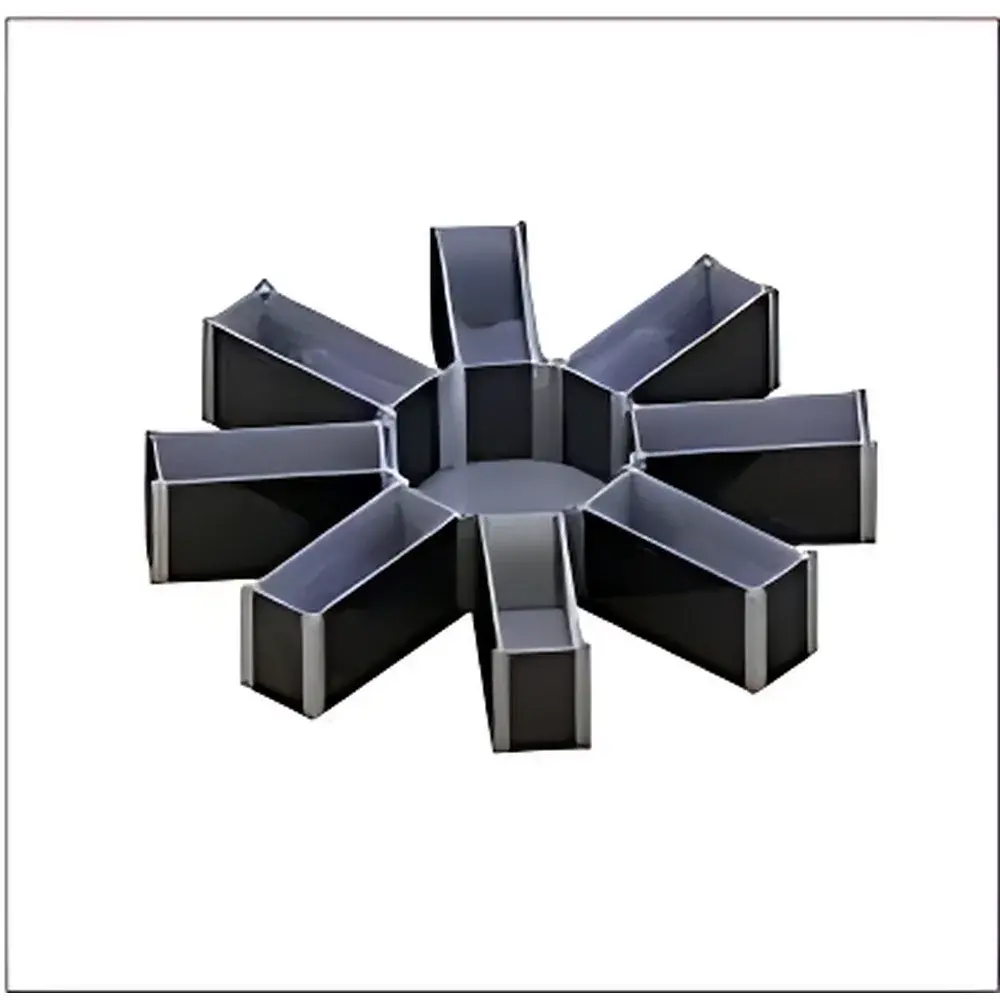
Radial Arm Maze 8-Arm Maze System for Rodent Behavioral Neuroscience
| Origin | USA |
|---|---|
| Manufacturer Type | Authorized Distributor |
| Origin Category | Imported |
| Model | 8-Arm Maze |
| Pricing | Available Upon Request |
Overview
The Radial Arm Maze 8-Arm Maze System is a rigorously engineered behavioral testing platform designed for preclinical assessment of spatial learning, working memory, and reference memory in rodents. Based on the classical radial arm maze paradigm first developed by Olton and Samuelson (1976), this system implements a symmetrical eight-arm configuration radiating from a central arena—enabling precise quantification of hippocampal- and prefrontal cortex-dependent cognitive functions. The apparatus operates on the principle of spontaneous foraging behavior: animals are motivated to retrieve food rewards (e.g., 45 mg dustless precision pellets for rats or 20 mg for mice) placed at the distal end of each arm, while avoiding revisits to previously baited arms—a behavioral metric directly correlated with intact short-term (working) and long-term (reference) memory encoding and retrieval. Unlike passive observation setups, this system integrates real-time sensor-based event detection, automated gate control, and synchronized video acquisition to eliminate observer bias and ensure high inter-laboratory reproducibility.
Key Features
- Modular, reconfigurable design supporting Radial Arm Maze, T-Maze, and Y-Maze protocols—each validated for species-specific scaling (rat and mouse)
- Eight independently actuated low-noise servo-driven gates mounted beneath the maze floor—eliminating occlusion of overhead camera fields of view and preventing limb entrapment
- Dual infrared (I/R) beam sensors at each arm entrance for unambiguous detection of entry vs. exit directionality—critical for distinguishing exploratory intent from accidental transit
- Arm-end reward delivery modules with integrated head-detection sensors and configurable dispensers (pellet or liquid)
- High-contrast arm surface options—including optically optimized blue acrylic—to enhance automated tracking accuracy under standard backlighting or Noldus EthoVision-compatible illumination
- Customizable hub geometry for Y-Maze configurations—designed to eliminate spatial confounds inherent in octagonal hub adaptations used in legacy systems
- Fully programmable timing architecture: adjustable habituation duration, trial timeout, inter-trial interval, and auto-termination upon full arm exploration
Sample Compatibility & Compliance
The system is validated for use with Sprague-Dawley and Wistar rats (200–500 g), C57BL/6 and BALB/c mice (20–35 g), and other common laboratory rodent strains. All structural components comply with ASTM F2100-22 standards for laboratory equipment durability and chemical resistance. Sensor firmware and data acquisition logic adhere to GLP-compliant audit trail requirements, including timestamped event logging, user authentication, and immutable raw-data export (CSV, HDF5). Optional integration with MED-PC IV software supports 21 CFR Part 11 compliance when configured with electronic signatures and role-based access controls.
Software & Data Management
The included MazeControl Suite provides native support for both single- and multi-station operation—MED-SYST-8 manages up to four concurrent mazes; MED-SYST-16 scales to eight. Software features include: real-time event visualization with color-coded arm occupancy heatmaps; automated calculation of primary endpoints (arm entry count, latency to first entry, working memory errors, reference memory errors, path efficiency ratio); batch analysis across cohorts; and export-ready reporting templates aligned with NIH Behavioral Core Facility standards. A comprehensive programmer’s manual and open API documentation enable custom protocol development in Python or MATLAB. All raw sensor timestamps, gate states, and reward delivery events are stored with microsecond resolution for post-hoc synchronization with electrophysiology or calcium imaging datasets.
Applications
- Evaluation of pharmacological agents targeting cholinergic, glutamatergic, or dopaminergic pathways in models of Alzheimer’s disease, schizophrenia, or ADHD
- Longitudinal assessment of cognitive deficits following traumatic brain injury, stroke, or neuroinflammatory challenge
- Validation of genetic knockouts or transgenic lines exhibiting hippocampal synaptic dysfunction
- Testing neural circuit interventions—including optogenetic inhibition or deep brain stimulation—in spatial memory circuits
- Standardized behavioral phenotyping for pre-IND toxicology studies requiring ICH S5(R3)-aligned cognitive endpoints
FAQ
Can this system be used for both rats and mice without hardware modification?
Yes—the modular arm length, gate clearance height, and pellet dispenser calibration are factory-configured for dual-species operation. Mouse-specific parameters (e.g., 20 mg pellet size, reduced illumination intensity) are selected via software profile.
Is video tracking software included, or must it be purchased separately?
The system includes hardware-level synchronization triggers for third-party tracking platforms (Noldus EthoVision XT, CleverSys TopScan, ViewPoint Behavior). No proprietary video analysis engine is bundled—ensuring compatibility with institutionally licensed tools and avoiding vendor lock-in.
What level of technical support is provided for protocol customization?
Dedicated application scientists provide remote protocol consultation, MED-PC IV script review, and validation of custom endpoint definitions against published literature benchmarks.
Does the system meet ISO 17025 requirements for accredited behavioral core facilities?
While ISO 17025 accreditation applies to testing laboratories—not equipment—the system’s traceable sensor calibration certificates, documented uncertainty budgets, and audit-ready data logs fully support facility-level accreditation efforts.



