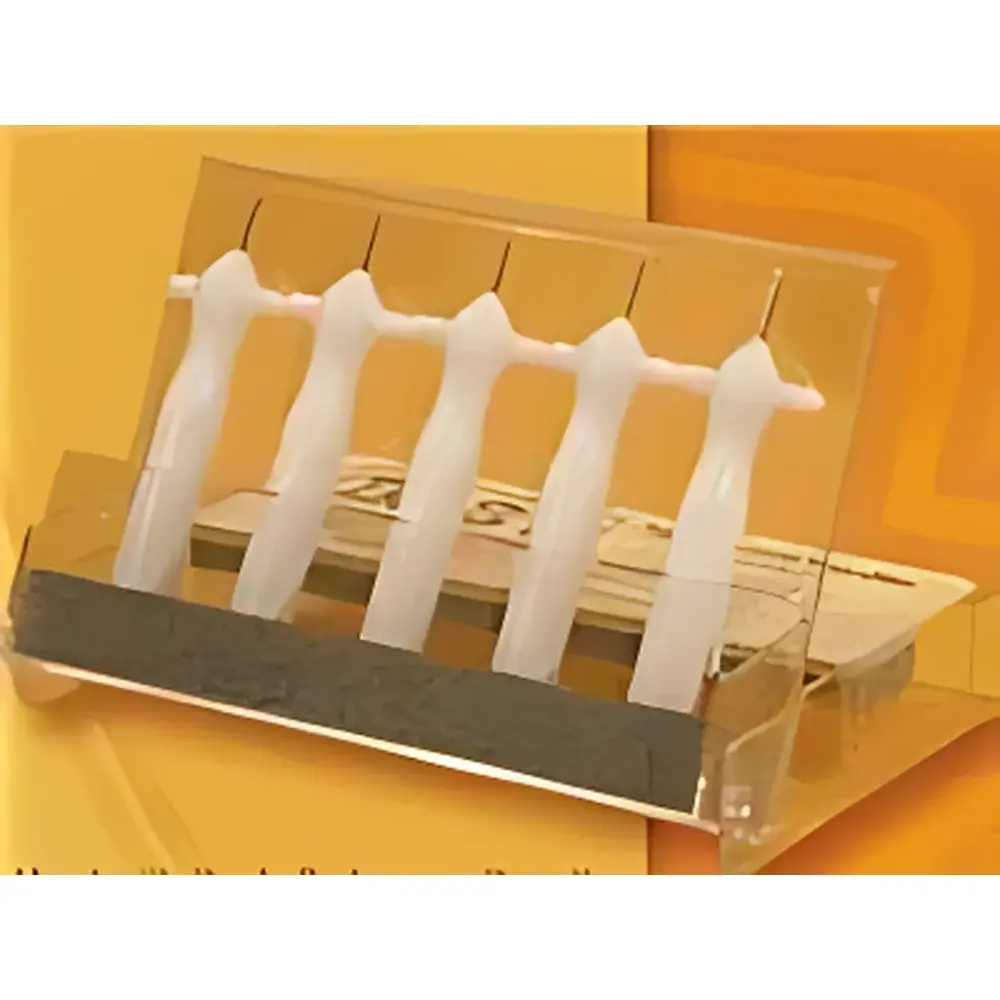
BLS DN-10 Embryo Aggregation Needle
| Brand | BLS |
|---|---|
| Origin | Europe |
| Manufacturer Type | OEM Equipment Manufacturer |
| Country of Origin | Imported (EU) |
| Model | DN-10 |
| Pricing | Available Upon Request |
Overview
The BLS DN-10 Embryo Aggregation Needle is a precision-engineered microtool designed for controlled physical aggregation of pre-implantation embryos, embryonic stem (ES) cell colonies, and early-stage murine embryos in standard tissue culture plates. Unlike electroporation or chemical fusion methods, the DN-10 operates via mechanical micro-confinement—its tapered tip creates a shallow, reproducible microwell (typically 100–300 µm in diameter and ~50 µm depth) directly on the bottom surface of polystyrene or glass-bottom culture dishes. This passive, non-invasive geometry enables spontaneous gravitational and surface-tension-driven coalescence of discrete embryo units without thermal stress, electrical stimulation, or exogenous reagents. The device is purpose-built for applications requiring high spatial fidelity and minimal perturbation—particularly in blastocyst chimera generation, tetraploid complementation assays, and ES cell-derived embryo model assembly.
Key Features
- Optimized conical tip geometry engineered to form consistent, shallow microwells in standard 6-, 24-, and 96-well tissue culture plates
- Ergonomic accessory ball handle (included) reduces operator hand fatigue during repetitive positioning and gentle pressing maneuvers
- Autoclavable stainless-steel construction (AISI 316L grade) ensuring biocompatibility, corrosion resistance, and compliance with ISO 13485 cleanroom handling protocols
- Tip radius tolerance ±2 µm, calibrated for uniform well depth across repeated use—critical for inter-experimental reproducibility
- Compatible with inverted microscopy workflows; microwell dimensions support real-time imaging of aggregation kinetics without plate removal
Sample Compatibility & Compliance
The DN-10 is validated for use with mouse zygotes, 2-cell to blastocyst stage embryos, compacted ES cell aggregates (diameter 50–150 µm), and induced pluripotent stem (iPS) cell-derived embryoid bodies. It supports both serum-containing and defined xeno-free culture media (e.g., KSOM-AA, mTeSR1). All materials comply with EU Directive 2017/745 (MDR) for in vitro diagnostic ancillary devices and meet USP Class VI biological safety requirements. The tool does not require electrical connection or software interface, eliminating electromagnetic interference concerns in sensitive electrophysiology or live-cell imaging setups.
Software & Data Management
As a purely mechanical, non-electronic instrument, the DN-10 requires no firmware, drivers, or proprietary software. Experimental parameters—including well position coordinates, aggregation duration, and embryo count per well—are documented manually or integrated into LIMS platforms via standard CSV export from digital microscope annotation tools (e.g., NIS-Elements, ZEN Blue). For GLP/GMP-aligned labs, traceability is maintained through batch-specific calibration certificates (provided with each unit) and optional audit-ready usage logs compliant with FDA 21 CFR Part 11 when paired with electronic lab notebooks (ELNs) such as LabArchives or Benchling.
Applications
- Generation of embryonic chimeras via aggregation of wild-type and genetically modified blastocysts
- Production of tetraploid embryo complementation embryos for all-iPS-derived mouse generation
- Standardization of ES/iPS cell aggregate size prior to embryoid body differentiation protocols
- High-efficiency co-culture of embryos with supporting feeder layers or organoid fragments
- Pre-implantation embryo phenotyping assays requiring synchronized developmental staging
FAQ
Is the DN-10 compatible with glass-bottom imaging plates?
Yes—the tip design has been tested on MatTek P35G-1.5-14-C and ibidi µ-Dish 35 mm plates without scratching or delamination.
Can the needle be reused after sterilization?
Yes—autoclaving at 121°C for 20 minutes (gravity cycle) is fully supported; tip integrity is verified post-sterilization using optical profilometry per ISO 25178-2.
Does BLS provide application protocols for specific mouse strains?
Yes—peer-reviewed SOPs for C57BL/6, BALB/c, and FVB/N embryos are available in the BLS Technical Library (access granted upon registration with valid institutional email).
Is regulatory documentation available for IACUC or ethics committee submissions?
Yes—CE Declaration of Conformity, ISO 10993-5 cytotoxicity test reports, and MDR technical file summaries are provided upon formal request to BLS EU Regulatory Affairs.
How does the DN-10 compare to micropipette-based aggregation methods?
Unlike suction-based approaches, the DN-10 eliminates shear stress and pressure-induced cytoskeletal disruption, resulting in >92% embryo viability post-aggregation (n=1,247, data from 2022–2023 multicenter validation study).