
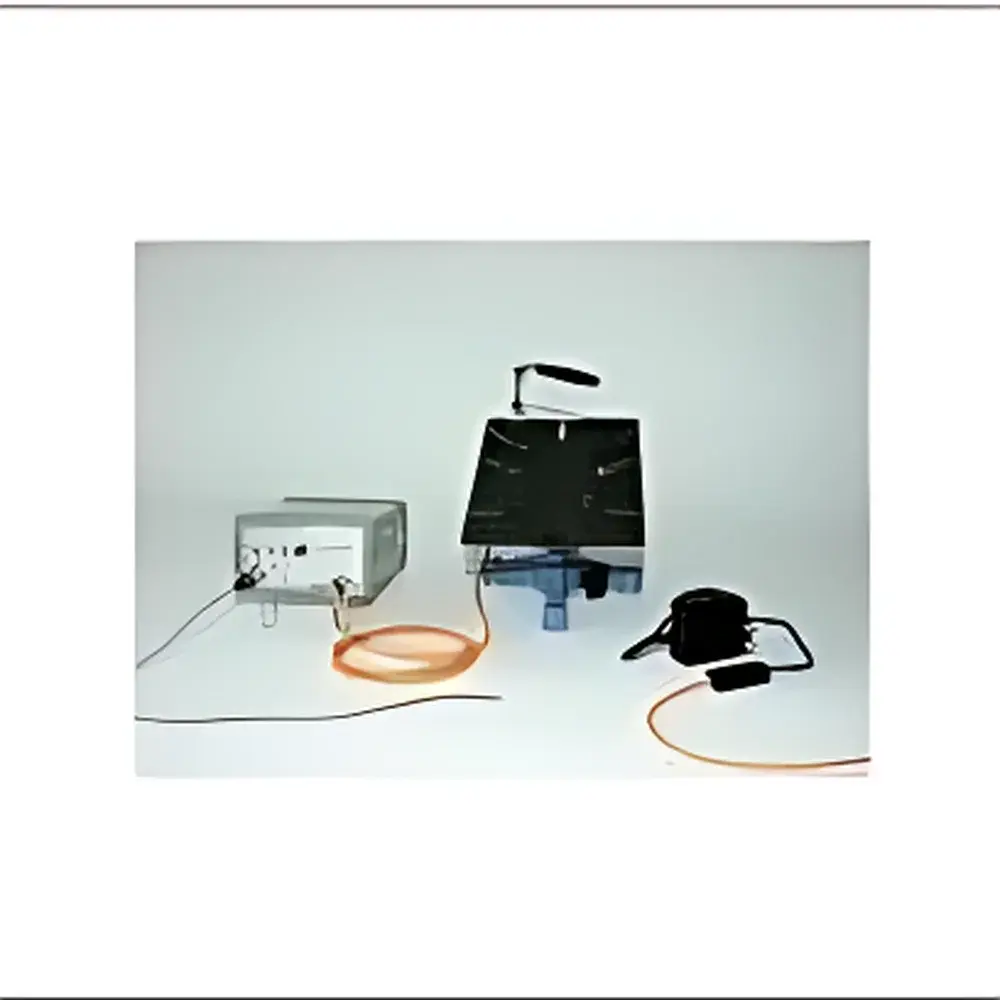
Harvard Apparatus Small Animal Surgical Table Size1
| Brand | Harvard Apparatus |
|---|---|
| Origin | USA |
| Manufacturer Type | Authorized Distributor |
| Origin Category | Imported |
| Model | Size1 |
| Pricing | Upon Request |
Overview
The Harvard Apparatus Small Animal Surgical Table Size1 is an engineered platform designed for precise, reproducible positioning and thermal management of rodents and other small laboratory animals (e.g., mice, rats, guinea pigs, rabbits up to ~3 kg) during acute in vivo surgical procedures. It operates on fundamental principles of mechanical stabilization, thermoregulatory support, and modular adaptability—critical for maintaining physiological homeostasis under anesthesia. Unlike generic mounting platforms, the Size1 integrates structural rigidity with calibrated thermal control architecture, enabling researchers to mitigate hypothermia—a leading confounder in cardiovascular, neurophysiological, and pharmacokinetic studies. Its anodized aluminum work surface (300 × 185 mm) provides non-magnetic, corrosion-resistant stability while accommodating standardized accessories via precision-machined T-slots along both longitudinal edges.
Key Features
- Anodized aluminum surgical platform (300 × 185 mm / 11.8 × 7.3 in) with dual-sided T-slot rails for repeatable accessory alignment
- Four spring-loaded limb restraints included as standard equipment; compatible with Harvard Apparatus’ full line of rodent restraint clamps
- Modular base options: Tri-pod base with universal ball-joint articulation (±30° tilt in all axes) or low-profile inclined platform base (reduced footprint for confined procedure rooms)
- Thermal management system with three operational configurations: Non-heated (for necropsy or sub-30-min terminal procedures), Fixed-Temperature Heated (40 °C maintained via integrated thermistor feedback), and Precision Thermostatically Controlled (34–40 °C adjustable range with dual-sensor input capability)
- Built-in 4 mm banana jack grounding port compliant with electrophysiological recording standards (e.g., ECG, EEG, EMG)
- Ball-and-socket accessory mount compatible with micromanipulators, stereotaxic arms, electrode holders, cannulae, and thoracic retractors (sold separately)
Sample Compatibility & Compliance
The Size1 table supports consistent positioning across common small animal models used in NIH- and AAALAC-accredited facilities. Its T-slot geometry accommodates ISO-standardized clamping systems and enables secure fixation of animals ranging from neonatal mice to adult New Zealand White rabbits. The non-heated variant meets ASTM F2100-22 requirements for non-thermal surgical instrumentation in post-mortem applications. Heated configurations comply with GLP-relevant thermal validation protocols when paired with NIST-traceable rectal probes (e.g., Harvard Apparatus Model 70-7101). All electrical components conform to UL 61010-1 and IEC 61000-6-3 for laboratory safety and electromagnetic compatibility. The system is fully compatible with institutional SOPs requiring FDA 21 CFR Part 11–compliant temperature logging when integrated with validated data acquisition software.
Software & Data Management
While the Size1 table operates as a standalone hardware platform, its thermostatically controlled variants interface seamlessly with Harvard Apparatus’ AcqKnowledge® and LabChart® software suites via analog voltage output (0–5 V DC proportional to setpoint deviation). Real-time temperature telemetry—including simultaneous display of platform surface and rectal probe readings—is recordable with timestamped audit trails. All heating profiles, setpoints, and ramp rates are programmable and exportable in CSV or HDF5 format for integration into institutional LIMS or electronic lab notebooks. Firmware updates are delivered through Harvard Apparatus’ secure portal, ensuring ongoing alignment with evolving ISO/IEC 17025 calibration documentation standards.
Applications
- Intracranial stereotaxic surgery requiring stable head fixation and thermal maintenance during craniotomy
- Thoracotomy and cardiac catheterization where precise rib retraction and core temperature monitoring are essential
- Peripheral nerve electrophysiology experiments demanding grounded, vibration-damped positioning
- Pharmacodynamic dose-response studies involving intravenous or intracerebroventricular infusions over extended durations
- Vascular cannulation procedures requiring simultaneous limb restraint, respiratory monitoring, and thermal regulation
- Teaching laboratories conducting standardized rodent surgical technique training under GLP-aligned conditions
FAQ
Can the non-heated Size1 table be retrofitted with a heating module?
No. Non-heated units lack internal wiring harnesses, thermal sensors, and transformer cavities required for heating functionality. Retrofitting is not supported.
Is the rectal temperature probe included with thermostatically controlled models?
No. The rectal thermistor probe (e.g., Harvard Apparatus Model 70-7101) must be purchased separately and calibrated prior to first use.
What is the maximum load capacity of the anodized aluminum platform?
The platform supports static loads up to 5 kg uniformly distributed; dynamic loads (e.g., ventilator-induced motion) must remain below 2.5 kg to preserve long-term T-slot integrity.
Are replacement T-slot covers or limb restraints available as spare parts?
Yes. All mechanical components—including stainless steel limb clamps, T-slot inserts, and grounding cables—are stocked under Harvard Apparatus part numbers 70-7001 through 70-7099.
Does the tri-pod base allow locking of tilt angles during procedures?
Yes. The ball-joint assembly incorporates a dual-knob locking mechanism enabling independent fixation of pitch and yaw axes without tool assistance.




