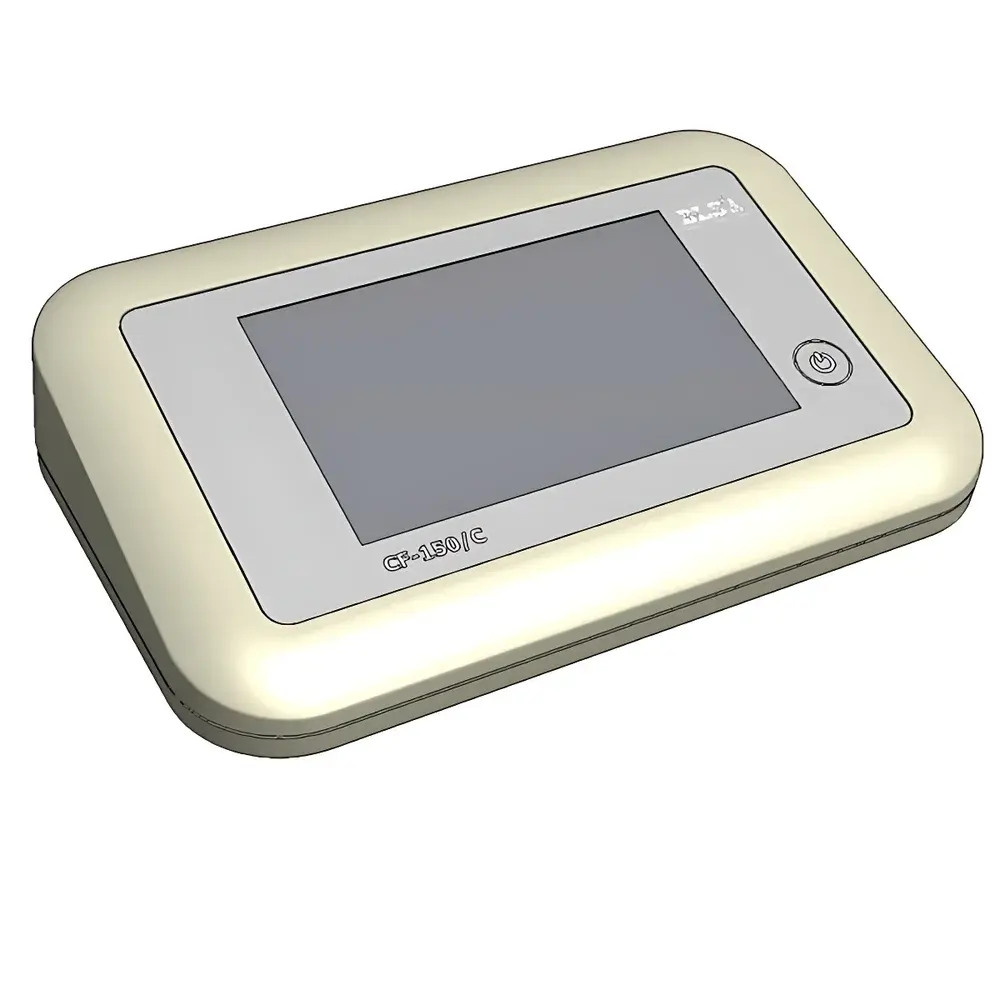
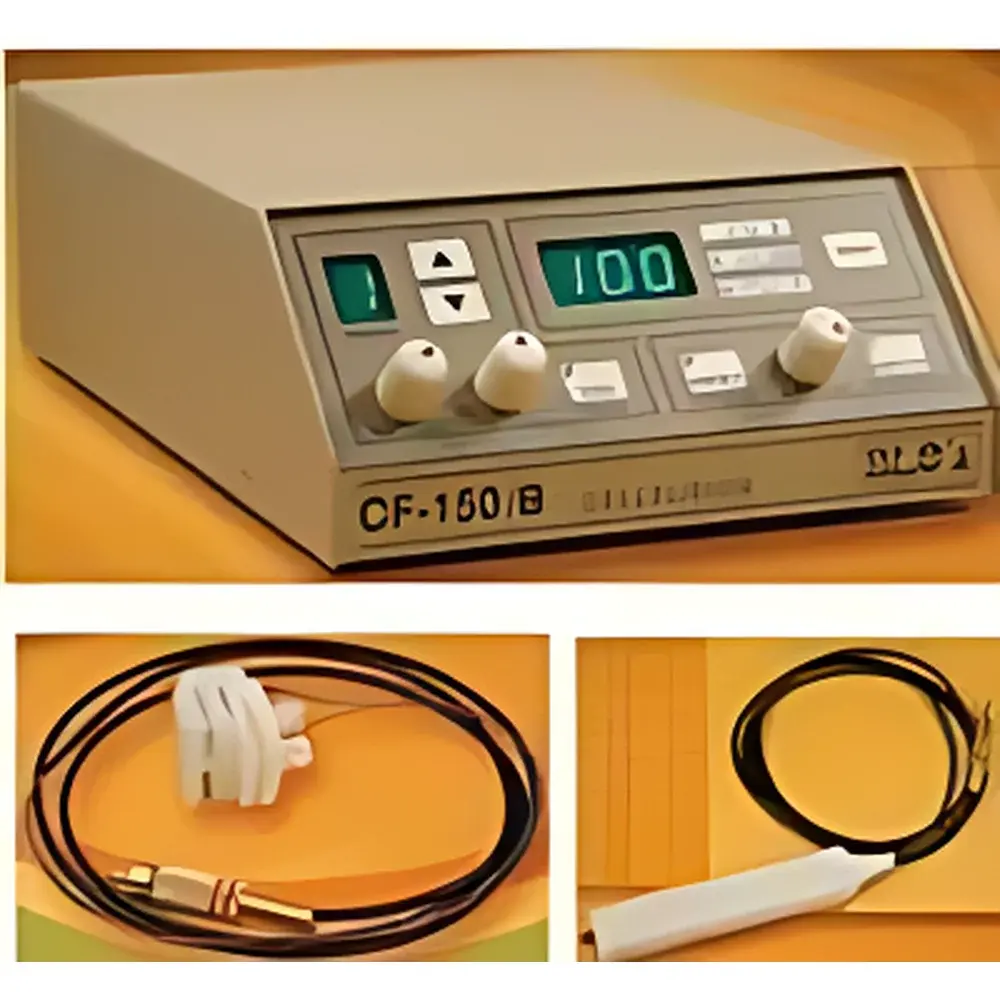
BLS CF-150C Electroporation-Based Cell Fusion Instrument
| Brand | BLS |
|---|---|
| Origin | Hungary |
| Model | CF-150C |
| Pulse Voltage Range (Square Wave) | 12–185 V |
| Pulse Duration | 10–200 µs |
| Inter-Pulse Interval | 200 µs |
| Pulse Count | 1–10 |
| HF Oscillator Frequency | 1 MHz ±100 Hz |
| HF Amplitude (Coarse) | 0–30 V<sub>eff</sub> |
| HF Amplitude (Fine) | 0–3 V<sub>eff</sub> |
| Operating Medium | Electrolytic or Non-electrolytic Solutions |
| Dimensions | 200 × 130 × 45 mm |
| Weight | 380 g |
| Power Consumption | 15 VA |
| Protection Class | Class I (Earthed) |
Overview
The BLS CF-150C is a precision-engineered electroporation-based cell fusion instrument designed specifically for high-efficiency, reproducible electrofusion of mammalian embryonic blastomeres—particularly at the two-cell stage. Unlike generic electroporators, the CF-150C implements a dual-mode pulse architecture: a precisely controlled square-wave high-voltage pulse (12–185 V, 10–200 µs) to induce reversible membrane destabilization, followed by a high-frequency (1 MHz ±100 Hz), low-amplitude alternating current field (0–30 Veff, coarse; 0–3 Veff, fine) to align adjacent cells and promote cytoplasmic and nuclear coalescence. This biophysical mechanism—grounded in dielectric breakdown and electrophoretic alignment—is optimized for applications requiring minimal thermal stress and maximal developmental viability, such as tetraploid embryo generation and somatic cell nuclear transfer (SCNT). The system’s compact, earthed Class I design ensures stable operation in standard CO2 incubator environments and laminar flow hoods, with full compliance to IEC 61010-1 safety standards for laboratory electrical equipment.
Key Features
- Dual-pulse architecture: Independent control of fusion-triggering square-wave pulses and post-alignment HF oscillation enables precise tuning of membrane poration and cell docking kinetics.
- Microsecond-level pulse timing resolution (10–200 µs) with programmable inter-pulse intervals (200 µs) and repeat counts (1–10), supporting protocol optimization across diverse embryonic models.
- Three interchangeable electrode chambers (GSS-250, GSS-500, GSS-1000) featuring laser-cut stainless-steel electrodes embedded in borosilicate glass—ensuring chemical inertness, optical clarity, and long-term biocompatibility.
- GSH-1 universal electrode clamp system provides mechanical stability on standard tissue culture plates (e.g., 35 mm or 60 mm dishes), eliminating lateral drift during pulsing and maintaining consistent electrode–sample contact resistance.
- DN-09 and DN-10 aggregation needles create calibrated micro-wells (≤100 µm depth) in culture dish bottoms to concentrate embryos, ES cell aggregates, or pre-implantation mouse embryos—enhancing spatial uniformity and fusion yield.
- Integrated vibration-dampened housing and earthed power supply (15 VA, Class I) minimize electromagnetic interference and ensure stable performance during extended multi-sample workflows.
Sample Compatibility & Compliance
The CF-150C is validated for use with murine two-cell embryos, embryonic stem (ES) cell colonies, and somatic donor nuclei in SCNT protocols. It supports both electrolytic (e.g., mannitol-based fusion media) and non-electrolytic (e.g., sucrose–PEG hybrid buffers) environments without hardware modification. All wetted components—including electrode chambers, clamps, and aggregation needles—are manufactured from USP Class VI-certified materials and undergo rigorous endotoxin testing (<0.03 EU/mL). The instrument meets ISO 13485:2016 requirements for medical device-related research instrumentation and is routinely employed in GLP-compliant developmental biology labs. While not a medical device per FDA 21 CFR Part 820, its operational parameters align with ASTM F2778-09 (Standard Guide for Electroporation-Based Cell Fusion) and support traceable, audit-ready workflows under institutional biosafety and animal care oversight.
Software & Data Management
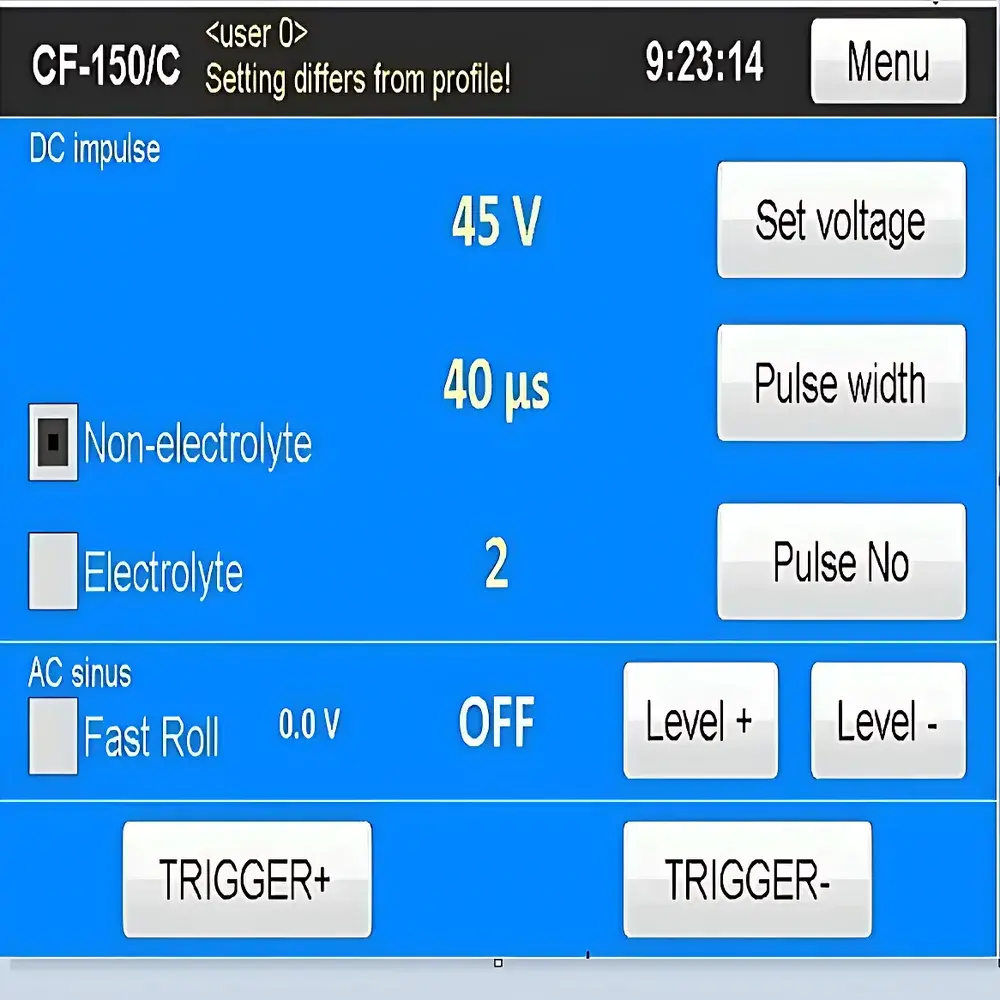
The CF-150C operates via front-panel digital controls with LED feedback—intentionally omitting proprietary software to eliminate driver dependencies, OS compatibility constraints, and cybersecurity vulnerabilities common in networked lab instruments. All parameter settings (voltage, duration, count, HF amplitude) are retained in non-volatile memory across power cycles. For documentation integrity, users are advised to record settings manually in electronic lab notebooks (ELN) compliant with ALCOA+ principles (Attributable, Legible, Contemporaneous, Original, Accurate, Complete, Consistent, Enduring, Available). BLS provides comprehensive, version-controlled SOPs and peer-reviewed protocol libraries—including Nagy et al. (1990, 1993) and Forrester et al. (1991) derivations—available in English, German, and French, with full traceability to published literature in Cell, Nature, and Nucleic Acids Research.
Applications
- Generation of tetraploid mouse embryos for ES cell–embryo complementation assays, enabling derivation of entirely ES cell-derived fetuses with defined genetic backgrounds.
- Somatic cell nuclear transfer (SCNT) in murine models, where high-fidelity nuclear reprogramming depends on synchronized cytoplasmic–nuclear fusion and minimal blastomere lysis.
- Functional validation of genetically engineered ES cell lines—assessing developmental competence through tetraploid complementation efficiency and post-implantation survival rates.
- Gene-trap screening in fully ES-derived embryos, where fusion-derived tetraploid hosts permit direct correlation between trapped gene expression patterns and tissue-specific phenotypes.
- Developmental toxicology studies requiring isogenic embryo cohorts with standardized fusion efficiency (>90% under optimized conditions) and low procedural mortality (<10%).
FAQ
What is the recommended electrode chamber for murine two-cell embryo fusion?
GSS-250 is specifically validated for two-cell blastomere fusion due to optimal electric field homogeneity at 250 µm gap width, minimizing arcing and maximizing membrane poration uniformity.
Can the CF-150C be used with non-murine species?
Yes—published applications include bovine, porcine, and human embryonic stem cell fusion; however, species-specific pulse calibration (voltage, duration, medium conductivity) must be empirically determined using BLS’s tiered optimization protocol.
Is the instrument compatible with time-lapse imaging systems?
Yes—the absence of RF emissions beyond the 1 MHz oscillator band and its Class I earthing design prevent interference with CCD/CMOS-based live-cell imaging platforms when operated within standard incubator configurations.
How is calibration verified?
BLS provides factory-calibrated pulse output verification reports traceable to NIST-traceable oscilloscope measurements; annual recalibration is recommended using the included test load resistor and certified multimeter.
Does the system support Good Manufacturing Practice (GMP) environments?
While intended for research use only, the CF-150C’s material certifications (USP Class VI), cleanable surfaces, and documentation-ready parameter logging support integration into early-stage bioprocess development workflows under GMP Annex 11-aligned data governance frameworks.