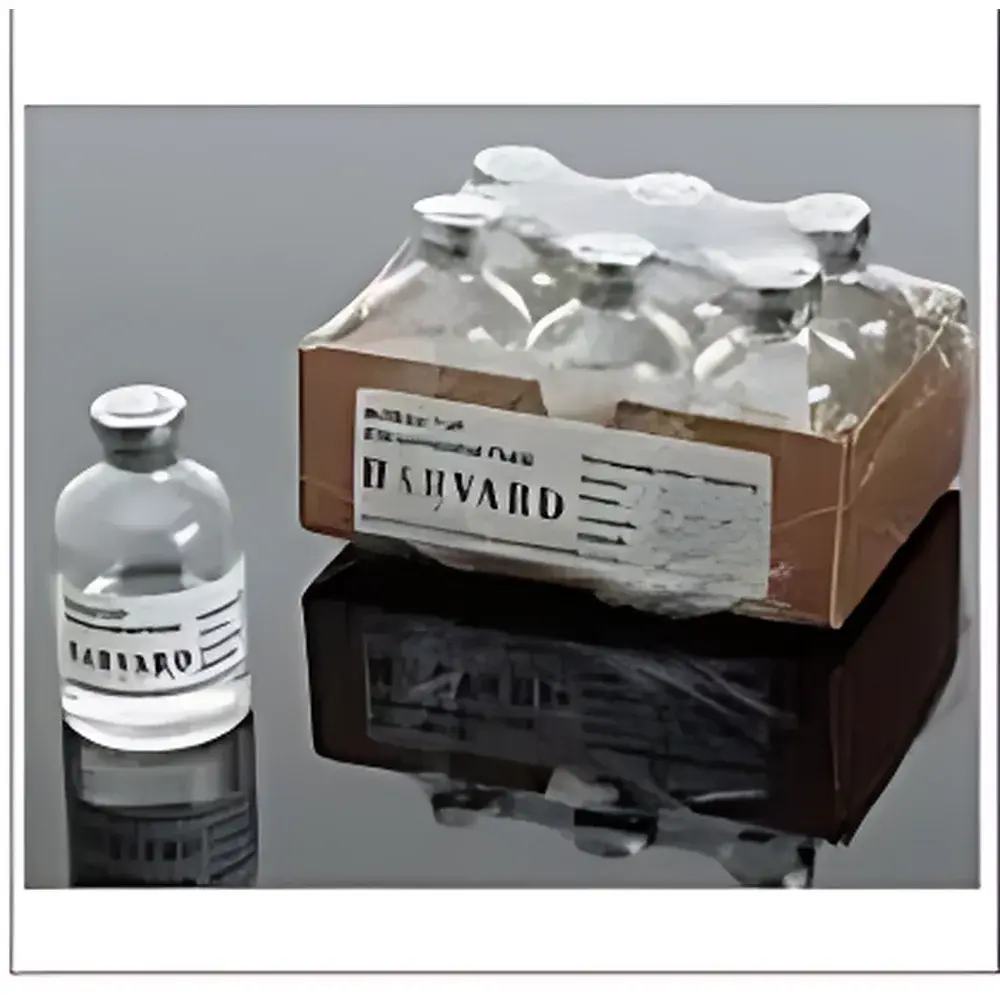
Artificial Cerebrospinal Fluid (ACSF) Solution, Harvard Apparatus Catalog #597316
| Brand | Harvard Apparatus |
|---|---|
| Origin | USA |
| Model | 597316 |
| Category | Research-Grade Physiological Salt Solution for Ex Vivo Neural Tissue Preparation |
| Regulatory Status | For Research Use Only (RUO) |
Overview
Harvard Apparatus Artificial Cerebrospinal Fluid (ACSF), catalog number 597316, is a rigorously formulated, ion-balanced physiological saline solution designed specifically for the maintenance and functional preservation of acute brain slices and isolated neural tissue during ex vivo electrophysiological and imaging experiments. This ACSF formulation replicates the ionic composition, osmolarity, and pH buffering capacity of native rodent cerebrospinal fluid, enabling sustained neuronal viability, synaptic integrity, and membrane potential stability over extended recording periods. It is optimized for use in submerged or interface-type brain slice chambers and is compatible with infrared differential interference contrast (IR-DIC) microscopy, supporting high-resolution visualization of neuronal somata, dendritic arbors, and spine morphology without optical distortion or cellular edema.
Key Features
- Precisely calibrated ionic composition: NaCl, KCl, CaCl2, MgSO4, NaH2PO4, NaHCO3, and D-glucose — all pharmaceutical-grade reagents traceable to USP/EP standards.
- Osmolarity adjusted to 290–310 mOsm/kg (measured at 25 °C), matching physiological conditions for murine and rat brain tissue.
- pH stabilized at 7.3–7.4 when equilibrated with 95% O2/5% CO2 gas mixture — critical for maintaining enzymatic activity and proton gradient-dependent transporters.
- Endotoxin-tested (<1.0 EU/mL) and sterile-filtered (0.22 µm) to prevent microglial activation and cytokine-mediated synaptic depression in long-duration recordings.
- Supplied as a ready-to-use liquid formulation; no reconstitution required — minimizes variability from manual preparation errors and batch-to-batch inconsistency.
- Validated compatibility with patch-clamp electrophysiology, field potential recordings, calcium imaging (e.g., GCaMP), and two-photon microscopy protocols.
Sample Compatibility & Compliance
This ACSF solution is validated for use with acute coronal, sagittal, and horizontal brain slices (200–400 µm thickness) prepared from mice, rats, and other laboratory rodents. It supports stable resting membrane potentials (>−65 mV) and action potential firing fidelity for ≥6 hours under controlled perfusion conditions (flow rate: 2–4 mL/min). The formulation complies with standard neurophysiology best practices outlined in the Journal of Neurophysiology and adheres to institutional animal care and use committee (IACUC)-approved ex vivo tissue handling protocols. While not intended for clinical or diagnostic use, it meets ISO 13485-aligned manufacturing controls for research reagents and is supplied with full Certificate of Analysis (CoA) including pH, osmolality, endotoxin, and sterility test results.
Software & Data Management
As a consumable physiological solution, ACSF #597316 does not incorporate embedded software or digital interfaces. However, its use is integral to reproducible data acquisition workflows governed by GLP-compliant electrophysiology platforms such as Molecular Devices pCLAMP, HEKA PatchMaster, or Spike2 (CED). When integrated into automated perfusion systems (e.g., Warner Instruments RC-26GL or Scientifica SliceScope Pro), batch lot numbers and expiration dates are recorded in electronic lab notebooks (ELNs) to satisfy audit requirements for method traceability under FDA 21 CFR Part 11 and ISO/IEC 17025 frameworks.
Applications
- Acute brain slice electrophysiology: whole-cell patch-clamp, sharp electrode recording, extracellular field EPSP/LTP measurements.
- Live-cell fluorescence and confocal imaging of neuronal structure and dynamics in hippocampal, cortical, thalamic, and striatal slices.
- Optogenetic stimulation and readout experiments requiring stable baseline excitability and minimal tonic inhibition drift.
- Pharmacological screening of ion channel modulators, GPCR ligands, and neuroactive compounds under physiologically relevant ionic conditions.
- Validation of slice health metrics including input resistance, series resistance stability, and spontaneous synaptic event frequency.
FAQ
Is ACSF #597316 suitable for human-derived neural tissue cultures?
No — this formulation is optimized for rodent (mouse/rat) acute brain slices and has not been validated for human iPSC-derived neurons or organoids.
What is the recommended storage condition and shelf life?
Store unopened bottles at 2–8 °C in the dark; do not freeze. Shelf life is 12 months from date of manufacture when stored properly. Once opened, use within 7 days under sterile conditions.
Can this ACSF be used without CO2 equilibration?
No — NaHCO3-based buffering requires equilibration with 95% O2/5% CO2 to achieve target pH 7.3–7.4. Alternative HEPES-buffered versions are available upon request.
Does Harvard Apparatus provide lot-specific CoA documentation?
Yes — each shipment includes a printed CoA with measured osmolality, pH (pre- and post-gassing), endotoxin level, sterility test result, and heavy metal impurity profile.
Is this product compliant with EU REACH and RoHS regulations?
Yes — all constituent chemicals meet REACH Annex XIV SVHC thresholds and RoHS Directive 2011/65/EU restrictions on hazardous substances.