
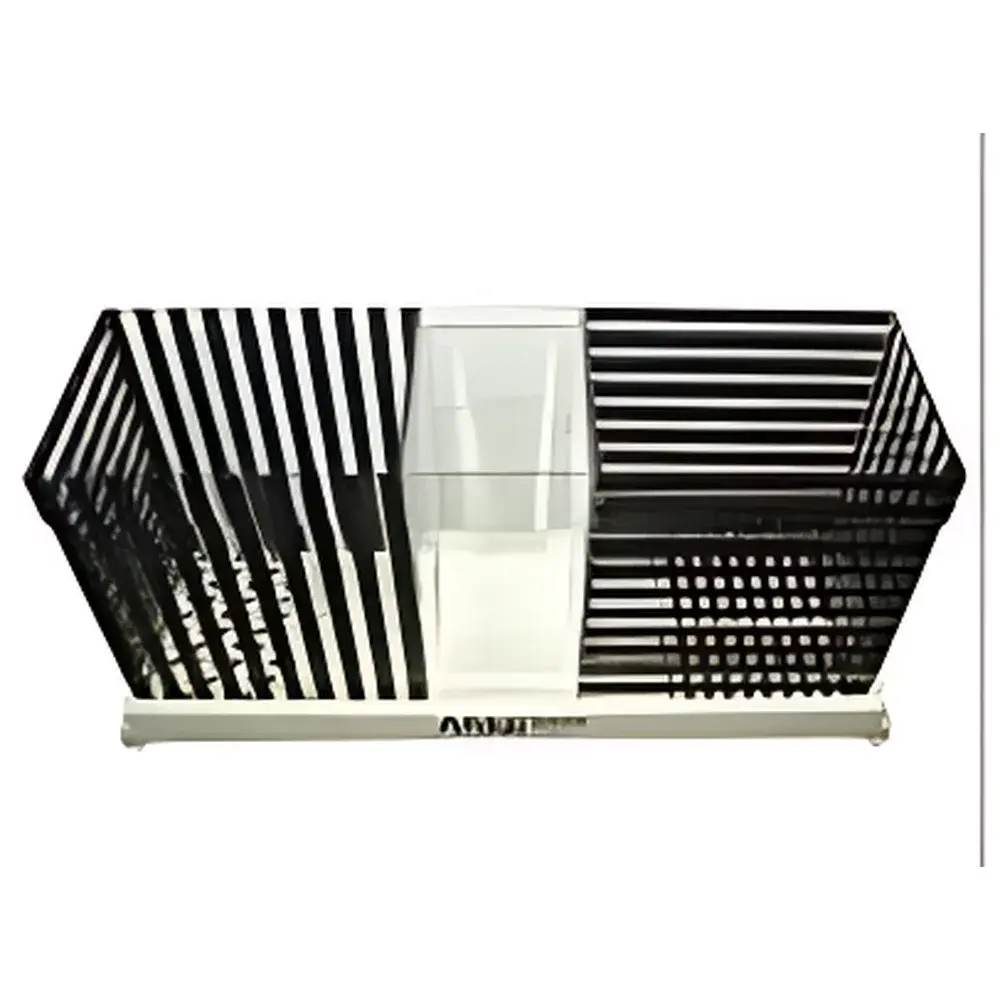
Conditioned Place Preference (CPP) System
| Origin | USA |
|---|---|
| Manufacturer Type | Distributor |
| Origin Category | Imported |
| Model | CPP |
| Pricing | Upon Request |
Overview
The Conditioned Place Preference (CPP) System is a rigorously validated behavioral neuroscience instrument designed for preclinical assessment of the motivational valence—rewarding or aversive—of pharmacological agents, neuroactive compounds, or environmental stimuli in rodent models. Grounded in classical Pavlovian conditioning principles, the system enables researchers to quantify associative learning between discrete contextual cues (e.g., distinct floor textures, wall patterns, lighting conditions, and olfactory signatures) and the subjective interoceptive effects of test substances. During conditioning, animals undergo repeated, temporally separated exposures to two or more physically differentiated compartments while under the influence of an active compound or vehicle control. Subsequent drug-free preference testing measures time spent in each compartment—a statistically significant bias toward the drug-paired environment indicates positive reinforcement, whereas avoidance reflects aversion or dysphoria. This paradigm is widely endorsed by NIH-funded behavioral pharmacology studies and aligns with translational frameworks for substance use disorder, addiction liability, and antidepressant/anxiolytic screening.
Key Features
- Modular dual- or multi-compartment arena with reversible, interchangeable cue configurations (visual, tactile, olfactory) to support counterbalanced experimental designs.
- High-resolution, frame-synchronized video tracking integrated with real-time dwell-time and transition-event analytics.
- Automated door actuation between compartments to enforce controlled access during conditioning and unbiased test phases.
- Calibrated injection ports and vapor delivery interfaces compatible with systemic (i.p., s.c., i.v.) and inhalational administration protocols.
- Environmentally isolated housing modules with independent ventilation and ambient light/temperature regulation to minimize cross-contamination of contextual cues.
- Compliance-ready architecture supporting audit trails, user-level permissions, and timestamped session metadata for GLP-aligned workflows.
Sample Compatibility & Compliance
The CPP System is optimized for use with adult male and female C57BL/6, BALB/c, Sprague-Dawley, and Wistar rats and mice (18–35 g). All hardware surfaces are autoclavable or compatible with EPA-registered disinfectants (e.g., 70% ethanol, Virkon®), ensuring rigorous decontamination between subjects and preventing residual cue carryover. The system conforms to NIH Guide for the Care and Use of Laboratory Animals standards and supports full documentation required for IACUC protocol submissions. Experimental paradigms are structured to meet criteria outlined in ASTM E2993-15 (Standard Guide for Behavioral Testing in Neuroscience Research) and referenced in FDA’s Nonclinical Laboratory Study Regulations (21 CFR Part 58).
Software & Data Management
Control and analysis are executed via CPP-Analyzer™ v4.x, a Windows-based application compliant with 21 CFR Part 11 requirements—including electronic signatures, role-based access control, and immutable audit logs. The software provides automated calculation of preference scores (e.g., % time in drug-paired zone, latency to first entry, number of crossings), statistical output (paired/unpaired t-tests, ANOVA with post-hoc corrections), and export options for raw tracking data (CSV, HDF5) and processed metrics (Excel, PDF). Data integrity is preserved through local encrypted storage with optional network backup integration; all session files retain embedded metadata (subject ID, dose, route, experimenter, date/time, hardware calibration ID).
Applications
- Evaluation of abuse potential and reinforcing properties of novel CNS-active therapeutics (e.g., opioid alternatives, dopamine modulators).
- Characterization of withdrawal-induced place aversion following chronic exposure to nicotine, alcohol, or benzodiazepines.
- Investigation of sex- and strain-dependent differences in reward processing and affective state modulation.
- Pharmacological validation of genetic knockouts or optogenetic/chemogenetic manipulations targeting mesolimbic circuitry (e.g., VTA-NAc pathway).
- Co-administration studies assessing interference of candidate anti-addiction agents on established CPP expression or reinstatement.
FAQ
What species and strains are validated for use with this CPP system?
C57BL/6 and BALB/c mice, as well as Sprague-Dawley and Wistar rats, are fully supported. Strain-specific baseline preference baselines and habituation protocols are included in the user manual.
Can the system accommodate three-chamber designs for more complex discrimination tasks?
Yes—the modular architecture allows expansion to tri-compartment configurations with synchronized door logic and independent cue assignment per zone.
Is video tracking performance affected by fur color or low-light conditions?
The system employs adaptive contrast thresholding and near-infrared illumination (850 nm) to ensure robust detection across pigmented and albino subjects under standardized dim-red test lighting.
How is data integrity maintained during multi-user laboratory deployments?
Each session is cryptographically hashed upon completion; software enforces mandatory electronic signature authentication prior to data export or deletion, satisfying ALCOA+ (Attributable, Legible, Contemporaneous, Original, Accurate, Complete, Consistent, Enduring, Available) principles.
Does the system support integration with third-party physiological monitoring devices?
Yes—via TTL-triggered I/O ports and standardized API endpoints, enabling synchronized acquisition of EEG, EMG, or photometry signals during CPP sessions.




