
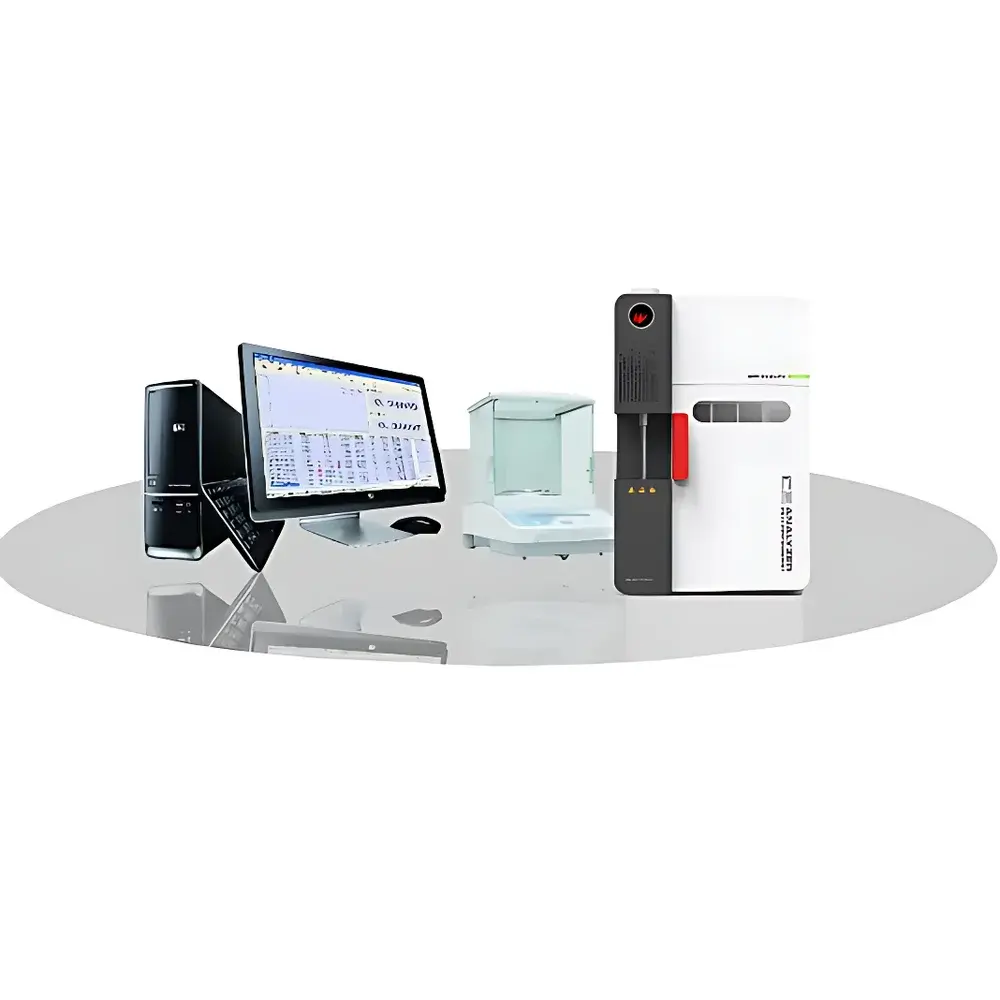
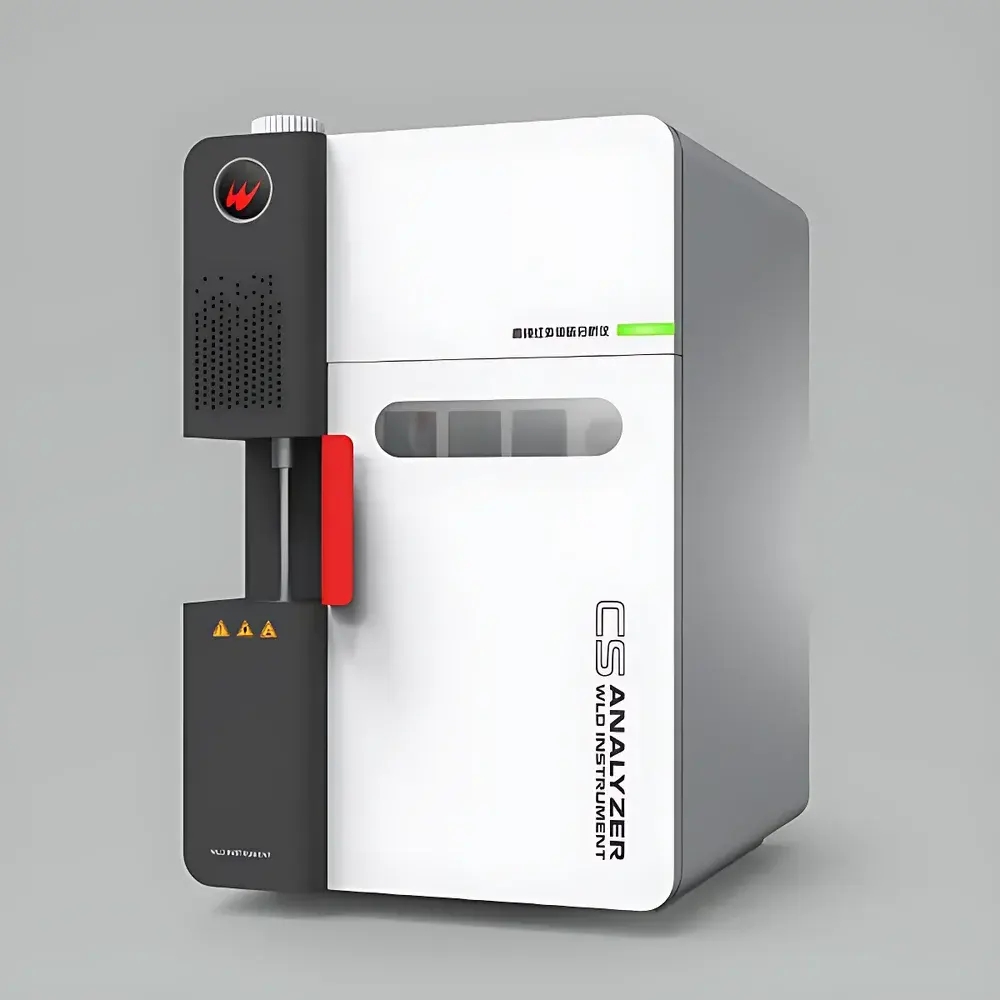
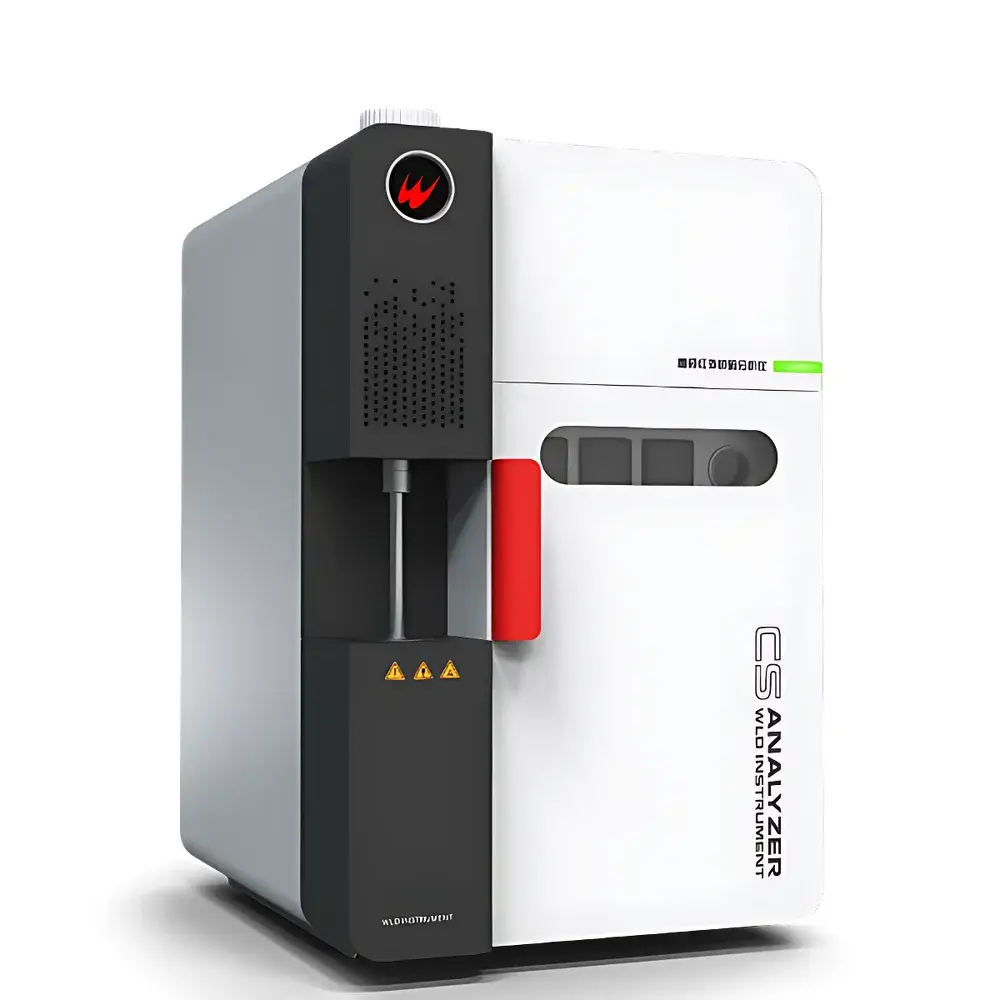
Wanlianda CS-902T High-Frequency Infrared Carbon-Sulfur Analyzer
| Brand | Wanlianda |
|---|---|
| Origin | Beijing, China |
| Manufacturer Type | Authorized Distributor |
| Country of Manufacture | China |
| Model | CS-902T |
| Measurement Principle | Non-Dispersive Infrared (NDIR) Absorption |
| Heating System | High-Frequency Induction Furnace |
| Carbon Range | 0.00002–10% (extendable) |
| Sulfur Range | 0.00002–5% (extendable) |
| Sensitivity | 0.1 ppm |
| Precision | C RSD ≤ 0.5%, S RSD ≤ 1.5% |
| Analysis Time | 40 s |
| Furnace Output Power | 2.5 kW |
| Compliance | GB/T 20123–2006 |
Overview
The Wanlianda CS-902T High-Frequency Infrared Carbon-Sulfur Analyzer is a fully integrated elemental combustion analyzer engineered for precise, rapid quantification of total carbon (C) and sulfur (S) content in solid inorganic and metallurgical samples. It operates on the principle of high-frequency induction combustion coupled with non-dispersive infrared (NDIR) spectroscopy. During analysis, a weighed sample is combusted in a pure oxygen atmosphere within a high-frequency induction furnace operating at 2.5 kW nominal power. The resulting CO₂ and SO₂ gases are carried through a dust removal and drying system into dual independent NDIR detection cells—each optimized for specific absorption bands (4.26 µm for CO₂, 7.35 µm for SO₂). Signal intensity is linearly correlated to gas concentration via Beer-Lambert law calibration, enabling trace-level quantification down to 0.1 ppm sensitivity. The instrument’s monolithic design integrates combustion and detection modules in a thermally stabilized chassis, minimizing thermal drift and ensuring measurement repeatability across extended operational cycles.
Key Features
- High-frequency induction furnace with stable 2.5 kW output and programmable power ramping—ensures complete, reproducible combustion of refractory alloys, ferroalloys, and high-carbon steels without electrode contamination or crucible carryover.
- Dual-channel NDIR detection architecture with separate optical paths for carbon and sulfur—eliminates cross-sensitivity and enables simultaneous, independent quantification with minimal spectral interference.
- Automated gas handling system featuring multi-stage filtration (ceramic filter, desiccant trap, CO converter), pressure-regulated flow control, and real-time flow monitoring—guarantees consistent carrier gas purity and optimal detector response.
- Calibration-ready configuration supporting both single-point and multi-point standardization using certified reference materials (CRMs) traceable to NIST or ISO 17025-accredited sources.
- Robust mechanical design with vibration-dampened optical bench, sealed detector housings, and temperature-compensated electronics—engineered for continuous operation in QC laboratories with ambient fluctuations.
Sample Compatibility & Compliance
The CS-902T accommodates a broad spectrum of conductive and semi-conductive solid matrices, including carbon steels, stainless steels, cast irons, ferromanganese, ferrosilicon, nickel-based superalloys, copper and aluminum alloys, geological ores (e.g., hematite, pyrite), rare-earth metals (e.g., cerium, neodymium), and cementitious materials. Sample mass ranges from 0.1 g to 1.0 g depending on expected C/S concentration and matrix volatility. All analytical protocols align with GB/T 20123–2006, which specifies method validation requirements—including limit of detection (LOD), limit of quantitation (LOQ), linearity (r² ≥ 0.999), and precision (RSD ≤ 0.5% for C, ≤1.5% for S). While not pre-certified to ASTM E1019 or ISO 15350, the instrument’s hardware architecture and data integrity controls support full method transfer and validation per those standards when implemented with documented SOPs and audit trails.
Software & Data Management
The analyzer is operated via Windows-based acquisition software compliant with GLP and GMP documentation requirements. Core functionalities include real-time spectral visualization, automatic baseline correction, peak integration with manual override, CRM library management, and customizable report templates exportable as PDF or CSV. Audit trail functionality records all user actions—including method edits, calibration events, result overrides, and instrument status changes—with timestamp, operator ID, and reason-for-change fields. Data files are stored in encrypted binary format with SHA-256 checksum verification; optional integration with LIMS via ODBC or HL7 interfaces supports centralized data governance and 21 CFR Part 11-compliant electronic signatures when deployed with validated IT infrastructure.
Applications
- Quality control of incoming raw materials (scrap metal, ferroalloys, fluxes) in steelmaking and foundry operations.
- Final product certification for low-alloy structural steels where carbon segregation or sulfur-induced hot shortness must be tightly controlled.
- Research-grade compositional mapping of rare-earth permanent magnets and high-entropy alloys requiring sub-ppm sulfur detection to assess embrittlement risk.
- Geochemical analysis of sulfide-rich mineral concentrates prior to hydrometallurgical processing.
- Regulatory compliance testing for ASTM A743/A744 (cast stainless steels) and ISO 4941 (copper alloys), where carbon and sulfur limits directly impact weldability and corrosion resistance.
FAQ
What sample preparation is required prior to analysis?
Solid samples must be cleaned of surface oxides or oil residues and machined into uniform chips or turnings (≤2 mm thickness). No acid digestion or fusion is needed—direct solid-state combustion is employed.
Can the CS-902T analyze non-conductive samples such as ceramics or polymers?
Not without modification: the high-frequency furnace requires electrical conductivity for efficient heating. Non-conductive samples require addition of a high-purity iron or tungsten flux to enable coupling; method development and CRM validation are recommended before routine use.
Is the instrument compatible with external gas supply systems?
Yes—it accepts regulated ultra-high-purity oxygen (≥99.995%) at 0.3–0.5 MPa and includes integrated pressure regulation, flow metering, and leak detection circuitry.
How frequently must the NDIR detectors be recalibrated?
Detector zero and span checks are performed automatically before each analysis sequence; full calibration using CRMs is recommended every 8–12 hours of continuous operation or after maintenance events.
Does the system support remote diagnostics or firmware updates?
Remote access is enabled via secure TLS-encrypted VNC connection for technical support; firmware updates are delivered as signed packages with version-controlled release notes and rollback capability.



