
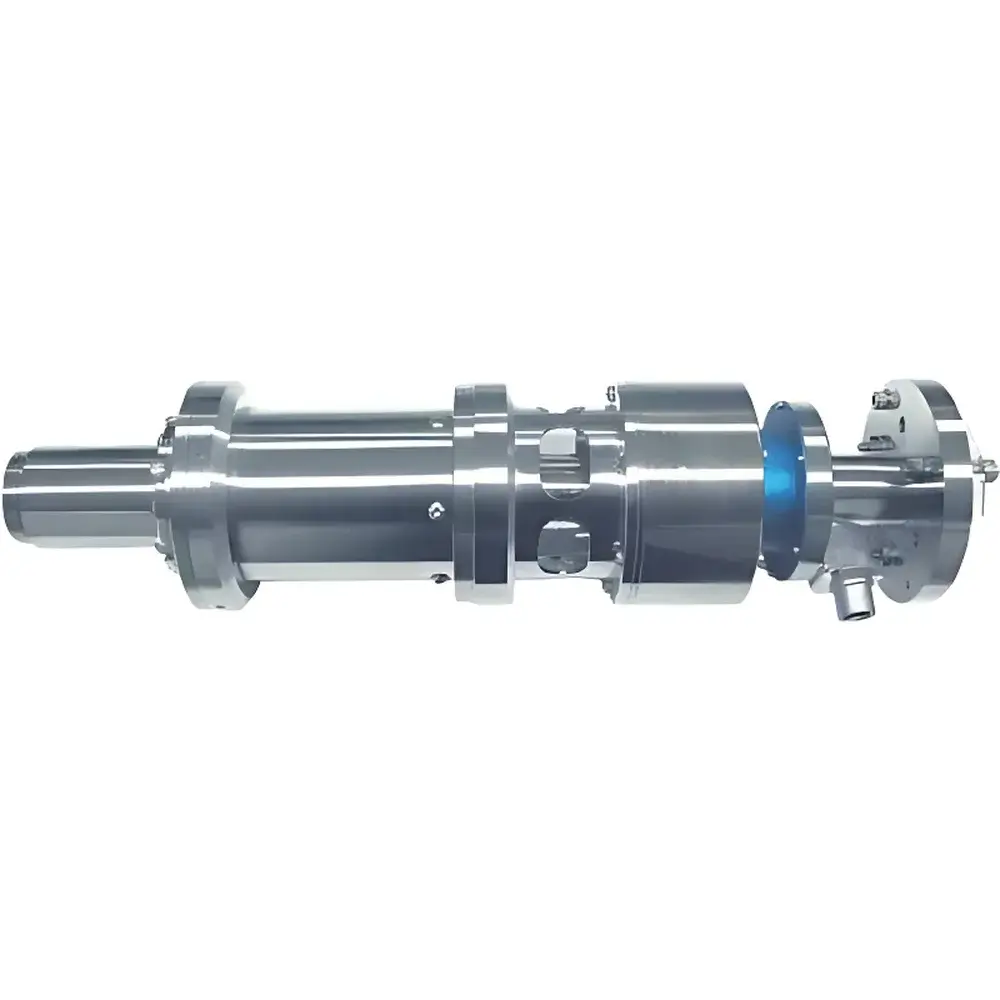
kSA400 RHEED Reflection High-Energy Electron Diffraction System
| Origin | Japan |
|---|---|
| Manufacturer Type | Authorized Distributor |
| Origin Category | Imported |
| Model | kSA400 RHEED |
| Pricing | Available Upon Request |
| Compliance | RoHS Directive 2011/65/EU |
| Beam Energy Range | 10–30 keV |
| Incidence Angle | < 5° (grazing incidence) |
| Emission Current | Standard Mode / Low-Emission Mode (MCP-enhanced, ~0.02–0.35% of conventional RHEED current) |
Overview
The kSA400 RHEED Reflection High-Energy Electron Diffraction System is a precision in-situ surface characterization instrument engineered for real-time monitoring of epitaxial thin-film growth—particularly within molecular beam epitaxy (MBE), pulsed laser deposition (PLD), and sputtering vacuum systems. Operating on the principle of grazing-incidence electron diffraction, the system directs a collimated, monoenergetic electron beam (10–30 keV) onto a crystalline sample surface at angles less than 5° relative to the surface plane. The resulting specular and diffracted intensities—captured as streaked or spot patterns on a high-brightness phosphor screen—are directly correlated with surface periodicity, step density, reconstruction symmetry, and layer-by-layer growth kinetics. Unlike ex-situ techniques such as XRD or TEM, RHEED provides sub-monolayer temporal resolution without interrupting vacuum integrity or growth conditions, making it indispensable for quantitative studies of surface dynamics, interface formation, and kinetic phase transitions.
Key Features
- Remote-controlled operation of acceleration voltage, emission current, electrostatic focusing, and beam deflection—enabling precise optimization without breaking vacuum or manual intervention.
- Integrated safety interlock system compliant with IEC 61010-1, automatically disabling high-voltage output upon chamber access or pressure excursion beyond 5×10⁻⁶ Torr.
- High-permeability mu-metal magnetic shielding enclosure minimizes external field interference (< 0.1 µT residual field), ensuring beam trajectory stability over extended acquisition periods.
- Ultra-low outgassing electron gun assembly featuring chemically passivated stainless-steel cathode housing and non-evaporable getter (NEG) coated anode surfaces—achieving base pressure compatibility down to 1×10⁻¹⁰ Torr after bakeout.
- Dual-mode operation: Standard RHEED mode for high-intensity pattern acquisition; Low-Emission RHEED mode utilizing microchannel plate (MCP) amplification to reduce incident current by 99.8–99.96% while preserving signal-to-noise ratio—critical for radiation-sensitive organic semiconductors, 2D materials (e.g., MoS₂, h-BN), and metal–organic frameworks (MOFs).
- Fully RoHS-compliant construction with lead-free soldering, cadmium-free phosphors, and halogen-free PCB substrates—verified per EN 50581:2012.
Sample Compatibility & Compliance
The kSA400 RHEED is compatible with standard UHV-compatible sample holders (e.g., 3-inch diameter, water-cooled, resistively heated up to 1100 °C) and integrates seamlessly with common MBE chamber flanges (CF-63, CF-100). Its low-energy secondary electron rejection design ensures minimal charging artifacts on insulating substrates (e.g., SrTiO₃, SiO₂/Si). The system meets essential requirements for GLP-compliant thin-film process development: traceable calibration records (per ISO/IEC 17025), audit-ready parameter logging, and hardware-enforced access control. It supports compliance with ASTM F1879-20 (Standard Guide for In-Situ Surface Characterization During Thin-Film Deposition) and is routinely deployed in facilities adhering to ISO 9001:2015 quality management protocols.
Software & Data Management
The kSA400 RHEED Control Suite (v4.2+) runs on Windows 10/11 64-bit and provides synchronized acquisition, real-time intensity profiling, and time-resolved streak analysis. All operational parameters—including HV setpoint, emission current, focus voltage, and MCP gain—are timestamped and stored in HDF5 format with embedded metadata (sample ID, chamber pressure, substrate temperature). Audit trail functionality complies with FDA 21 CFR Part 11 requirements, including electronic signatures, user-level permissions, and immutable log archiving. Optional Python API enables integration with LabVIEW, MATLAB, or custom process control logic for closed-loop growth automation.
Applications
- In-situ monitoring of III–V (GaAs, InP), II–VI (ZnSe), and oxide (STO, LAO) heteroepitaxy for quantum well and superlattice fabrication.
- Real-time quantification of growth rate and oscillation damping during shuttered MBE sequences.
- Surface reconstruction mapping during thermal annealing or reactive gas exposure (e.g., O₂, NH₃).
- Crystallinity assessment of solution-processed perovskite precursors under controlled ambient transfer.
- Interface sharpness evaluation at metal/semiconductor junctions (e.g., Ni/Si, TiN/HfO₂) in gate-stack development.
FAQ
What vacuum level is required for stable kSA400 RHEED operation?
Optimal performance requires a base pressure ≤5×10⁻⁹ Torr; differential pumping capability allows integration into chambers with background pressures up to 1×10⁻⁶ Torr during active deposition.
Can the kSA400 RHEED be retrofitted to existing MBE systems?
Yes—standard CF-63 or CF-100 flange mounting, ±15 V DC power input, and RS-232/USB-C communication interfaces ensure straightforward integration with most commercial MBE platforms (Riber, Veeco, DCA, SPECS).
Is MCP-based low-emission mode compatible with quantitative intensity analysis?
Yes—calibrated MCP gain linearity (±1.2% deviation across 10²–10⁴ amplification range) and dark-current subtraction algorithms enable absolute intensity normalization for kinetic modeling.
Does the system support automated pattern recognition for growth mode classification?
The optional AI-assisted module (kSA-AutoPhase v2.1) applies convolutional neural networks trained on >12,000 labeled RHEED sequences to classify growth modes (2D layer-by-layer, 3D island, step-flow) with >94.7% accuracy.
What documentation is provided for regulatory validation?
Includes Factory Acceptance Test (FAT) report, RoHS Declaration of Conformity, CE marking dossier, and IQ/OQ protocols aligned with ISO 13485 and GAMP5 guidelines.





