
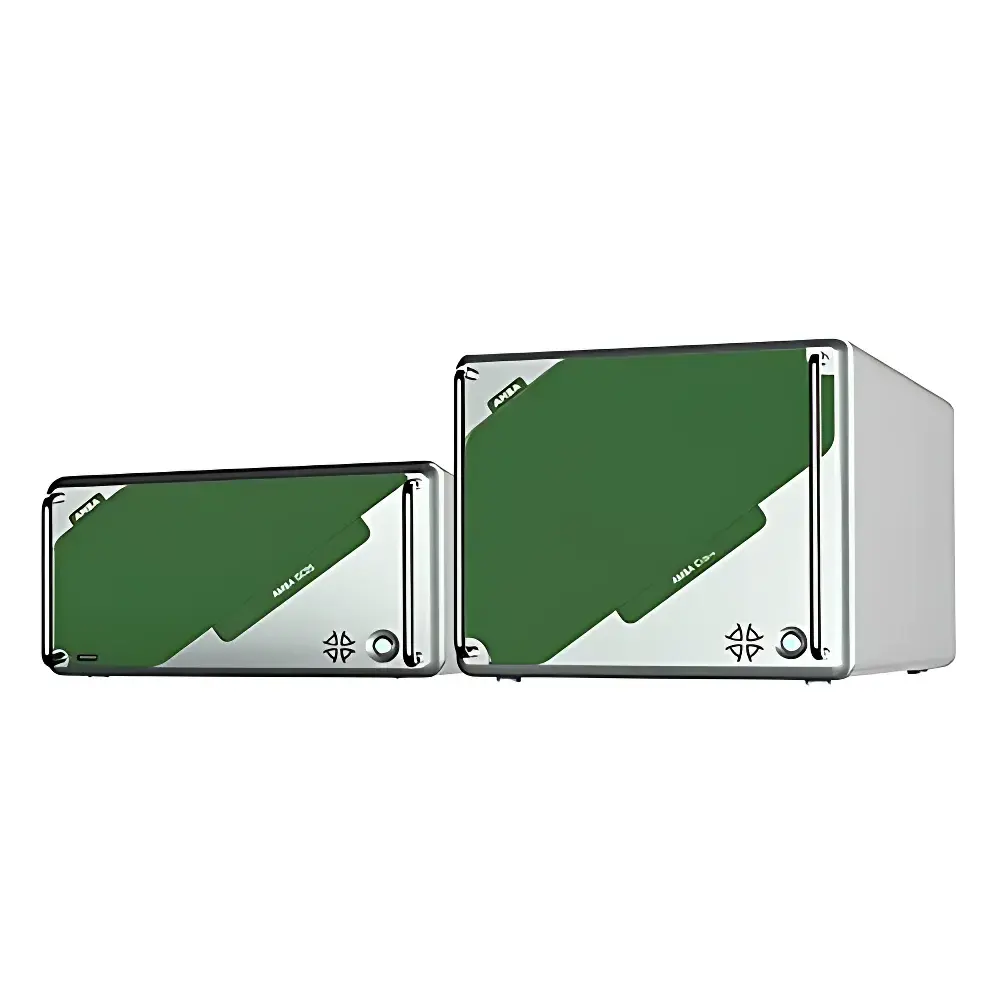
Pri-eco AMBA C123+N Isotope Ratio Gas Chromatography–Infrared Spectrometry (IR-GC-IRMS) System
| Brand | Pri-eco |
|---|---|
| Origin | Beijing, China |
| Manufacturer Type | Direct Manufacturer |
| Country of Origin | China |
| Model | AMBA C123+N |
| Price | Upon Request |
| Measurement Principle | Mid-infrared quantum cascade laser absorption spectroscopy coupled with high-speed gas chromatography and micro-combustion |
| δ¹³C Precision (C₁–C₄) | <0.4‰ (1σ) |
| Sampling Frequency | 1 Hz |
| Cycle Time per Sample | ≤3 min (including C₁, C₂, C₃, and C₄ isotopic analysis) |
| Measurement Chamber Volume | <1 mL |
| Operating Pressure | 50 Torr |
| Concentration Range | CH₄ >0.5% v/v |
| Operating Temperature | 0–35 °C (above dew point) |
| Relative Humidity | <100% RH |
| Dimensions (Isotope Analyzer) | 740 × 465 × 357 mm (H) |
| Dimensions (Fast GC Module) | 675 × 558 × 370 mm (H) |
| Power Requirement | 110/220 V AC, 50/60 Hz |
| Peak Power | 3 kW |
| Average Power | 1 kW |
Overview
The Pri-eco AMBA C123+N Isotope Ratio Gas Chromatography–Infrared Spectrometry (IR-GC-IRMS) System is an integrated analytical platform engineered for continuous, high-temporal-resolution measurement of compound-specific carbon isotope ratios (δ¹³C) in hydrocarbon gases. Unlike conventional isotope ratio mass spectrometry (IRMS) systems requiring cryogenic vacuum, complex sample preparation, and offline combustion, the AMBA C123+N employs a robust mid-infrared quantum cascade laser (QCL) absorption spectrometer coupled with a dedicated high-speed gas chromatograph and a miniature catalytic oxidation reactor. This architecture enables real-time separation of individual hydrocarbons—including methane (C₁), ethane (C₂), propane (C₃), n-butane (C₄), and higher homologs—followed by quantitative conversion to CO₂ and subsequent isotopic quantification via calibrated infrared absorption at precisely resolved rotational-vibrational transitions. The system operates at reduced pressure (50 Torr) within a thermally stabilized optical cavity (<1 mL volume), delivering sub-permil precision without reliance on high-vacuum pumps or liquid nitrogen cooling.
Key Features
- First-generation field-deployable, fully automated compound-specific δ¹³C analyzer for natural gas and petroleum fluids
- Integrated high-speed GC module with optimized column chemistry for baseline separation of C₁–C₄ hydrocarbons in under 90 seconds
- Micro-combustion interface with Pd/Pt catalyst ensuring quantitative and reproducible oxidation of all targeted alkanes to CO₂
- Mid-IR QCL-based detection with wavelength-scanned absorption spectroscopy targeting isotopologue-specific rovibrational lines of ¹²CO₂ and ¹³CO₂
- No external vacuum system required—operates at stable 50 Torr partial pressure for enhanced signal-to-noise and reduced mechanical complexity
- Automatic baseline drift correction and internal reference gas normalization, minimizing dependence on frequent external standard injections
- Modular architecture supporting both unattended online operation (e.g., drilling mud-gas logging) and discrete offline injection modes
- Full compatibility with 100% hydrocarbon concentration streams—no dilution or pre-concentration needed for typical natural gas matrices
Sample Compatibility & Compliance
The AMBA C123+N accepts gaseous samples across the full compositional spectrum of petroleum systems: raw wellhead gas, processed pipeline gas, biogenic landfill emissions, and laboratory-synthesized standards. It complies with ASTM D7169 (Standard Test Method for High Boiling Point Petroleum Fractions) for hydrocarbon group-type analysis, and its data traceability framework aligns with ISO/IEC 17025 requirements for calibration and uncertainty reporting. For regulated environments—including environmental forensics, oil & gas exploration QA/QC, and food authenticity testing—the system supports audit-ready metadata tagging, timestamped raw spectra storage, and user-access logs compatible with GLP/GMP workflows. While not certified under FDA 21 CFR Part 11 out-of-the-box, its software architecture permits integration with validated electronic lab notebook (ELN) platforms meeting electronic record integrity requirements.
Software & Data Management
Control and data acquisition are managed through Pri-eco’s proprietary IRIS (Isotopic Ratio Intelligent Software) suite, running on Windows-based industrial PCs. IRIS provides real-time chromatogram visualization, peak integration with retention time locking, automatic δ¹³C calculation using dual-ratio referencing (¹³CO₂/¹²CO₂ and ¹²CO₂/¹⁶O¹²C¹⁸O), and configurable export to CSV, HDF5, or LIMS-compatible XML formats. All spectral acquisitions include embedded calibration coefficients, pressure/temperature sensor readings, and detector gain history—enabling full metrological traceability. Raw interferograms and absorbance spectra are archived with SHA-256 checksums to ensure data integrity over long-term storage. Remote monitoring and diagnostic access are supported via TLS-secured HTTP API, facilitating integration into centralized asset management systems used in offshore rigs or remote monitoring stations.
Applications
- Geochemical reservoir characterization: distinguishing thermogenic vs. microbial gas origins via δ¹³C₁–δ¹³C₂–δ¹³C₃ trends
- Mud-gas logging (MGL): real-time downhole hydrocarbon isotope profiling during drilling operations
- Environmental contamination source apportionment: fingerprinting petroleum hydrocarbons in soil gas, groundwater vapor, or atmospheric plumes
- Fuel adulteration detection: identifying illicit blending of bio-derived C₂–C₄ components into fossil-based liquefied petroleum gas (LPG)
- Biogas process monitoring: tracking isotopic shifts during anaerobic digestion to infer substrate utilization pathways
- Standards development and inter-laboratory comparison studies requiring rapid, reproducible δ¹³C benchmarks for light alkanes
FAQ
Does the AMBA C123+N require carrier gas cylinders or external calibration standards during routine operation?
No—its internal reference gas cell and automated baseline correction algorithm eliminate the need for daily standard injections. Optional external calibration can be performed weekly using certified CH₄/CO₂ mixtures for long-term drift verification.
Can the system analyze wet gas samples containing water vapor or H₂S?
Yes—integrated Nafion™ dryers and sulfur-tolerant catalytic combustion modules allow direct analysis of raw wellhead gas without pre-conditioning, provided H₂S remains below 100 ppmv.
What is the minimum detectable concentration for propane (C₃H₈) while maintaining δ¹³C precision better than 0.4‰?
At ≥400 ppmv C₃H₈, the system achieves δ¹³C₃ precision of ≤0.35‰ (1σ) over 3-minute measurement cycles, as verified against NIST SRM 1650b and in-house gravimetric standards.
Is the fast GC module compatible with alternative column chemistries for extended carbon number range (e.g., C₅–C₈)?
Yes—the GC oven and injector support interchangeable capillary columns (e.g., Al₂O₃/KCl PLOT or RTX-1); method revalidation is required for compounds beyond C₄, but hardware compatibility is native.
How is instrument performance validated following maintenance or relocation?
A built-in diagnostic sequence executes spectral line shape verification, pressure/temperature sensor cross-checks, and combustion efficiency assessment using a certified CH₄ standard—results are auto-generated in PDF compliance reports.




