
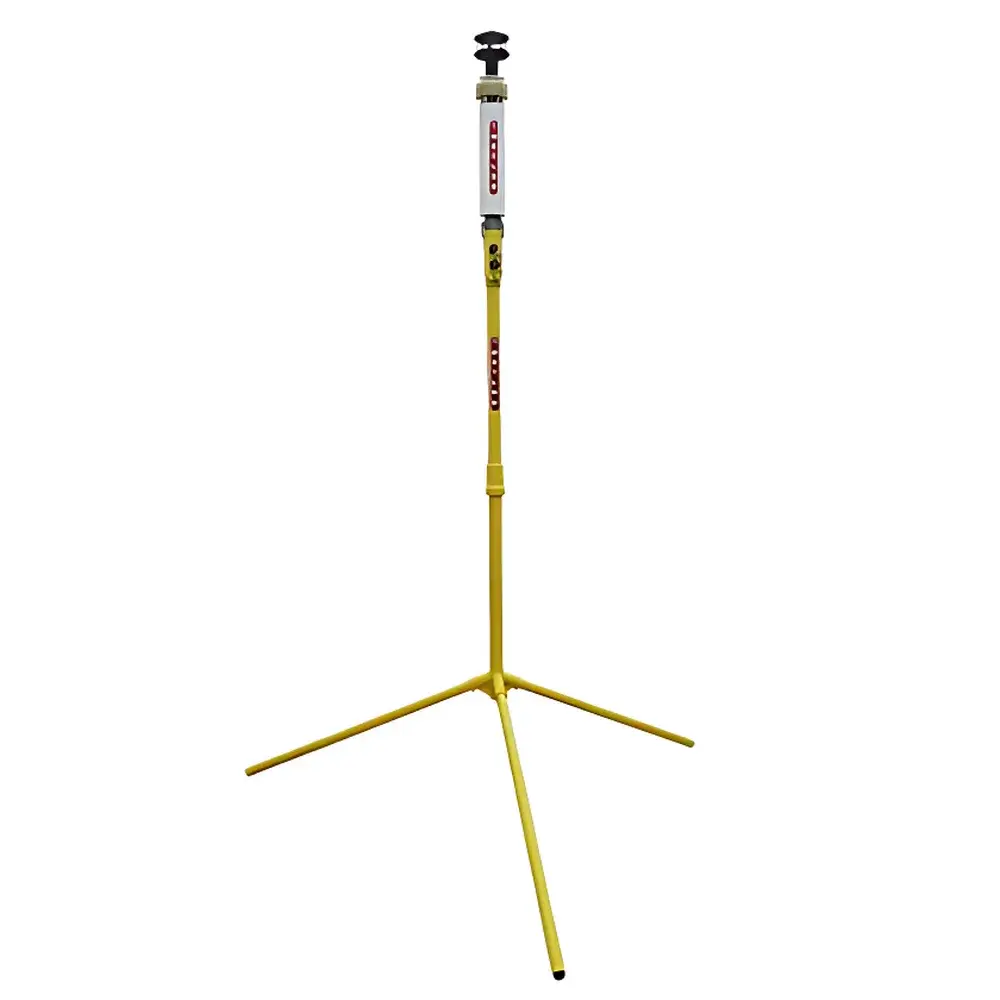
Pri-eco METLOG 2000 Research-Grade Military-Spec Automatic Weather Station
| Brand | Pri-eco |
|---|---|
| Origin | Beijing, China |
| Manufacturer Type | Original Equipment Manufacturer (OEM) |
| Country of Origin | China |
| Model | METLOG 2000 |
| Instrument Type | Portable Weather Station |
| CPU | 32-bit, 300 MHz |
| Data Storage | 64 MB (expandable to 32 GB) |
| Wind Speed Range | 0–60 m/s |
| Wind Direction | 360° continuous, ±3° accuracy |
| Relative Humidity Range | 0–100% RH (±2% @ 0–90%, ±3% @ 90–100%) |
| Air Temperature Range | −80°C to +75°C (±0.1°C accuracy) |
| Atmospheric Pressure Range | 500–1200 hPa (±0.3 mbar) |
| Global Solar Radiation | ±5% calibration uncertainty, 90 µA per 1000 W·m⁻², linearity ≤1% up to 3000 W·m⁻², response time: 10 µs |
| Soil Temperature Range | −50°C to +50°C (±0.2°C) |
| Soil Moisture Range | 0–100% volumetric water content (±3% accuracy) |
| Rainfall Resolution | 0.25 mm (0.01 in), accuracy <1.0% @ 50.8 mm/h |
| Digital Magnetic Compass | ±1° heading accuracy (at 25°C, 0° heel), 0.1° resolution |
| Enclosure | Spark-proof anodized aluminum housing with dual O-ring sealing |
| Communication | Embedded RJ45 Ethernet interface, cable-free modular architecture |
| Surge & Lightning Protection | Integrated galvanic isolation per channel, TVS and MOV protection |
| Power | Optional 40 W solar panel support |
| Mounting | Corrosion-resistant aviation-grade aluminum tripod, <60 s deployment |
Overview
The Pri-eco METLOG 2000 is a research-grade, military-specification automatic weather station engineered for operational resilience in extreme environmental conditions—ranging from coastal maritime deployments to high-latitude polar field campaigns and rapid-response disaster monitoring. At its core lies a hardened 32-bit microprocessor data logger (300 MHz clock speed) housed within a spark-proof, hermetically sealed anodized aluminum enclosure. The system adheres to the fundamental principles of meteorological measurement integrity: traceable sensor calibration, galvanic channel isolation, redundant environmental hardening, and deterministic real-time data acquisition. Unlike consumer-grade or educational weather stations, the METLOG 2000 implements rigorous electromagnetic compatibility (EMC) design—meeting IEC 61000-4 series immunity standards—and incorporates intrinsic safety features essential for deployment in explosive atmospheres (ATEX Zone 2 / IECEx compliant enclosure design). Its architecture supports continuous unattended operation over multi-year intervals, with onboard storage (64 MB standard, expandable to 32 GB via microSD) enabling gap-free logging at sub-second resolution where required.
Key Features
- Modular, cable-free sensor integration with tool-less mechanical coupling—enabling full system assembly in under 60 seconds
- Dual O-ring sealed, anodized 6061-T6 aluminum enclosure rated IP67 for ingress protection against salt spray, dust, and immersion
- Per-channel digital signal isolation with transient voltage suppression (TVS) and metal-oxide varistor (MOV) surge protection—certified for lightning-prone regions per IEC 62305-4
- Ultrasonic wind sensor with no moving parts: 0–60 m/s range, 360° azimuth coverage, ±3° directional accuracy, and minimal maintenance footprint
- Integrated digital magnetic compass with tilt compensation (±1° heading accuracy at 25°C, 0° heel) for autonomous wind vector correction in mobile platforms
- Embedded RJ45 Ethernet interface supporting TCP/IP, Modbus TCP, and NTP synchronization—eliminating reliance on proprietary radio links or cellular gateways
- Comprehensive power flexibility: direct DC input (9–36 V), optional 40 W monocrystalline solar panel with charge controller, and low-power sleep mode (<15 mA standby)
Sample Compatibility & Compliance
The METLOG 2000 is designed for long-term exposure in aggressive ambient environments—including marine splash zones (ISO 9223 C5-M corrosion class), tropical high-humidity zones (>95% RH sustained), and cryogenic field sites (−80°C operational minimum). All sensors comply with relevant metrological traceability frameworks: humidity and temperature modules are calibrated against NIST-traceable reference standards; solar radiation sensors conform to ISO 9060:2018 Class C spectral responsivity requirements; barometric pressure transducers meet EN 12365:2001 static accuracy tolerances. The system supports audit-ready data provenance through embedded timestamping (GPS-synchronized or internal RTC with ±1 ppm stability), and firmware logs all configuration changes with immutable timestamps—facilitating GLP-compliant field studies and defense-sector documentation requirements (MIL-STD-810H environmental testing alignment).
Software & Data Management
Data acquisition is managed via Pri-eco’s open-architecture METLOG OS v4.x firmware, supporting both local SD card logging and real-time streaming via Ethernet. The platform natively exports time-series data in CF-standard NetCDF-4 format (with CF-1.8 metadata conventions), ensuring interoperability with MATLAB, Python (xarray), and NOAA’s IOOS infrastructure. Configuration and diagnostics are accessible via web-based GUI (HTTPS-enabled) or command-line interface (CLI) over SSH—no vendor-specific software installation required. Firmware updates are delivered as signed binary packages with SHA-256 verification. For regulated environments, optional audit trail extension enables FDA 21 CFR Part 11–compliant electronic records: user authentication, role-based access control (RBAC), and immutable event logging of all parameter modifications.
Applications
- Mobile meteorological observation on naval vessels, unmanned surface vehicles (USVs), and tactical ground vehicles—leveraging GPS-synced time stamping and inertial wind correction
- Long-term climate monitoring in remote Arctic/Antarctic stations where reliability outweighs telemetry bandwidth constraints
- Post-disaster situational awareness networks—rapidly deployed after hurricanes, wildfires, or seismic events to feed NOAA’s HRRR and WRF models
- Agricultural research networks requiring soil moisture–temperature co-location with atmospheric forcing data for evapotranspiration modeling (FAO-56 compliance support)
- Aviation safety support at non-towered airfields: integrated visibility and cloud base height sensing (optional LIDAR module) feeding ASOS/AWOS interoperability protocols
FAQ
What communication protocols does the METLOG 2000 support?
It supports Modbus TCP, HTTP RESTful API, NMEA 0183 (for GPS/compass), and raw binary UDP streaming—no proprietary protocol lock-in.
Can the system operate without external power for extended periods?
Yes: with the optional 40 W solar panel and deep-cycle battery, autonomy exceeds 30 days under typical mid-latitude insolation (≥3 kWh/m²/day).
Is sensor recalibration required onsite?
No—factory calibration is NIST-traceable and stable for 24 months under normal operating conditions; field verification kits (e.g., dry-well calibrators for air temperature) are available separately.
How is data integrity ensured during network outages?
All measurements are buffered locally in non-volatile memory with cyclic redundancy check (CRC-32) validation; gaps are automatically flagged upon reconnection and reconciled using monotonic time interpolation.
Does the METLOG 2000 meet military environmental testing standards?
While not formally certified to MIL-STD-810H, its mechanical, thermal, and EMC design exceeds the test criteria for Method 502.6 (low temperature), Method 506.6 (humidity), and Method 516.6 (vibration) — validated via third-party lab reports available under NDA.







