
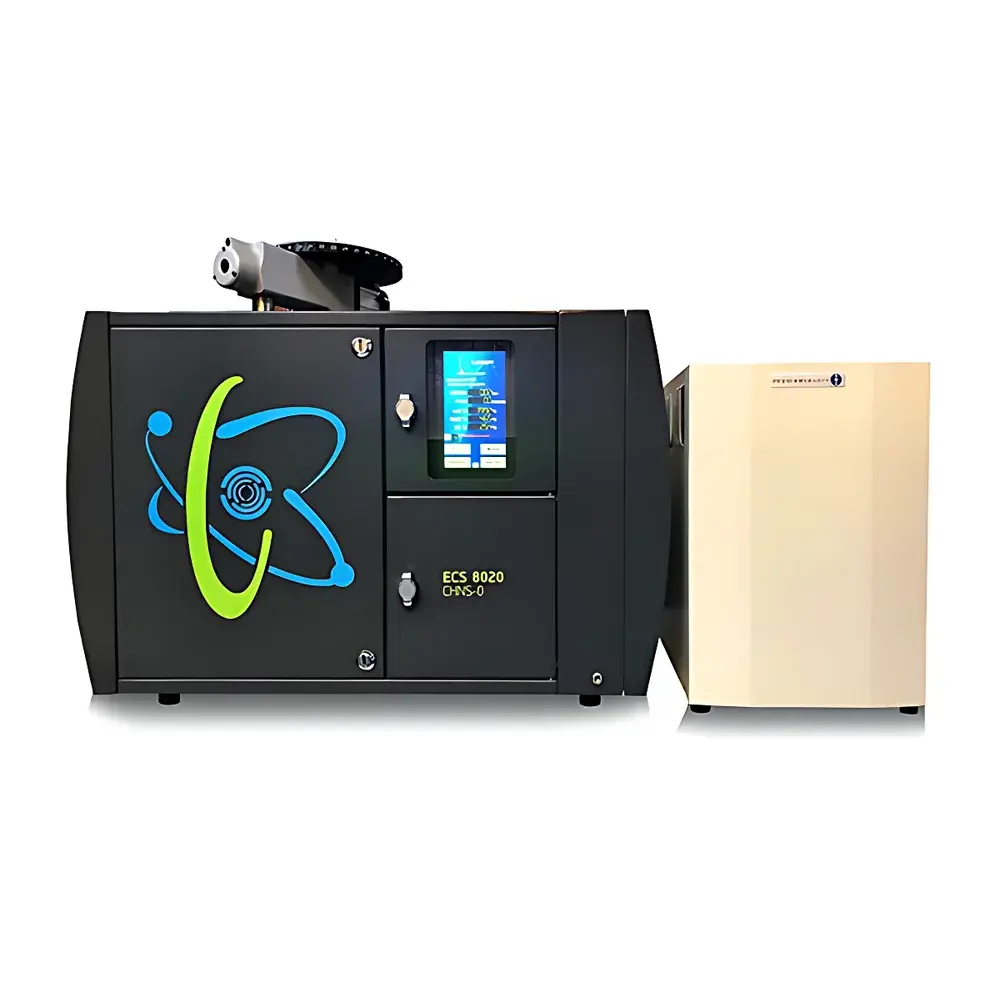
ID Micro EA Desktop Isotope Ratio Mass Spectrometer
| Origin | UK |
|---|---|
| Manufacturer Type | Authorized Distributor |
| Origin Category | Imported |
| Model | ID Micro EA |
| Price Range | USD 140,000–280,000 |
| Instrument Type | Stable Gas Isotope Ratio Mass Spectrometer |
| Resolution | >75 at m/z 29 |
Overview
The ID Micro EA Desktop Isotope Ratio Mass Spectrometer (IRMS) is a compact, high-precision analytical platform engineered for stable isotope ratio measurements of carbon (¹³C/¹²C), nitrogen (¹⁵N/¹⁴N), oxygen (¹⁸O/¹⁶O), and sulfur (³⁴S/³²S) in gaseous analytes—primarily CO₂, N₂, NO, SO₂, and CO generated via elemental combustion or chemical conversion. Unlike conventional IRMS systems requiring dedicated shielded rooms, cryogenic infrastructure, or high-vacuum service contracts, the ID Micro EA integrates a permanent high-stability magnet, compact 14 cm radius-of-curvature (RAD) 90° magnetic sector mass analyzer, and on-board vacuum system into a footprint of just 70 × 30 × 47 cm. Its core measurement principle relies on magnetic sector-based ion beam separation under high vacuum, followed by simultaneous multi-collector detection using a CNOS triple Faraday cup array. This architecture ensures high mass resolution (>75 at m/z 29), low baseline noise, and exceptional signal stability—critical for achieving sub-permil precision in isotopic delta (δ) values referenced to international standards (e.g., VPDB, AIR-N₂).
Key Features
- Desktop form factor (45 kg net weight) with integrated vacuum pumping options: selectable 70 L/s or 250 L/s turbomolecular pump for optimized sensitivity vs. operational cost trade-offs
- Modular, plug-and-play high-sensitivity ion source with rapid field-replaceable design—enabling source maintenance without breaking vacuum or recalibrating mass calibration
- Permanent high-temperature-stable magnet eliminating need for water-cooling or external power supplies; maintains field homogeneity over extended thermal cycles
- Triple Faraday cup collector array (CNOS configuration) for simultaneous detection of isotopic ions at m/z 44/45/46 (CO₂), 28/29/30 (N₂), and other relevant masses—minimizing time-dependent drift during peak integration
- Low-power operation: typical electrical draw of 240 W; compatible with standard 110–240 V AC outlets and uninterruptible power supply (UPS) systems in shared laboratory environments
- Automated instrument diagnostics and remote performance optimization via secure internet connectivity—supporting GLP-compliant audit trails and preventive maintenance scheduling
Sample Compatibility & Compliance
The ID Micro EA is designed for seamless coupling with elemental analyzers (e.g., Flash EA, vario EL cube) or gas chromatography–combustion–IRMS (GC-C-IRMS) interfaces for solid, liquid, or gaseous samples. It supports routine analysis of organic matrices including foodstuffs (honey, wine, vanilla), biological tissues (urine, serum, hair), environmental solids (soil, sediment, plant matter), and geological carbonates. All δ¹³C and δ¹⁵N performance specifications meet or exceed requirements defined in ASTM D7665–22 (Standard Practice for Determination of Stable Isotope Ratios) and ISO 11290–2 (Microbiology of Food and Animal Feeding Stuffs). Data acquisition and processing comply with FDA 21 CFR Part 11 electronic record and signature requirements when deployed with validated software configurations and user access controls.
Software & Data Management
The system ships with a full-featured, Windows-based control and data reduction suite supporting real-time mass spectrometer tuning, automated peak centering, baseline correction, integration window optimization, and delta value calculation against user-defined reference gas injections. Raw data files are stored in vendor-neutral ASCII format with embedded metadata (timestamp, operator ID, calibration history, vacuum status). The software includes built-in diagnostic modules for ion source emission stability, magnet current ripple, detector gain linearity, and Faraday cup offset verification—each generating timestamped logs suitable for internal QA review or regulatory inspection. Audit trail functionality records all parameter changes, method edits, and report exports with user authentication and tamper-evident hashing.
Applications
- Food authenticity and traceability: detection of honey adulteration (C₃/C₄ sugar syrups), origin verification of olive oil and dairy products, and labeling compliance for organic certification
- Clinical and biomedical research: non-invasive diagnosis of Helicobacter pylori infection via ¹³C-urea breath test, metabolic flux analysis in cancer cell lines, and isotopic tracer studies in pharmacokinetics
- Environmental geochemistry: quantification of soil organic carbon turnover rates, nitrate source apportionment in groundwater, and paleoclimate reconstruction from speleothem carbonate δ¹⁸O
- Petroleum and energy geoscience: hydrocarbon fingerprinting, biodegradation assessment of crude oils, and methane source discrimination (thermogenic vs. microbial) in shale gas systems
- Forensic science: geographic profiling of illicit drugs via plant δ¹³C/δ¹⁵N signatures, and human remains provenance determination using bone collagen isotopic composition
FAQ
What sample introduction methods are supported?
The ID Micro EA operates exclusively in continuous-flow mode and requires interfacing with an external elemental analyzer (EA), gas chromatograph (GC), or laser fluorination system. Direct liquid injection or solid probe insertion is not supported.
Is the instrument compliant with ISO/IEC 17025 accreditation requirements?
Yes—the hardware architecture, software audit trail, calibration traceability to NIST SRMs, and documented uncertainty budgets support implementation within ISO/IEC 17025 accredited laboratories when paired with appropriate quality management procedures.
Can the system be upgraded for sulfur or oxygen isotope analysis?
Oxygen isotope analysis (δ¹⁸O in CO) is enabled via optional CO conversion furnace and cryo-trap module; sulfur isotope capability (δ³⁴S in SO₂) requires additional high-temperature reactor and dedicated Faraday cup reconfiguration—both available as factory-installed options.
What is the typical maintenance interval for the ion source?
Under normal operation with clean, well-conditioned sample streams, the ion source requires cleaning or replacement every 6–12 months; the modular design allows full exchange in under 15 minutes without venting the mass analyzer chamber.
Does the system support automated unattended operation?
Yes—when coupled with autosampler-equipped elemental analyzers or GC systems, the ID Micro EA supports overnight batch runs with automatic gas standard injections, system diagnostics, and error recovery protocols triggered by vacuum loss or beam instability events.







