
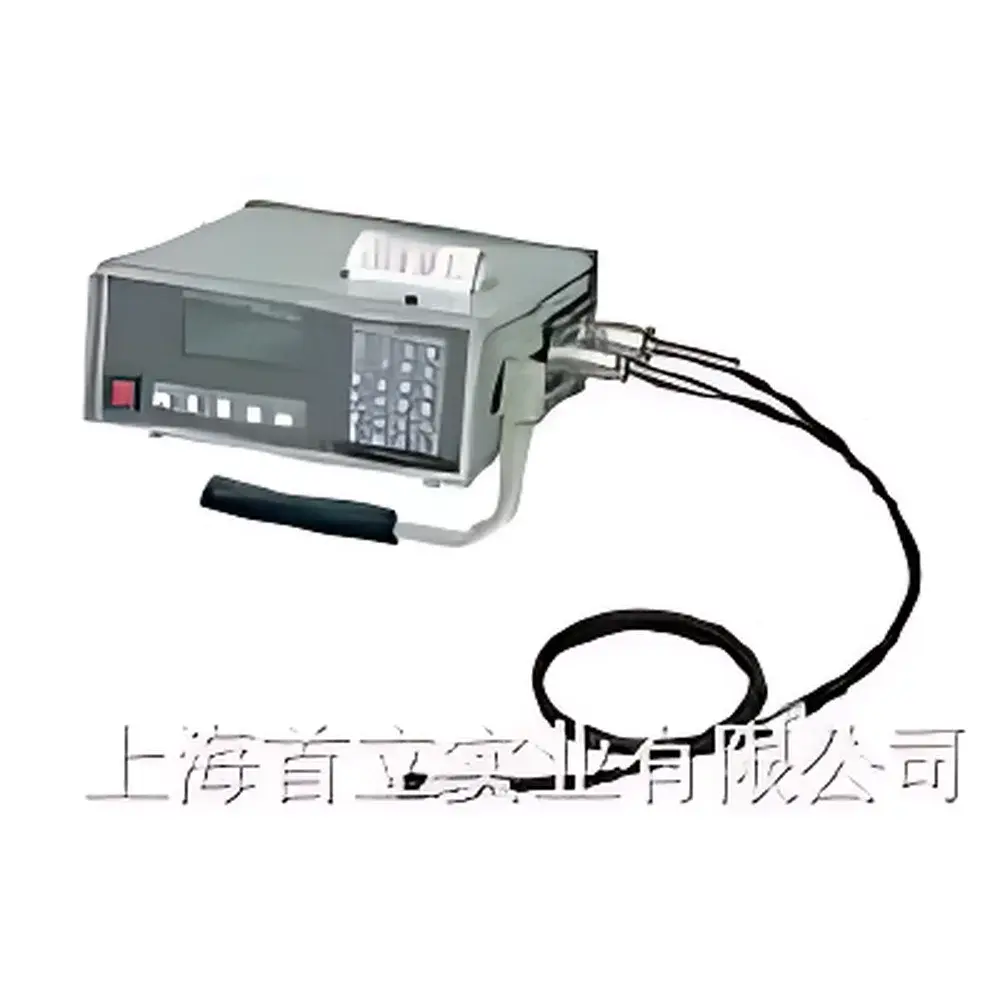
FW-098 Resin Product Evaluation Instrument
| Origin | Japan |
|---|---|
| Manufacturer Type | Authorized Distributor |
| Origin Category | Imported |
| Model | FW-098 |
| Pricing | Upon Request |
| Measurement Parameters | Y, ΔY, % Error |
| Luminance Range (Y) | 0–150 |
| Measurement Aperture | Φ4 mm, Φ10 mm |
| Illumination/Reception Geometry | 0°/0° (Per JIS Z 8722) — Vertical Illumination / Vertical Detection |
| Compliant Standards | JIS Z 8722, ASTM E 308, ASTM E 313, ASTM D 1925 |
| Accuracy & Repeatability | ±0.05% of full scale (FS) at Y = 100 |
| Dimensions (W × D × H) | 300 × 270 × 150 mm |
| Weight | 5 kg |
| Power Supply | AC, 60 W |
| Light Source | 12 V / 2 A Halogen Lamp |
| Optional Accessories | Windows-compatible color management software, RS-232C interface cable |
| Data Storage Capacity | 800 measurements |
Overview
The FW-098 Resin Product Evaluation Instrument is a precision optical measurement system engineered for quantitative assessment of surface integrity in polymer-based materials—particularly thermosetting resins, coatings, encapsulants, and molded composites. Unlike conventional colorimeters or spectrophotometers optimized for hue and chroma, the FW-098 employs a calibrated 0°/0° illumination-detection geometry (per JIS Z 8722) to isolate luminance (Y) variations associated with microstructural discontinuities—including hairline cracks, interfacial delamination, and subsurface voids. Its optical design enables consistent evaluation across heterogeneous surface finishes—from matte-textured mold releases to high-gloss polished surfaces—without requiring gloss compensation or mechanical repositioning. The instrument operates on the principle that localized fracture zones exhibit measurable deviations in diffuse reflectance due to altered light scattering profiles; these deviations are captured as normalized Y-value differentials (ΔY) and statistically expressed as percentage error relative to reference-area luminance. This approach provides objective, operator-independent pass/fail criteria for quality control in resin manufacturing, electronics encapsulation, and aerospace composite inspection.
Key Features
- Dual-aperture optical head (Φ4 mm and Φ10 mm) for flexible spatial resolution—enabling high-resolution crack localization or macro-scale homogeneity assessment.
- Digital crack enhancement algorithm that dynamically adjusts contrast to render subtle fissures optically distinguishable—rendering cracks visibly “white” or luminescent against background without physical marking.
- One-touch measurement initiation with real-time Y-value acquisition and immediate ΔY calculation against user-defined baseline regions.
- Intelligent data averaging routine with outlier rejection: during sequential measurements, anomalous readings exceeding ±0.05% FS deviation are flagged and may be overwritten without interrupting workflow.
- Onboard non-volatile memory storing up to 800 measurement records—including timestamp, aperture selection, Y-value, ΔY, % error, and operator ID (if configured via RS-232C).
- Integrated halogen illumination system (12 V / 2 A) with thermal stabilization ensuring spectral stability over extended operation cycles (>10,000 hours MTBF).
Sample Compatibility & Compliance
The FW-098 accommodates rigid and semi-rigid resin specimens ranging from 10 mm × 10 mm to 300 mm × 300 mm in planar dimension, with no minimum thickness requirement—provided the backside is non-transmissive. It is validated for use with epoxy, phenolic, silicone, and polyimide systems, including filled and fiber-reinforced variants. Surface roughness (Ra) tolerance spans 0.02 µm (mirror-polished) to 12.5 µm (as-molded)—verified per ISO 25178-2. Regulatory alignment includes full traceability to JIS Z 8722 (diffuse reflectance methodology), ASTM E 308 (CIE tristimulus computation), ASTM E 313 (yellowness index), and ASTM D 1925 (yellowing index for plastics). The device supports GLP-compliant audit trails when paired with optional Windows-based software and RS-232C logging.
Software & Data Management
The optional color management software (Windows 10/11 compatible) provides full bidirectional communication via RS-232C. It enables automated report generation (PDF/CSV), statistical process control (SPC) charting (X̄–R, Cpk), batch-level trend analysis, and configurable alarm thresholds for ΔY and % error. All stored measurements include embedded metadata: date/time stamp, aperture mode, calibration ID, and firmware revision. Audit logs record every parameter change, data export event, and memory overwrite action—supporting FDA 21 CFR Part 11 requirements when electronic signatures and role-based access controls are enabled.
Applications
- QC screening of encapsulated semiconductor packages for die-attach cracking and mold compound delamination.
- In-process verification of UV-cured resin coatings on optical lenses and medical device housings.
- Comparative aging studies tracking crack propagation in aerospace-grade phenolic laminates under thermal cycling.
- Supplier qualification testing for resin suppliers—validating consistency in batch-to-batch surface integrity.
- Root cause analysis in failure investigations where visual inspection is inconclusive but functional degradation correlates with micro-crack density.
FAQ
Does the FW-098 require annual recalibration?
Yes—certified recalibration against NIST-traceable luminance standards is recommended annually or after 2,000 measurement cycles, whichever occurs first.
Can the instrument measure through transparent resin layers?
No—it is designed for surface and near-surface discontinuity detection only; transmission-mode measurement is not supported.
Is the halogen lamp field-replaceable?
Yes—the lamp module is user-serviceable with standard Torx T10 tools and requires no optical realignment post-replacement.
What is the minimum detectable crack width?
Under optimal contrast conditions (Φ4 mm aperture, high-reflectance matrix), the system resolves discontinuities ≥15 µm in width with ≥95% detection probability at SNR > 20 dB.
Does the device support Ethernet or USB connectivity?
No—communication is exclusively via RS-232C; USB-to-serial adapters are permitted but not supplied.




