
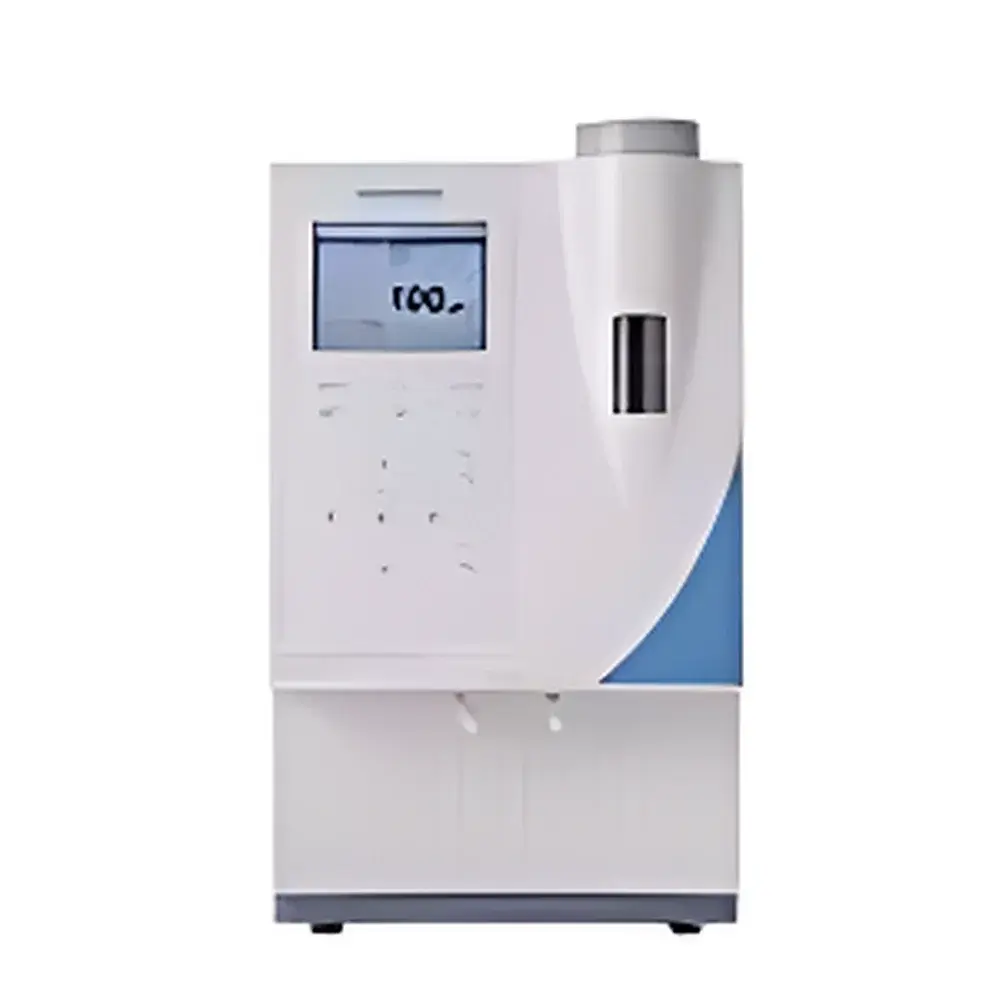
HORIBA OCMA-505 Infrared Oil Content Analyzer
| Brand | HORIBA |
|---|---|
| Origin | Japan |
| Model | OCMA-505 |
| Instrument Type | Laboratory Analyzer |
| Measurement Principle | Non-Dispersive Infrared (NDIR) Absorption after Solvent Extraction |
| Measurement Range | 0–200 mg/L |
| Detection Limit | Not Specified |
| Accuracy | ±0.1 mg/L (0–99.9 mg/L) |
| Resolution | 0.1 mg/L (0–9.9 mg/L) |
| Measurement Cycle | One analysis per minute |
| Extractant | HORIBA H-997 solvent |
| Sample-to-Extractant Ratio | 2:1 (v/v) |
| Data Storage Capacity | 300 measurements |
| Display | 3.5-inch backlit color LCD |
| Power Supply | 100–240 V AC, 50/60 Hz |
| Dimensions (W×D×H) | 200 × 313 × 342 mm |
| Weight | 7 kg |
Overview
The HORIBA OCMA-505 Infrared Oil Content Analyzer is a fully automated laboratory instrument engineered for precise, reproducible quantification of total petroleum hydrocarbons (TPH) and mineral oil in aqueous and semi-aqueous matrices. It operates on the principle of non-dispersive infrared (NDIR) absorption spectroscopy following selective liquid–liquid extraction using HORIBA’s proprietary H-997 solvent—a chlorinated hydrocarbon-free, low-toxicity extractant optimized for broad-spectrum oil recovery. Unlike traditional hexane-based methods requiring post-extraction solvent evaporation—which risks loss of volatile fractions such as gasoline-range organics (GRO), benzene, toluene, or xylene—the OCMA-505 measures the intact extract directly in the integrated cuvette, preserving low-boiling-point compounds and enabling accurate assessment of environmentally relevant hydrocarbon mixtures. Its design complies with foundational methodological expectations aligned with ISO 9377-2 (water quality — determination of hydrocarbon oil index), ASTM D7066 (standard test method for oil and grease in water by infrared spectrophotometry), and supports data integrity requirements under GLP and routine environmental QA/QC protocols.
Key Features
- One-touch operation: Automated sequence initiation—extraction, phase separation, optical measurement, and waste discharge—executed via single START button press, eliminating manual intervention and operator-dependent variability.
- Reduced solvent consumption: Optimized fluidics and extraction chamber geometry lower H-997 usage by >20% versus prior-generation instruments, decreasing chemical disposal volume, operational cost, and environmental footprint.
- Backlit extraction chamber (patented LED illumination): Enables real-time visual confirmation of emulsion formation, phase separation kinetics, and interfacial clarity—critical for troubleshooting heterogeneous or surfactant-laden samples.
- 3.5-inch color LCD with adjustable backlight: Intuitive graphical interface displays real-time status, calibration prompts, measurement results, and diagnostic flags; supports multilingual menu navigation (English, Japanese, Chinese).
- Flexible unit selection: Direct input of sample mass/volume enables automatic conversion between mg/L, mg, mg/g, and mg/pc—essential for wastewater discharge reporting, parts cleaning validation, and soil leachate analysis.
- No solvent evaporation step: Preserves volatile and semi-volatile hydrocarbons, extending applicability beyond conventional gravimetric or evaporation-coupled IR methods.
- Integrated self-diagnostic system: Continuously monitors optical path integrity, temperature stability, pump function, and valve actuation; logs error codes and maintenance alerts.
Sample Compatibility & Compliance
The OCMA-505 accommodates diverse sample types across environmental, industrial, and manufacturing domains—including municipal and industrial wastewater effluents, bilge water, tank washings, soil leachates, metalworking fluids, and component rinse solutions. It accepts samples filtered through 40-mm hydrophobic membrane filters (included) to remove suspended solids without adsorbing dissolved oil fractions. While not certified to EPA Method 1664 or ISO 9377-1, its NDIR detection architecture and H-997 extraction chemistry provide analytical performance consistent with regulatory screening thresholds for Class I–III discharges under national water quality standards (e.g., Japan’s JIS K 0102, China’s GB/T 16488, EU WFD monitoring guidelines). Instrument firmware supports audit-trail logging for GLP-compliant laboratories, and raw absorbance data export facilitates traceable reprocessing.
Software & Data Management
Data are stored internally (300 measurement records with timestamp, operator ID, calibration history, and raw absorbance values) and exported via USB 2.0 to FAT32-formatted flash drives in CSV format—compatible with LIMS integration, Excel-based trending, and statistical process control (SPC) software. No proprietary drivers or cloud dependency required. The embedded clock enables time-stamped compliance reporting aligned with ISO/IEC 17025 documentation requirements. Optional SR-305 Solvent Regenerator (sold separately) extends H-997 reuse through dual-stage activated carbon and activated alumina columns—reducing solvent procurement frequency and supporting circular lab practices.
Applications
- Effluent Monitoring: Real-time compliance verification for steel mills, petrochemical plants, food processing facilities, and marine vessel bilge discharge systems.
- Environmental Emergency Response: Rapid field-deployable assessment of oil spills in harbor waters, offshore platforms, and storage tank cleanout runoff.
- Manufacturing Process Control: Quantification of residual lubricants on machined components, validation of ultrasonic cleaning efficacy in aerospace and semiconductor fabrication lines.
- Soil & Sediment Screening: Leachate analysis from contaminated sites using standardized aqueous extraction protocols (e.g., SPLP or TCLP variants).
- Regulatory Surveillance: Routine monitoring at fueling stations, vehicle inspection centers, and groundwater monitoring wells per local environmental agency directives.
FAQ
What extraction solvent is required for the OCMA-505?
HORIBA H-997 solvent is mandatory; it is specifically formulated for optimal infrared absorption characteristics and phase separation behavior. Substitution with hexane, CCl₄, or other solvents invalidates calibration and compromises accuracy.
Can the OCMA-505 measure diesel, kerosene, or crude oil equivalents?
Yes—its broad-band NDIR detection responds to C–H stretching vibrations common to aliphatic and aromatic hydrocarbons. Calibration curves may be established using site-specific reference oils per ISO 9377-2 Annex B guidance.
Is method validation support available from HORIBA?
HORIBA provides application notes detailing linearity (R² ≥ 0.999 over 0–200 mg/L), repeatability (n = 6, RSD < 3.5% at 10 mg/L), and interference testing against common matrix constituents (e.g., humic acids, detergents, ethanol). Full validation packages require user-conducted spike recovery studies per ISO/IEC 17025 Clause 7.7.
Does the instrument meet FDA 21 CFR Part 11 requirements?
The OCMA-505 does not include electronic signature functionality or role-based access control; however, its CSV export format and internal audit log satisfy baseline data integrity expectations for non-GMP environmental testing environments.
What maintenance intervals are recommended?
Daily: Visual inspection of extraction chamber and tubing; weekly: H-997 solvent level check and filter replacement; annually: photodetector sensitivity verification and pump calibration using certified reference standards.







