
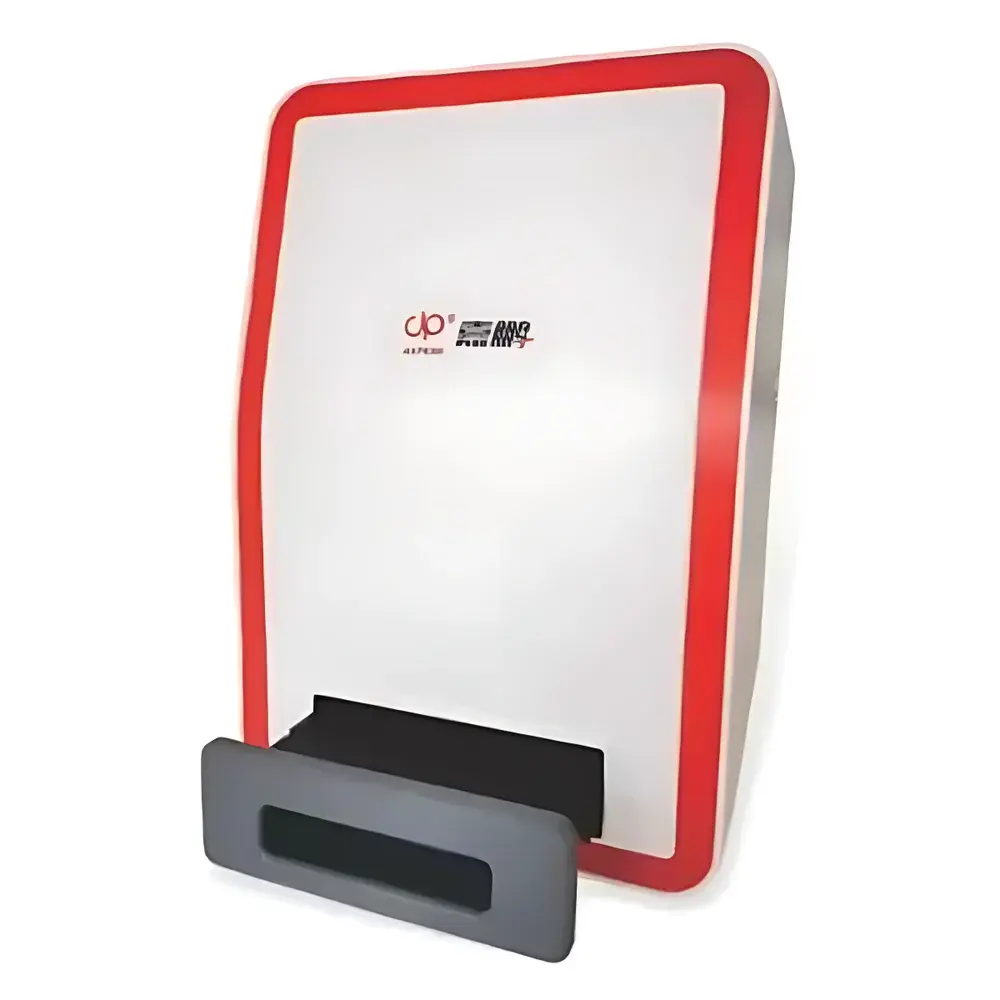
Jiapeng JP-K4600 Miniature Chemiluminescence Imaging System
| Brand | Jiapeng |
|---|---|
| Origin | Shanghai, China |
| Manufacturer Type | Authorized Distributor |
| Region of Origin | Domestic (China) |
| Model | JP-K4600 |
| Instrument Type | Chemiluminescence Gel Imaging System |
| CCD Resolution | 9 MP (3000 × 3000) |
| Bit Depth | 16-bit |
| Dynamic Range | 0–4.8 OD |
| CCD Sensor Size | 4/3-inch (SONY IMX533CLK-D) |
| Detection Sensitivity | ≥0.02 ng for Protein |
| Signal-to-Noise Ratio | 56 dB |
| Lens | Fixed F/0.95 lens (optional F/0.8), 8–48 mm optical zoom (6× zoom ratio) |
| Sample Stage | 11 × 11 cm illuminated platform with anti-scatter design |
| Cooling Temperature | −45 °C (ΔT = −65 °C vs ambient) |
| Pixel Size | 5.4 µm × 5.4 µm |
| Pixel Binning | 1×1 to 8×8 |
| Dark Current | <0.0005 e⁻/pixel/s |
| White Light Source | Top-mounted, uniform illumination |
| Image Area | 10 × 8.8 cm |
| Power Supply | AC 220 V, 50/60 Hz |
| Dimensions (W×D×H) | 295 × 245 × 450 mm |
| Weight | 5 kg |
Overview
The Jiapeng JP-K4600 Miniature Chemiluminescence Imaging System is a compact, high-sensitivity benchtop instrument engineered for quantitative detection and documentation of chemiluminescent and bioluminescent signals in life science applications. It operates on the principle of photon capture via a deep-cooled scientific CMOS sensor, optimized for low-light imaging without compromising spatial resolution or dynamic fidelity. Unlike broad-spectrum UV or visible-light gel documentation systems, the JP-K4600 is purpose-built for enzymatic and substrate-based luminescence assays—particularly Western blotting workflows utilizing horseradish peroxidase (HRP) or alkaline phosphatase (AP) conjugates. Its architecture eliminates reliance on film or intensified CCDs, delivering digital quantification across a calibrated optical density (OD) range of 0–4.8 with 16-bit linear response (0–65,535 gray levels). The system’s thermal management—achieving −45 °C sensor temperature (ΔT = −65 °C below ambient)—significantly suppresses dark current noise (<0.0005 e⁻/pixel/s), enabling long-exposure acquisition essential for weak signal detection.
Key Features
- Deep-cooled 4/3-inch SONY IMX533CLK-D sensor with 9 MP native resolution (3000 × 3000), optionally upgradable to 23.65 MP (5376 × 4400)
- F/0.95 fixed-aperture lens (F/0.8 optional) combined with 6× optical zoom (8–48 mm), ensuring optimal light throughput and focus flexibility across varied sample formats
- 11 × 11 cm anti-scatter sample stage with programmable auto-shutoff for white-light illumination (0–60 min timer)
- 16-bit digitization and 4.8 OD dynamic range support precise densitometric analysis of multi-band Western blots and low-abundance targets
- Pixel binning modes (1×1 to 8×8) allow real-time trade-offs between sensitivity, frame rate, and spatial resolution
- Integrated top-mounted white LED source with >95% intensity uniformity across 10 × 8.8 cm field of view, calibrated for Coomassie and SYBR-safe staining documentation
Sample Compatibility & Compliance
The JP-K4600 accommodates standard electrophoresis formats including mini-gels (up to 10 × 8 cm), blot membranes (PVDF, nitrocellulose), microplates (96-well luminometer-compatible), and tissue sections mounted on glass slides. It supports all major chemiluminescent substrates—including ECL, ECL Plus, SuperSignal West Pico/Femto, CDP-Star, CSPD, LumiGlo, and Western Lightning—without hardware modification. While not certified to ISO/IEC 17025 or FDA 21 CFR Part 11 out-of-the-box, the system generates audit-ready TIFF and PNG files with embedded metadata (exposure time, binning mode, lens aperture, sensor temperature), facilitating GLP-compliant recordkeeping when integrated into validated laboratory workflows. Raw image data is stored unprocessed, preserving integrity for retrospective reanalysis.
Software & Data Management
The JP-K4600 ships with Jiapeng ImageStudio Pro—a Windows-based acquisition and analysis suite supporting real-time preview, exposure optimization, background subtraction, band intensity profiling, molecular weight calibration, and multi-channel overlay (chemiluminescence + white-light). All operations are scriptable via Python API for integration into automated pipelines. Export options include CSV (intensity tables), PDF (publication-ready reports), and FAIR-aligned TIFF stacks with EXIF-compliant metadata tags. Software logs user actions, timestamps, and instrument parameters per acquisition, satisfying basic traceability requirements under ISO 15189 and CLIA guidelines.
Applications
- Quantitative Western blot analysis with inter-blot normalization and statistical reproducibility assessment
- Detection of low-copy-number proteins in cell lysates, serum samples, or exosomal fractions
- Validation of CRISPR/Cas9 knockout efficiency via target protein depletion
- High-throughput screening of antibody binding affinity using luminometric ELISA variants
- Bioluminescent reporter assays (e.g., luciferase, NanoLuc) in live-cell or lysate formats
- Documentation of nucleic acid gels stained with SYBR Gold or ethidium bromide under safe white-light illumination
FAQ
What is the minimum detectable protein mass using the JP-K4600?
The system achieves ≥0.02 ng sensitivity for HRP-conjugated antibodies on nitrocellulose membranes under standard ECL conditions (1-minute exposure, F/0.95 lens, 2×2 binning, −45 °C cooling).
Can the JP-K4600 perform multiplex imaging?
Yes—sequential imaging with different substrates (e.g., HRP + AP) is supported via software-controlled exposure sequencing and channel registration; however, true simultaneous dual-color detection requires external filter wheels not included in base configuration.
Is the software compatible with LIMS or ELN platforms?
Native LIMS/ELN integration is not provided, but TIFF/PNG exports and CSV intensity data are fully compatible with third-party laboratory informatics systems via standardized import protocols.
Does the system meet regulatory requirements for clinical diagnostics?
The JP-K4600 is intended for research use only (RUO); it is not CE-IVD or FDA 510(k)-cleared for diagnostic applications.
What maintenance is required for long-term performance stability?
No routine optical alignment or vacuum pump servicing is needed; periodic verification of sensor cooling performance and white-light uniformity (using NIST-traceable grayscale standards) is recommended annually.





