
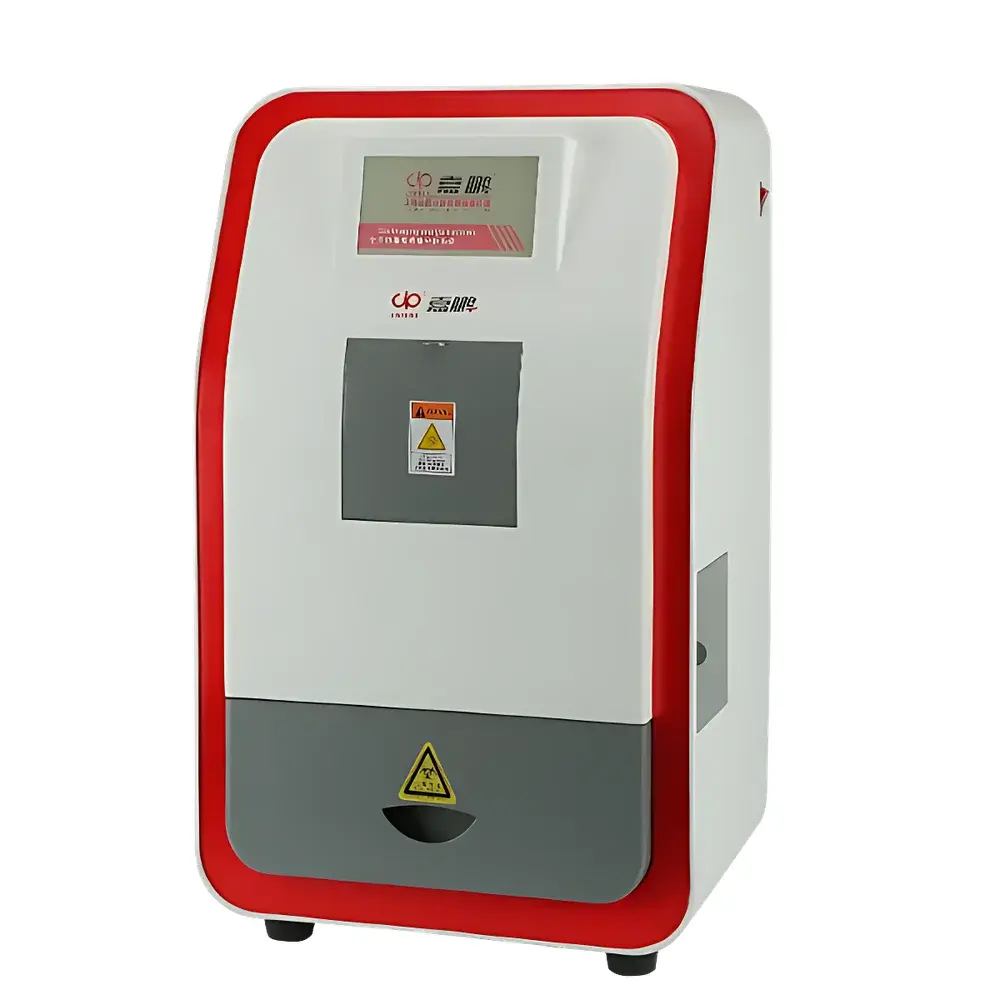
Jiapeng JP-2880 Fully Automated Gel Documentation and Analysis System
| Brand | Jiapeng |
|---|---|
| Origin | Shanghai, China |
| Model | JP-2880 |
| Instrument Type | Standard Gel Imaging System |
| CCD Resolution | 5 MP (3096 × 2080) |
| Bit Depth | 16-bit |
| Dynamic Range | >4.5 OD |
| CCD Sensor Size | 1/2.5" |
| Minimum Detectable DNA | 0.01 ng (EB-stained dsDNA) |
| Signal-to-Noise Ratio | ≥56 dB |
| Lens | Motorized High-Transmission Zoom Lens (Computar, 8–48 mm, f/1.2) |
| Transmission UV Source | 302 nm (210 × 260 mm area) |
| Optional Blue/White Light Transilluminator | 210 × 300 mm |
| Standard Emission Filter | 590 nm |
| Software | JP-GEL 1D Image Analysis Suite |
| Power Supply | AC 220 V, 50/60 Hz |
| Dimensions (W×D×H) | 380 × 430 × 730 mm |
| Weight | 18.1 kg |
Overview
The Jiapeng JP-2880 Fully Automated Gel Documentation and Analysis System is an integrated benchtop platform engineered for precise acquisition, quantification, and comparative analysis of nucleic acid and protein electrophoresis gels, blotting membranes, autoradiographs, microplates, and thin-layer chromatography (TLC) plates. Built upon a high-sensitivity monochrome CCD imaging architecture with 16-bit digitization and >4.5 optical density (OD) dynamic range, the system captures quantitative fluorescence and chemiluminescent signals across multiple excitation modalities—including 254 nm, 302 nm, and 365 nm UV transillumination and reflectance illumination. Its motorized zoom lens (8–48 mm, f/1.2) enables consistent magnification control without manual intervention, while the large-area 302 nm UV transilluminator (210 × 260 mm) ensures uniform excitation for ethidium bromide (EB), SYBR® Safe, GoldView™, and other common nucleic acid dyes. Designed for reproducible data generation in molecular biology laboratories, the JP-2880 supports GLP-aligned workflows through audit-trail-capable software logging and standardized image export formats.
Key Features
- Fully automated hardware control via JP-GEL 1D software—motorized lens focus, zoom, aperture adjustment, UV lamp activation, and white/blue light switching are all programmable and scriptable.
- Scientific-grade monochrome CCD sensor (1/2.5″, 3096 × 2080 pixels, 5.7 µm × 4.28 µm pixel size) delivering high quantum efficiency and low read noise for reliable detection of faint bands down to 0.01 ng EB-stained dsDNA.
- Real-time sample visualization via UV-protective observation window or live software preview—enabling immediate assessment of gel integrity and band resolution prior to exposure.
- Configurable exposure times from 0.294 ms to 2000 ms, supporting both rapid screening and long-integration chemiluminescence capture.
- Auto-shutdown protocol: All illumination sources deactivate after 15 minutes of inactivity, reducing photobleaching risk and extending lamp lifetime.
- Integrated safety design: Interlocked UV chamber door, automatic lamp cutoff upon software exit, and compliant shielding meeting IEC 61010-1 electrical safety standards.
Sample Compatibility & Compliance
The JP-2880 accommodates standard vertical and horizontal electrophoresis gels (up to 20 × 20 cm), Western/Northern/Southern blot membranes, dot/slot blots, autoradiographic films, 96-well ELISA plates, and silica-based TLC plates. It supports dual-mode detection: UV-induced fluorescence (e.g., EB, SYBR Green I, GelRed™) and visible-light absorbance (e.g., Coomassie Blue, Ponceau S, silver stain). The system complies with ISO/IEC 17025-relevant documentation practices when used with JP-GEL 1D’s metadata tagging and versioned analysis logs. While not FDA 21 CFR Part 11-certified out-of-the-box, its software architecture allows integration into validated environments via user-defined electronic signature protocols and external LIMS linkage.
Software & Data Management
JP-GEL 1D is a Windows-based image analysis suite supporting TIFF, JPEG, PNG, and RAW export formats. It provides lane and band detection with background subtraction algorithms, molecular weight calibration using reference ladders, relative optical density (ROD) quantification, % volume normalization, cluster analysis for multi-gel comparisons, and homology mapping based on band pattern similarity metrics. All processing steps are logged with timestamps, operator ID (if network-authenticated), and parameter sets—enabling full traceability. Batch processing mode permits parallel analysis of up to 96 images with identical settings, and results export directly to Excel-compatible CSV or structured XML for downstream statistical packages (e.g., R, GraphPad Prism).
Applications
- Quantitative PCR product verification and sizing (100 bp – 10 kb range).
- DNA fragment analysis in restriction digestion, cloning validation, and CRISPR editing assays.
- Semi-quantitative protein expression profiling via SDS-PAGE and Western blot densitometry.
- Northern blot hybridization signal intensity comparison across RNA samples.
- Enzyme-linked immunosorbent assay (ELISA) plate imaging and spot intensity mapping.
- TLC solvent front tracking and Rf value calculation for small-molecule separation studies.
FAQ
Does the JP-2880 support chemiluminescent detection?
Yes—the system’s high-sensitivity CCD and extended exposure capability (up to 2000 ms) enable robust capture of horseradish peroxidase (HRP) and alkaline phosphatase (AP)-based chemiluminescent signals when used with reflective UV or white-light illumination modes.
Can JP-GEL 1D perform batch analysis across multiple gels?
Yes—batch mode allows simultaneous loading, lane alignment, and band quantification of up to 96 images using identical calibration and threshold parameters.
Is the UV transilluminator intensity adjustable?
No—the 302 nm UV source operates at fixed optimal intensity for EB and SYBR-compatible dyes; however, exposure time and lens aperture are fully adjustable to modulate effective signal gain.
What file formats does the software support for import and export?
Import: TIFF, JPEG, PNG, BMP, RAW (proprietary). Export: TIFF (uncompressed), JPEG, PNG, CSV (quantitative data), XML (analysis metadata), and PDF (annotated reports).
Does the system meet CE or UL safety certification requirements?
The JP-2880 conforms to IEC 61010-1 for laboratory electrical equipment and carries CE marking for the European Economic Area; UL listing is available upon request for North American deployment under OEM agreement.





