
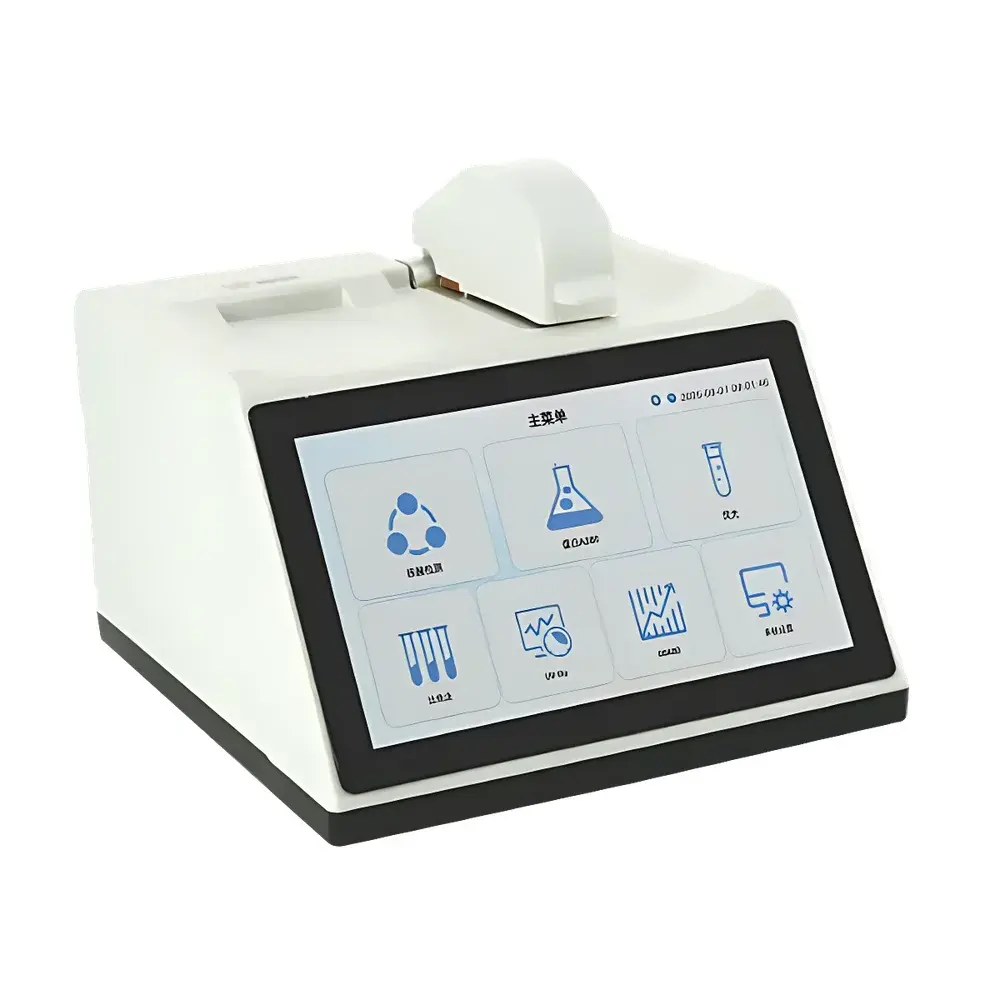
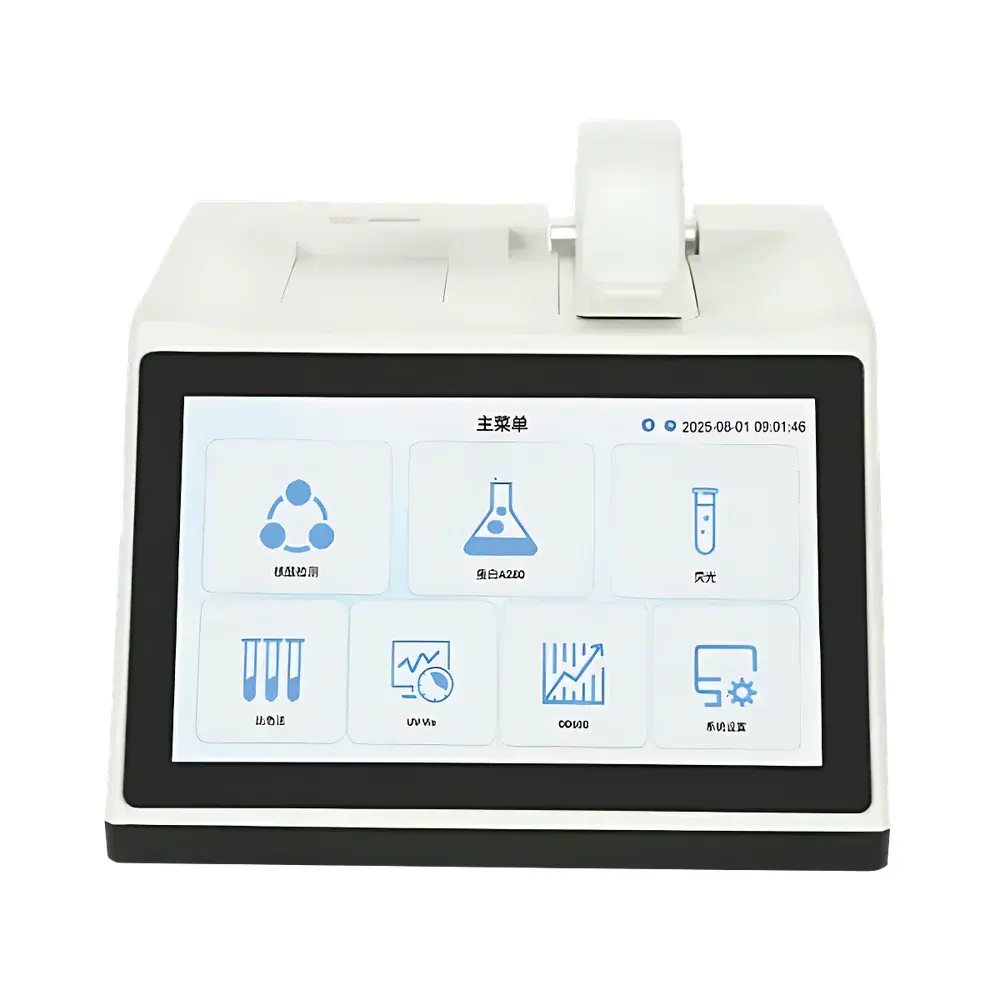
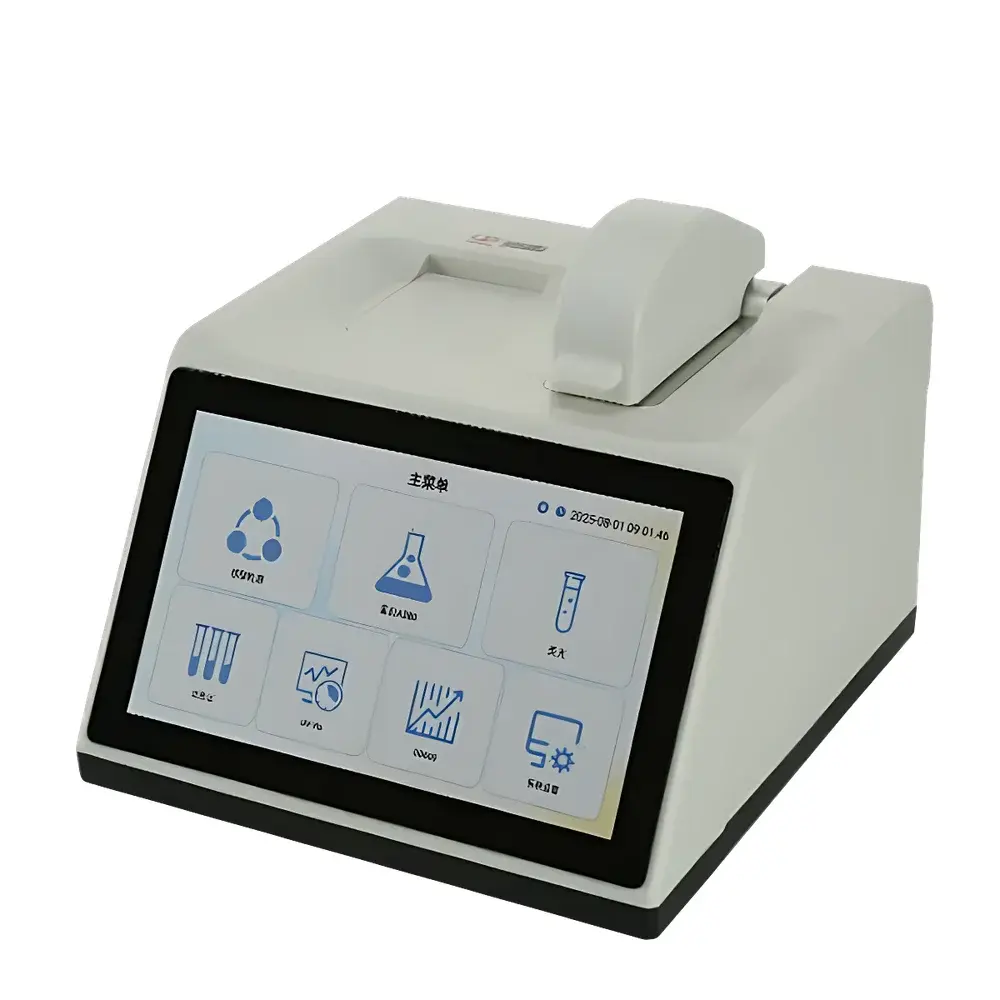
JP-Keebio1000 Ultra-Micro Spectrophotometer
| Brand | JiaPeng |
|---|---|
| Origin | Shanghai, China |
| Model | JP-Keebio1000 |
| Spectral Bandwidth | 1.0, 0.5, 0.1, 0.05, 0.02 mm (auto-switching) |
| Wavelength Accuracy | ±1 nm |
| Wavelength Range | 185–910 nm |
| Cuvette Absorbance Range | 0–4 A |
| Sample Volume | 0.2–2.0 µL |
| Optical Path Lengths | 0.02–1.0 mm (motorized auto-adjustment) |
| Light Source | Xenon flash lamp (≥10⁹ flashes, ~10-year operational life) |
| Detector | 3648-pixel linear CCD array |
| Absorbance Accuracy | ±1% (at 7.332 A, 260 nm) |
| Absorbance Precision | ±0.002 A |
| OD₆₀₀ Mode | 600 ± 8 nm |
| Measurement Time | ≤5 s per sample |
| dsDNA Quantitation Range | 0–38,880 ng/µL |
| BSA Protein Range | 0.06–820 mg/mL |
| Data Export | USB port, microSD slot |
| Optional fluorescence module (Ex | 460 nm, Em: 525 nm) |
Overview
The JP-Keebio1000 Ultra-Micro Spectrophotometer is a dual-mode, full-spectrum absorbance instrument engineered for high-precision nucleic acid and protein quantification in resource-constrained or high-throughput laboratory environments. It operates on the principle of UV-Vis absorbance spectroscopy—measuring photon attenuation across 185–910 nm using a pulsed xenon light source and a high-resolution 3648-pixel linear CCD detector. Its defining architecture integrates two complementary sample introduction methods: a quartz-fiber-based microfluidic measurement base for direct 0.2–2.0 µL droplet analysis, and a standard 10-mm cuvette compartment supporting OD600 microbial culture density measurements (600 ± 8 nm). This hybrid design eliminates dilution errors associated with conventional cuvette-based assays while extending dynamic range across seven orders of magnitude—from trace-level oligonucleotides to highly concentrated recombinant proteins. The instrument’s optical path length is motorized and auto-adjusted among five discrete settings (0.02, 0.05, 0.1, 0.5, and 1.0 mm), enabling automatic optimization of signal-to-noise ratio without manual recalibration or user intervention.
Key Features
- 10.1-inch capacitive touchscreen running Android OS with purpose-built analytical application—no external PC required
- Auto-switching optical path lengths (0.02–1.0 mm) ensure optimal absorbance linearity across diverse sample concentrations
- Dual-mode operation: microvolume drop assay (quartz fiber stage) and standardized cuvette-based OD600 measurement for bacterial/fungal culture monitoring
- Xenon flash lamp with >10⁹ pulses lifetime (>10 years under typical usage), eliminating warm-up time and spectral drift
- Thermal printer integrated for immediate hardcopy reporting compliant with GLP documentation workflows
- Data export via USB-A port and microSD card slot—supports CSV, PDF, and proprietary .jpk file formats
- Optional fluorescence detection module (460 nm excitation / 525 nm emission) compatible with common dyes including SYBR Green I, PicoGreen, and Qubit reagents
- Battery-powered operation (20,000 mAh Li-ion, optional) enables field deployment or mobile lab use without AC dependency
Sample Compatibility & Compliance
The JP-Keebio1000 accommodates a broad spectrum of biological and chemical samples, including purified dsDNA, ssDNA, RNA, oligos, BSA, lysozyme, IgG, and crude lysates—with minimal interference from common contaminants such as guanidine salts, EDTA, and residual phenol. Its wavelength accuracy (±1 nm) and resolution (≤3 nm FWHM at Hg 546 nm) meet ASTM E275 and ISO 6425 requirements for spectrophotometric performance validation. While not certified to FDA 21 CFR Part 11 out-of-the-box, audit-trail-enabled firmware updates (v3.2+) support configurable user access levels, electronic signature prompts, and immutable timestamped data logs—facilitating alignment with GLP and GMP quality systems during method validation. Cuvette mode complies with ISO 8655-7 for photometric cell verification protocols.
Software & Data Management
The embedded Android platform hosts a dedicated analytical suite featuring preloaded nucleic acid (A260/A280, A260/A230) and protein (A280, A205) calculation algorithms per USP and NCBI-recommended extinction coefficients. All measurements are stored with metadata—including date/time stamp, operator ID, path length used, and raw spectral scan (360–900 nm, 1-nm intervals). Exported files retain full traceability: CSV exports include raw absorbance vectors; PDF reports embed instrument serial number, calibration status, and QC check results. Firmware supports over-the-air (OTA) updates via USB or network-connected host, ensuring continuous compliance with evolving laboratory informatics standards.
Applications
- Quantitative assessment of nucleic acid yield and purity post-extraction or enzymatic reaction (e.g., PCR cleanup, NGS library prep)
- Routine monitoring of protein expression and purification efficiency via A280 and A205 ratios
- High-frequency OD600 tracking of microbial growth kinetics in bioreactor inoculation studies
- Verification of dye-labeling efficiency in fluorescent probe synthesis
- Quality control of synthetic oligonucleotides and CRISPR guide RNAs
- Educational use in undergraduate biochemistry labs due to intuitive interface and low consumable cost
FAQ
Is the JP-Keebio1000 compliant with regulatory data integrity standards?
Yes—when configured with audit-trail firmware (v3.2+), it supports role-based access control, electronic signatures, and immutable data logging suitable for GLP/GMP environments.
Can the instrument measure samples with high turbidity or particulate content?
The microvolume mode is sensitive to scattering artifacts; for turbid samples, cuvette-based OD600 measurement is recommended with appropriate blank subtraction.
What maintenance is required for long-term accuracy?
No routine lamp replacement is needed (xenon flash lamp rated for ≥10⁹ pulses); annual verification using NIST-traceable neutral density filters is advised.
Does the fluorescence module require external power or separate software?
No—the optional fluorescence hardware integrates seamlessly into the main Android interface and draws power from the same internal supply.
How is path length calibration validated?
Factory calibration uses laser interferometry against fused silica standards; users may perform verification using certified reference standards (e.g., potassium dichromate in 0.005 M H2SO4).




