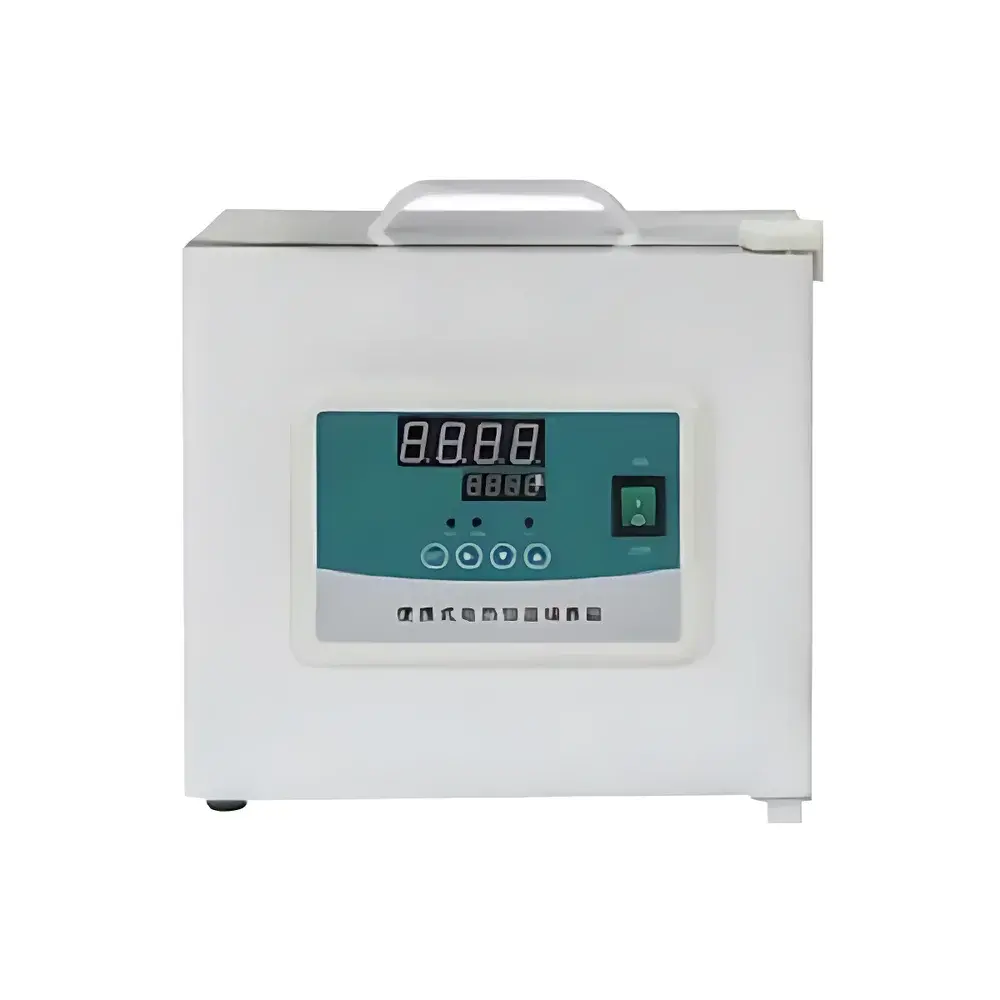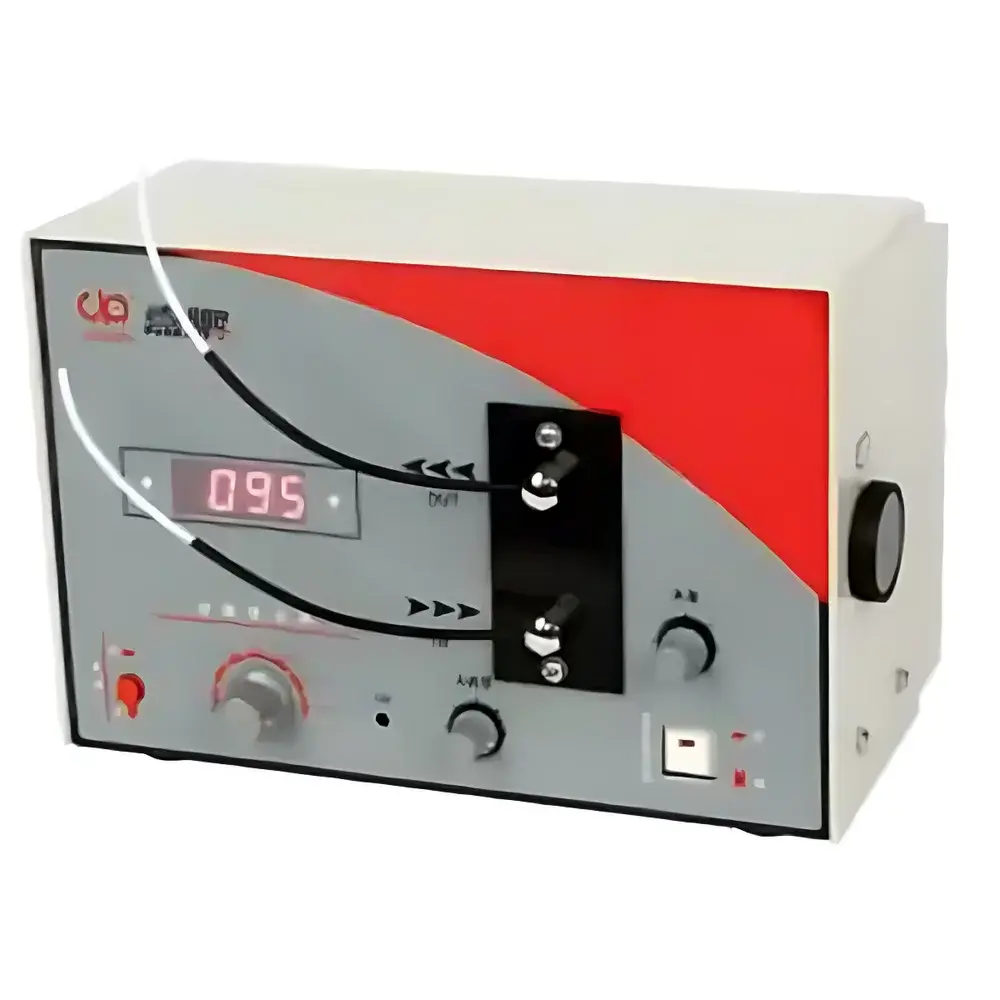
Jiapeng HD-3000 Computer-Controlled UV/Vis Detector
| Brand | Jiapeng |
|---|---|
| Origin | Shanghai, China |
| Model | HD-3000 |
| Detection Wavelengths | 214 nm, 220 nm, 254 nm, 280 nm, 340 nm |
| Wavelength Accuracy | ±1 nm |
| Flow Cell | 80 µL volume, 4 mm path length |
| Absorbance Range | 0.05 A to 2 A (7 gain ranges) |
| Transmittance Range | 0–100 %T |
| Minimum Detectable Concentration | 48 µg/mL (for BSA at 280 nm) |
| Display | Triple-channel LED display of real-time OD values |
| Data Interface | USB and RS-232 (COM) |
| Software | Dedicated chromatography analysis software for Windows XP/7/10 (PC not included) |
| Compatibility | GE Healthcare AKTA system interface-ready |
| Purification Principle | Ion Exchange Chromatography (IEX) |
| Gradient Type | Linear gradient support |
Overview
The Jiapeng HD-3000 Computer-Controlled UV/Vis Detector is a dedicated analytical instrument engineered for real-time absorbance monitoring during liquid chromatography-based biomolecule purification. It operates on the principle of ultraviolet-visible absorption spectroscopy, leveraging Beer–Lambert law-based quantification to detect nucleic acids (260 nm), aromatic amino acid residues in proteins (280 nm), peptide bonds (214–220 nm), and secondary structural transitions (340 nm). Designed for integration into benchtop FPLC or custom-built purification systems, the HD-3000 delivers stable, low-drift baseline performance essential for reproducible peak integration and fraction tracking. Its fixed-wavelength LED optical architecture eliminates mechanical wavelength scanning, enhancing long-term photometric stability and reducing maintenance overhead—critical for multi-hour column runs common in protein refolding or monoclonal antibody capture studies.
Key Features
- Triple-channel LED digital display showing simultaneous real-time OD readings at user-selected wavelengths (e.g., 254 nm + 280 nm + 214 nm), enabling ratiometric assessment of sample purity (A260/A280, A280/A214) without post-acquisition calculation.
- Optimized flow cell with 4 mm path length and 80 µL internal volume—engineered to minimize band broadening while maintaining sufficient sensitivity for low-concentration eluates typical in IEX and size-exclusion purification workflows.
- Seven-step programmable absorbance gain ranging from 0.05 A to 2 A, allowing dynamic range adaptation across diverse sample loads—from crude lysate supernatants to highly purified elution peaks.
- Dual communication interface (USB 2.0 and RS-232) ensures compatibility with legacy and modern Windows platforms (XP through Windows 10), supporting both standalone operation and synchronized acquisition with third-party fraction collectors or peristaltic pumps.
- Pre-aligned optical path using imported high-stability UV LEDs; achieves <5 mV/h baseline drift under constant flow conditions, meeting GLP-relevant stability benchmarks for method validation documentation.
- AKTA-compatible mechanical and electrical interface—supports direct mounting adjacent to GE Healthcare columns and synchronization via TTL trigger signals for automated fraction collection.
Sample Compatibility & Compliance
The HD-3000 is validated for continuous-flow detection of native and denatured proteins, oligonucleotides, plasmid DNA, enzymes, and synthetic peptides in aqueous mobile phases (e.g., Tris-HCl, phosphate, or sodium acetate buffers with ≤30% glycerol or ≤10% DMSO). It complies with core instrumentation requirements outlined in ISO 17025 for testing laboratories and supports audit-ready data integrity when used with its native software under controlled IT environments. While not FDA 21 CFR Part 11-certified out-of-the-box, the system supports electronic signature-capable workflow extensions when deployed with validated LIMS integration and time-stamped raw data logging—making it suitable for early-stage process development in biopharmaceutical QC labs operating under GMP-aligned quality systems.
Software & Data Management
The bundled chromatography analysis software provides native acquisition, visualization, and quantitative processing capabilities. It records time-stamped absorbance traces with 10 Hz sampling resolution, exports ASCII-compatible .csv files for downstream statistical analysis (e.g., in MATLAB or GraphPad Prism), and generates publication-ready plots with customizable axis scaling, peak annotation, and baseline correction algorithms (linear, polynomial, or rolling-ball). All raw signal files retain embedded metadata—including date/time stamp, selected wavelength, gain setting, and user-defined experiment ID—enabling traceable reconstruction of purification conditions. Data export conforms to ASTM E1957-18 standards for chromatographic data interchange, facilitating cross-platform review in regulated environments.
Applications
- Real-time monitoring of ion exchange chromatography (IEX) elution profiles for recombinant protein purification, including His-tagged and GST-fusion constructs.
- Quantitative assessment of nucleic acid yield and purity during affinity-based RNA/DNA isolation protocols.
- Verification of enzyme activity fractions following gel filtration or hydrophobic interaction chromatography (HIC).
- Method development support for optimizing linear salt gradients in anion/cation exchange systems—leveraging immediate visual feedback to adjust slope and endpoint before full-scale runs.
- Educational use in university biochemistry and molecular biology laboratories for teaching chromatographic theory, Beer–Lambert law application, and spectral deconvolution principles.
FAQ
Is the HD-3000 compatible with non-Jiapeng fraction collectors?
Yes—the device outputs standard TTL-level trigger pulses and accepts external start/stop commands via its COM port, enabling interoperability with most commercially available fraction collectors, including Gilson, Bio-Rad, and custom Arduino-based systems.
Can the software perform baseline correction and peak integration automatically?
Yes—the native software includes configurable automatic baseline subtraction (first-derivative or spline-based) and Gaussian-weighted peak detection with retention time alignment, supporting area-under-curve (AUC) quantification for relative abundance estimation.
What is the warm-up time required to achieve photometric stability?
The LED light source reaches thermal equilibrium within 15 minutes; baseline drift remains below ±0.5 mV over subsequent 4-hour continuous operation when ambient temperature is stabilized within ±2 °C.
Does the flow cell support high-pressure applications?
No—the HD-3000 is rated for low-pressure liquid chromatography only (max. 1 MPa / 10 bar); it is not intended for UHPLC or HPLC backpressure environments.
Is calibration traceable to NIST standards?
The instrument is factory-calibrated using certified neutral density filters and reference solutions (e.g., potassium dichromate in 0.005 M H2SO4); users may perform periodic verification per ASTM E275-22 guidelines using supplied calibration check kits.