
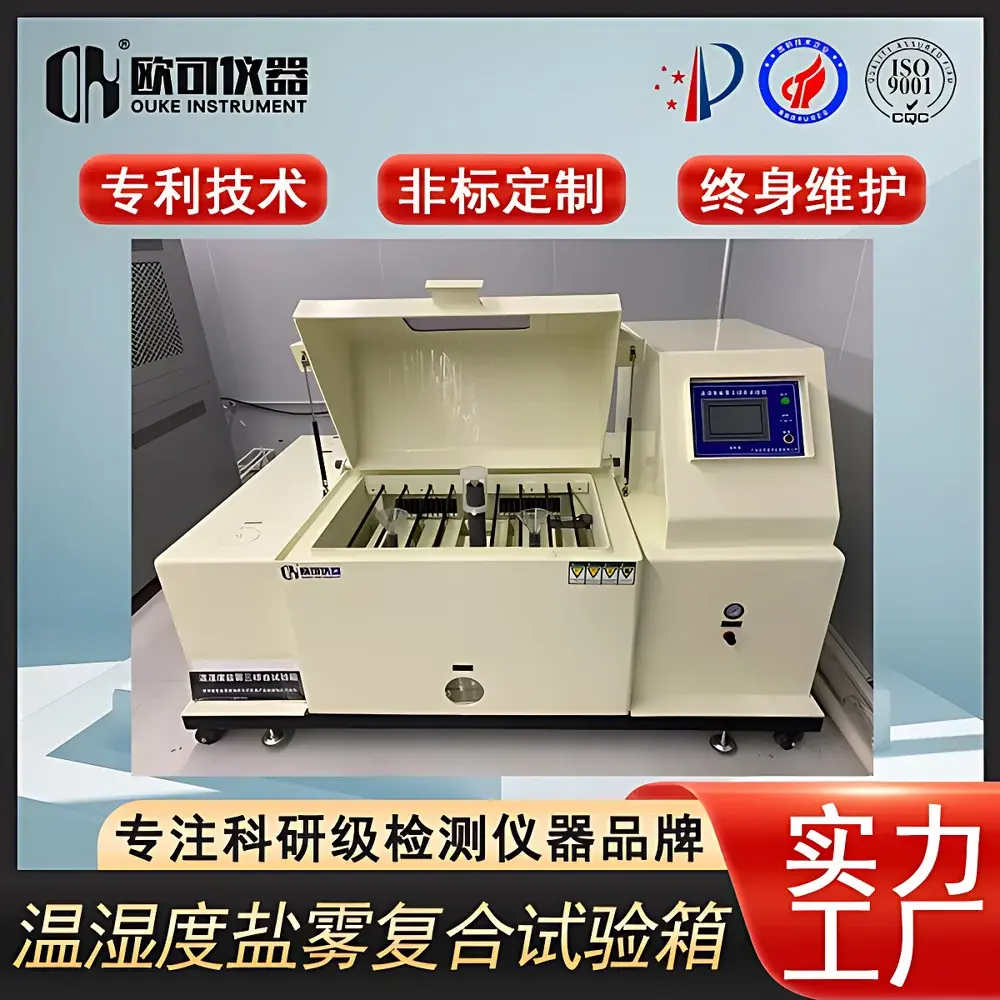
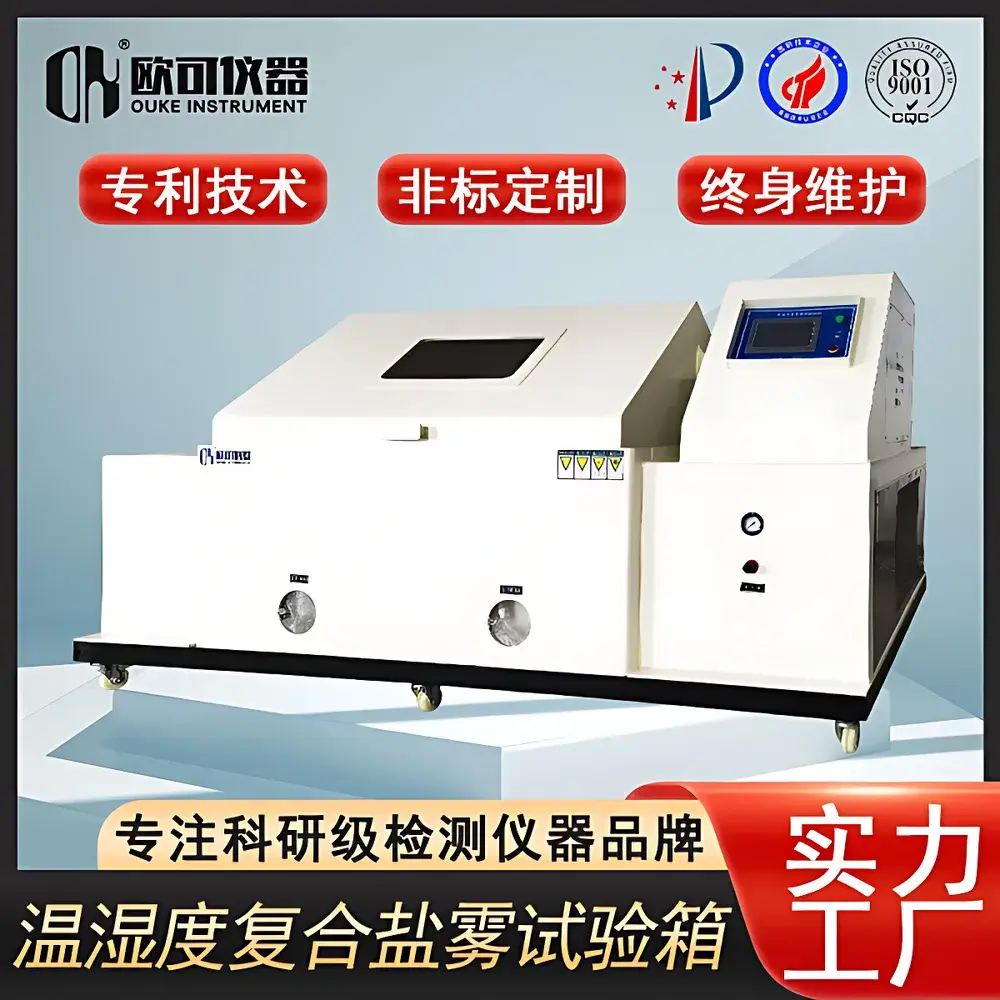
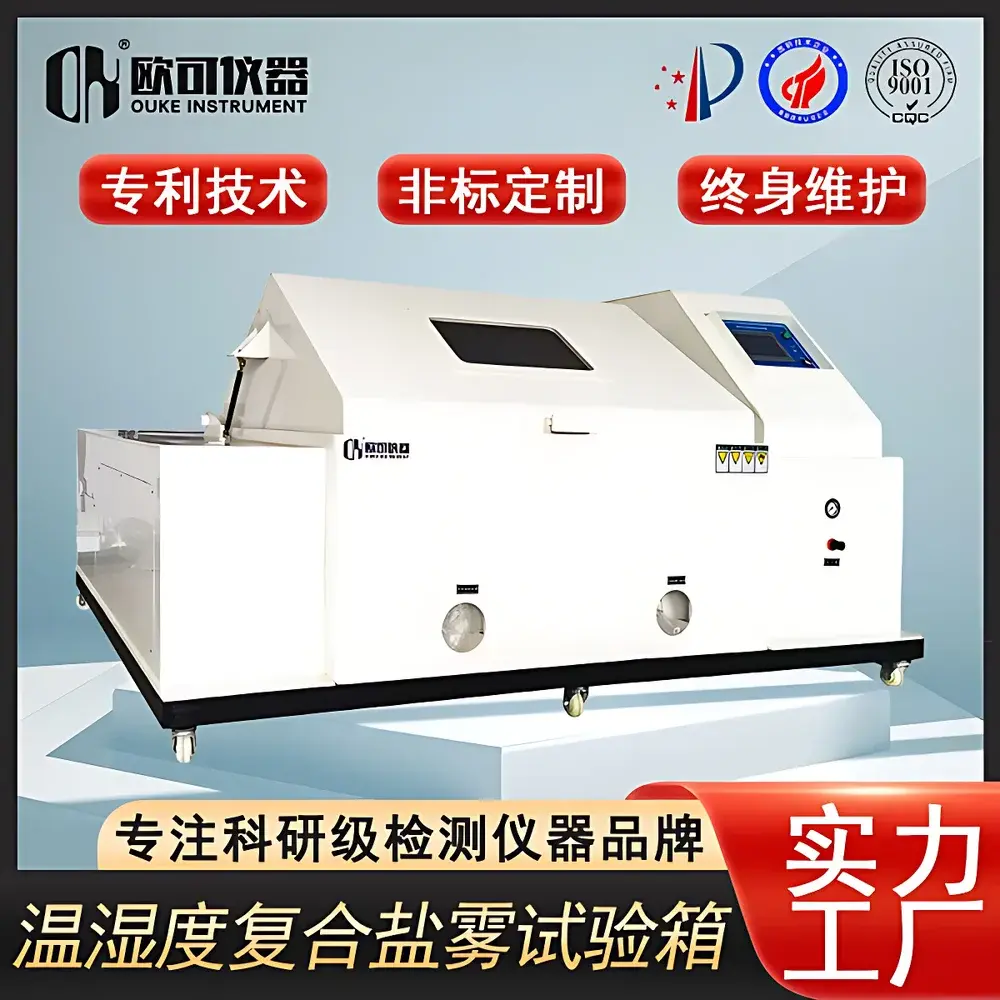
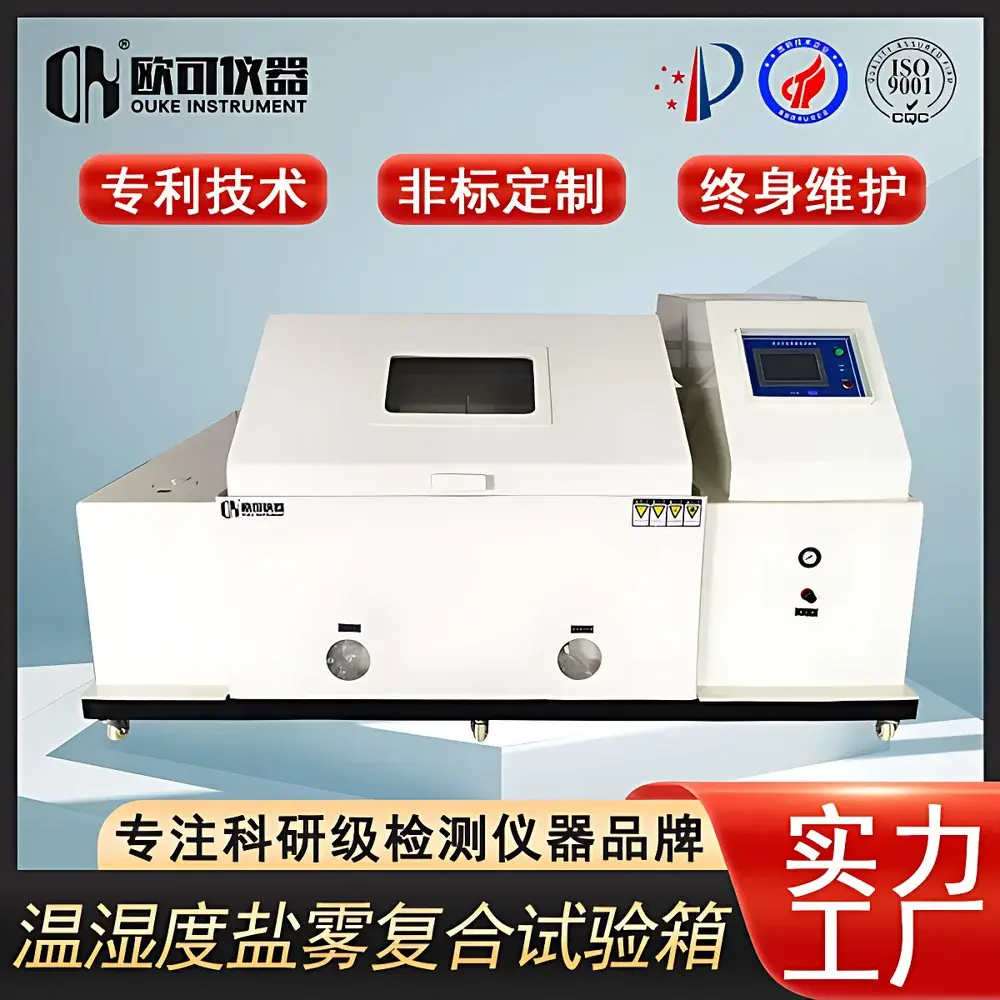
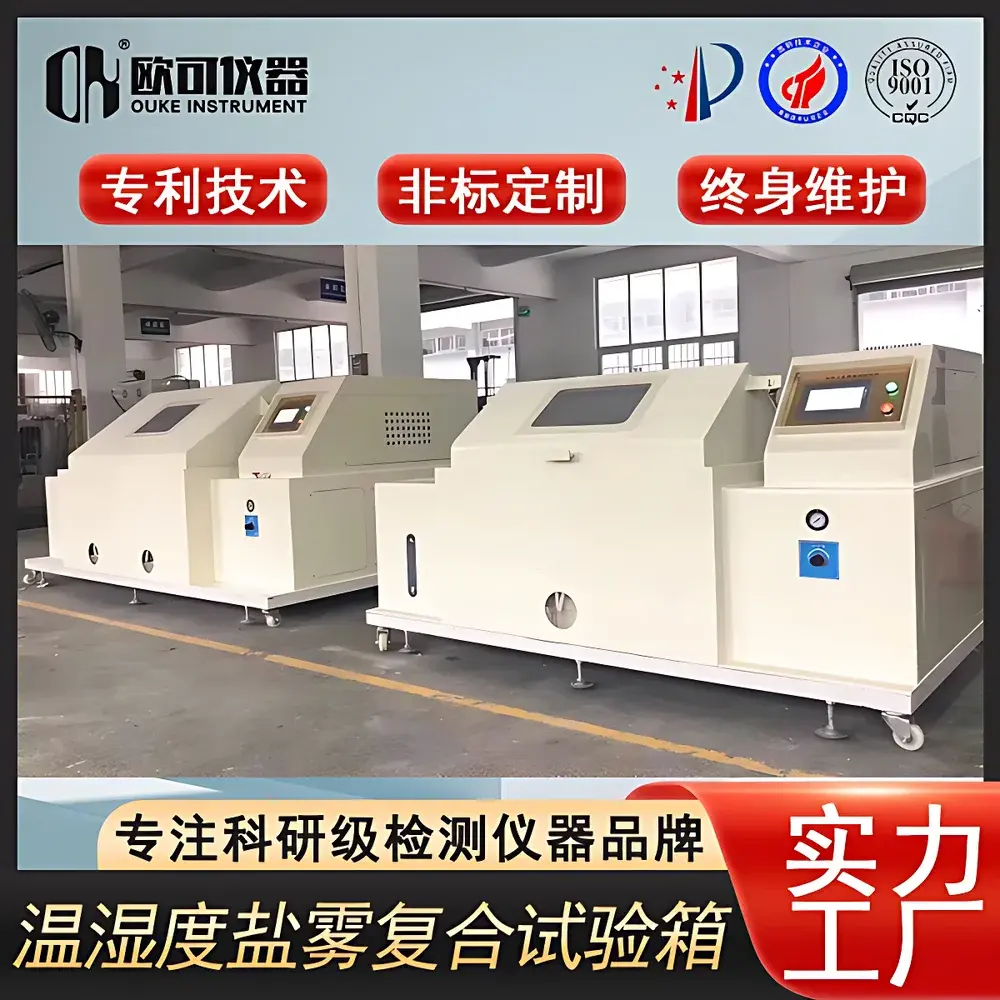
OK-FH-121 Tri-Combined Corrosion Test Chamber (Salt Spray + Dry + Humid Heat)
| Brand | OK Instruments |
|---|---|
| Origin | Guangdong, China |
| Manufacturer Type | OEM/ODM Manufacturer |
| Model | OK-FH-121 |
| Salt Spray Method | Air-Atomized Nozzle System (OK-FH-120 Compatible) |
| Salt Spray Deposition Rate | 1–2 mL / 80 cm²·hr |
| Nozzle Pressure | 0.7–1.0 kg/cm² |
| Fog Removal | Pneumatic Air-Blow Exhaust |
| Salt Fog Settlement | ~1.0–2.0 mL/80 cm²·hr (ASTM B117 compliant range) |
| Temperature Range Options | A: 0–80°C |
| B | −20–80°C |
| C | −40–80°C |
Overview
The OK-FH-121 Tri-Combined Corrosion Test Chamber is an engineered environmental test system designed for accelerated cyclic corrosion testing (CCT) in accordance with internationally recognized standards including ASTM B117, ISO 9227, ISO 16701, VDA 233-102, GMW 14872, SAE J2334, and Ford CETP 00.00-L-467. Unlike conventional single-mode salt spray chambers, the OK-FH-121 integrates three distinct climatic phases—salt fog, dry-off, and humid heat—within a single, sealed test chamber. This tri-phase cycling capability enables realistic simulation of real-world atmospheric degradation mechanisms, where electrochemical corrosion, hygroscopic salt migration, and oxide layer formation occur sequentially under controlled thermal and humidity transitions. The chamber employs a closed-loop air management architecture to ensure phase integrity and minimize cross-contamination between cycles—a critical requirement for reproducible, auditable corrosion data.
Key Features
- Triple-phase programmable controller supporting up to 999 cycles with individual phase duration, temperature, and RH setpoints per segment
- Corrosion-resistant chamber construction using fiber-reinforced polymer (FRP) inner lining and stainless-steel 316L structural frame
- Precision air-atomized spray system (OK-FH-120 compatible) with adjustable nozzle pressure (0.7–1.0 kg/cm²) and calibrated deposition rate (1–2 mL/80 cm²·hr)
- Integrated pneumatic fog removal system utilizing compressed air purge to eliminate residual mist prior to dry/humid transition
- Independent high-efficiency heating and humidification modules enabling rapid thermal ramping (up to 3°C/min) and precise RH control (10–98% RH, ±2% RH accuracy)
- Titanium-sheathed heating elements and corrosion-inhibited Pt100 sensors for long-term stability in aggressive saline environments
- Compliance-ready architecture supporting audit trails, user-level access control, and optional 21 CFR Part 11 electronic signature modules
Sample Compatibility & Compliance
The OK-FH-121 accommodates test specimens up to 600 × 600 × 500 mm (W×D×H), with customizable sample racks fabricated from non-reactive PVC or titanium alloy. It supports standardized test panels (e.g., ASTM G85 Annex A5), automotive fasteners, coated substrates, printed circuit assemblies, and encapsulated electronic modules. All operational parameters—including salt concentration (5.0 ± 0.1% NaCl by mass), pH (6.5–7.2), and chamber temperature uniformity (±2°C across working volume)—are traceable to NIST-calibrated instrumentation. The system meets GLP/GMP documentation requirements when configured with optional data logging and event-triggered reporting. Full compliance documentation—including factory calibration certificates, material certifications (EN 10088-1 for SS316L), and electrical safety reports (IEC 61000-6-3/6-4)—is provided with each unit.
Software & Data Management
The OK-FH-121 operates via OK-TestSuite v3.2, a Windows-based control platform supporting IEC 61131-3 structured text programming for complex multi-step CCT profiles. Real-time monitoring includes dual-channel temperature/RH logging at 1-second intervals, spray deposition verification via gravimetric collection trays, and automatic cycle validation alerts. Data export conforms to ASTM E2911 and ISO/IEC 17025 reporting formats (CSV, PDF, XML). Optional cloud synchronization enables remote supervision, multi-site fleet management, and integration with LIMS or PLM systems. Audit trail records include operator ID, parameter changes, alarm events, and firmware version history—fully compliant with FDA 21 CFR Part 11 and EU Annex 11 requirements when enabled.
Applications
This chamber serves as a core validation tool in automotive OEM R&D labs for evaluating corrosion resistance of body panels, brake calipers, battery enclosures, and ADAS sensor housings. In aerospace, it supports MIL-STD-810H Method 509.6 (salt fog) and Method 506.6 (humidity) sequence validation for avionics enclosures and composite fasteners. Photovoltaic manufacturers use it to assess edge seal durability of solar modules per IEC 61701. Additional applications include qualification of marine-grade coatings (ISO 12944), galvanized steel passivation layers, and medical device housing materials per ISO 10993-15. Its −40°C to +80°C extended range option (Model C) further enables low-temperature stress-corrosion cracking evaluation per ASTM G123.
FAQ
What standards does the OK-FH-121 support out-of-the-box?
Preloaded test templates include ASTM B117, ISO 9227, GMW 14872, VDA 233-102, and SAE J2334. Custom profiles can be imported via CSV or programmed directly.
How is cross-contamination between salt fog and dry phases prevented?
A dedicated pneumatic air-blow exhaust system evacuates residual fog within 90 seconds; chamber interior surfaces are heated to >60°C during dry phase initiation to inhibit salt crystallization.
Is third-party calibration and IQ/OQ documentation available?
Yes—factory IQ/OQ protocols and UKAS-accredited calibration certificates (traceable to NPL/PTB) are available as optional add-ons.
Can the chamber operate unattended for extended cycles (e.g., 60+ days)?
Equipped with dual-stage water purification, auto-refill reservoirs, and redundant safety interlocks, the OK-FH-121 supports continuous operation up to 90 days with scheduled maintenance every 30 days.
Does OK Instruments provide application engineering support for method development?
Yes—dedicated corrosion testing engineers assist with profile optimization, failure mode correlation, and comparative analysis against reference chambers (e.g., Q-Lab Q-FOG).



