
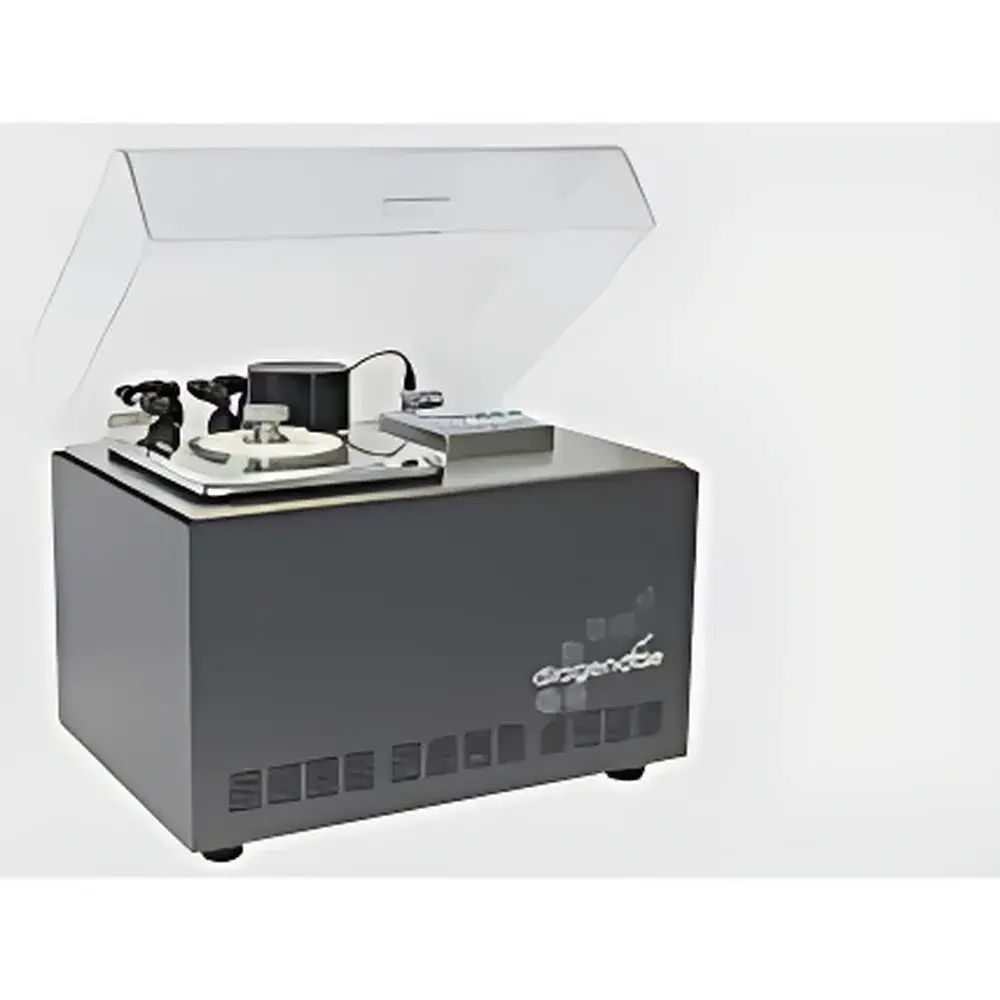
Diagenode BIORUPTOR Pico Ultrasonic Sonicator
| Brand | Diagenode |
|---|---|
| Origin | Belgium |
| Model | Pico |
| Ultrasonic Power | 25–210 W |
| Operating Frequency | 20–60 kHz |
| Temperature Range | −20 °C to 40 °C |
| Sample Volume Capacity | 5 µL – 12 mL (dependent on adapter selection) |
| Maximum Simultaneous Samples | 12 |
| Cooling System | Integrated solenoid-valve-controlled recirculating chiller |
| Fragment Size Range (DNA) | 100 bp – 1 kb |
| Adapter Standard | 0.5 mL tube holder with mechanical locking mechanism |
Overview
The Diagenode BIORUPTOR Pico is a high-precision, water-bath ultrasonic sonicator engineered specifically for reproducible nucleic acid shearing and chromatin fragmentation in next-generation sequencing (NGS) library preparation and chromatin immunoprecipitation (ChIP) workflows. Unlike probe-based sonicators, the BIORUPTOR Pico employs controlled cavitation within a temperature-regulated water bath, ensuring uniform energy delivery without direct probe contact—eliminating cross-contamination risk, aerosol generation, and sample overheating. Its core architecture integrates a microprocessor-controlled ultrasonic generator, precision stepper-motor-driven sample rotation, and real-time thermal management to deliver consistent fragment size distributions across biological replicates. Designed for compliance with Good Laboratory Practice (GLP) and quality-controlled molecular biology environments, the system supports traceable, audit-ready operation when paired with validated protocols.
Key Features
- Stepper-motor-driven sample rotation: Ensures homogeneous acoustic exposure by rotating sample racks at fixed speed during sonication—critical for achieving narrow fragment size distribution (CV < 8% between replicates).
- Intelligent thermal regulation: Integrated solenoid-valve-controlled recirculating chiller activates only during instrument idle periods; cooling pauses synchronously with ultrasonic pulses to prevent acoustic dampening and preserve cavitation efficiency.
- Digital LCD interface with operational diagnostics: Displays real-time power output, cycle progress, accumulated operating hours, and automatic thermal shutdown at >40 °C to protect both samples and transducer longevity.
- Sealed, non-invasive sample processing: All tubes remain capped and fully submerged in the water bath—no probes inserted, no open-tube handling, and zero biohazard aerosol generation (compliant with BSL-2 containment requirements).
- Modular adapter system: Supports multiple tube formats (0.5 mL, 1.5 mL, 15 mL, 50 mL) and microplate configurations; standard 0.5 mL adapter features mechanical twist-lock clamps for secure, leak-proof positioning of up to 12 tubes per run.
- Wide dynamic power range (25–210 W) and tunable frequency (20–60 kHz): Enables optimization for diverse sample types—from low-concentration chromatin lysates to viscous bacterial cell suspensions—without hardware modification.
Sample Compatibility & Compliance
The BIORUPTOR Pico accommodates a broad spectrum of biological matrices, including native chromatin extracts, crosslinked nuclei, purified genomic DNA, total RNA, and intact microbial cells. It is routinely validated for use in Illumina TruSeq, NEBNext, and ThruPLEX library prep workflows. The system meets ISO 9001 manufacturing standards and conforms to IEC 61000-6-3 (EMC) and IEC 61010-1 (safety) requirements. When operated under documented SOPs—including calibration verification, temperature logging, and maintenance records—it satisfies data integrity expectations under FDA 21 CFR Part 11 and EU Annex 11 for regulated NGS applications. No specialized consumables (e.g., glass capillaries or proprietary tubes) are required—standard polypropylene centrifuge tubes are fully compatible.
Software & Data Management
While the BIORUPTOR Pico operates via standalone front-panel controls, its protocol parameters (power level, cycle duration, on/off time, total cycles, and temperature setpoint) are fully programmable and recallable. Each method can be saved with user-defined naming and timestamped execution logs stored in non-volatile memory. Optional integration with laboratory information management systems (LIMS) is supported via RS-232 or USB-to-serial interface for automated protocol transfer and electronic record capture. Audit trails include operator ID (if configured), start/stop timestamps, actual power delivered per cycle, and thermal deviation alerts—facilitating GLP/GMP-compliant documentation and internal QA review.
Applications
- Fragmentation of chromatin for ChIP-seq, CUT&RUN, and CUT&Tag assays
- Shearing of high-molecular-weight genomic DNA prior to Illumina, PacBio, or Oxford Nanopore library construction
- Controlled RNA fragmentation for RNA-seq, ribosome profiling, and small RNA library prep
- Cell lysis of Gram-positive bacteria, yeast, and plant tissues in extraction protocols requiring minimal heat-induced degradation
- Preparation of fragmented nucleic acid standards for QC and calibration of bioanalyzers and qPCR instruments
FAQ
Does the BIORUPTOR Pico require calibration? How often should it be performed?
Yes—annual power output verification using a calibrated calorimetric probe is recommended per Diagenode’s service guidelines. In regulated environments, calibration must align with internal SOPs and be traceable to NIST standards.
Can the system process samples at sub-zero temperatures?
The instrument supports ambient operation down to −20 °C when used with an external cryo-cooling bath; however, the built-in chiller is rated for −20 °C inlet fluid only—not direct sub-zero sample chamber operation.
Is the 0.5 mL adapter compatible with low-retention tubes?
Yes—the mechanical locking design accommodates standard low-binding polypropylene tubes (e.g., Axygen, Eppendorf LoBind) without modification or adapter replacement.
How does the BIORUPTOR Pico ensure inter-run reproducibility?
Through synchronized stepper-motor rotation, pulse-width-modulated ultrasonic delivery, and duty-cycle–governed thermal recovery—each parameter is digitally locked per protocol, minimizing operator-dependent variability.
What maintenance is required beyond routine cleaning?
Transducer inspection every 12 months, chiller fluid replacement biannually, and ultrasonic bath descaling with mild citric acid solution every 3 months—detailed in the Diagenode Preventive Maintenance Manual (P/N: PM-BPICO-EN).






