
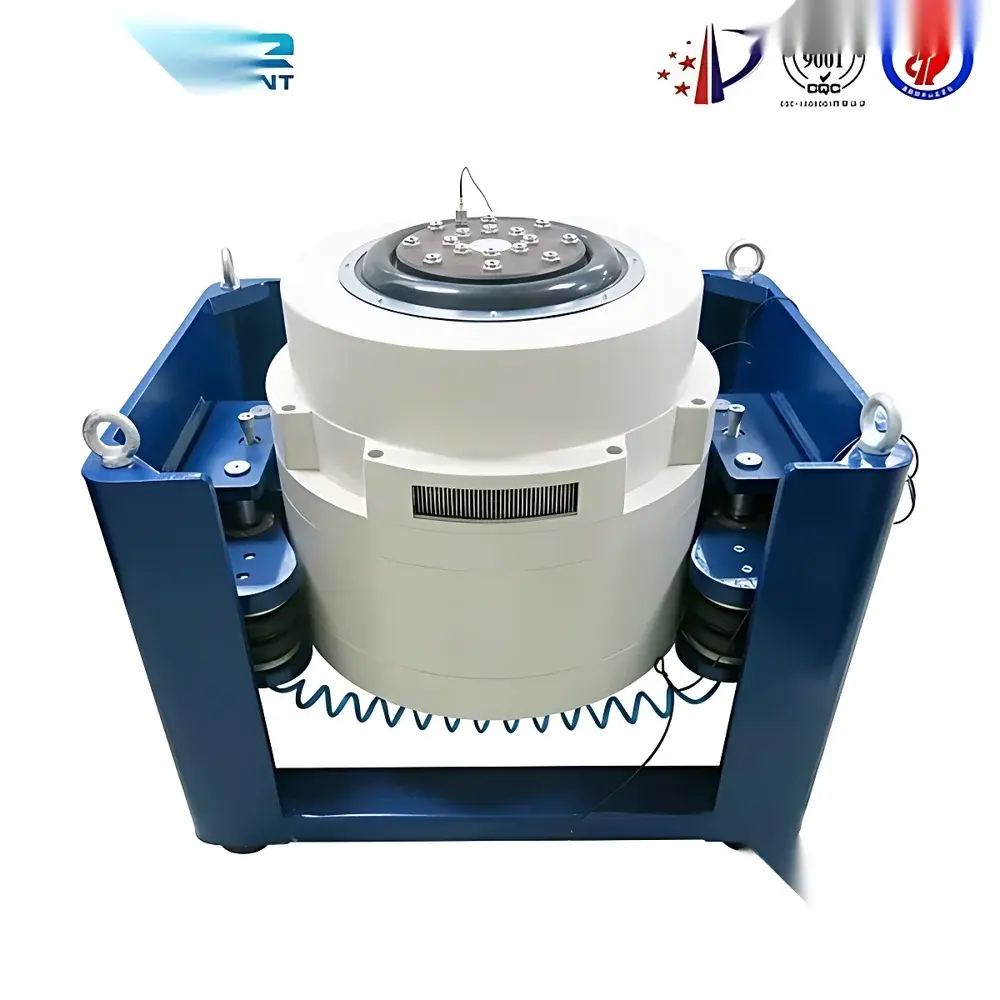
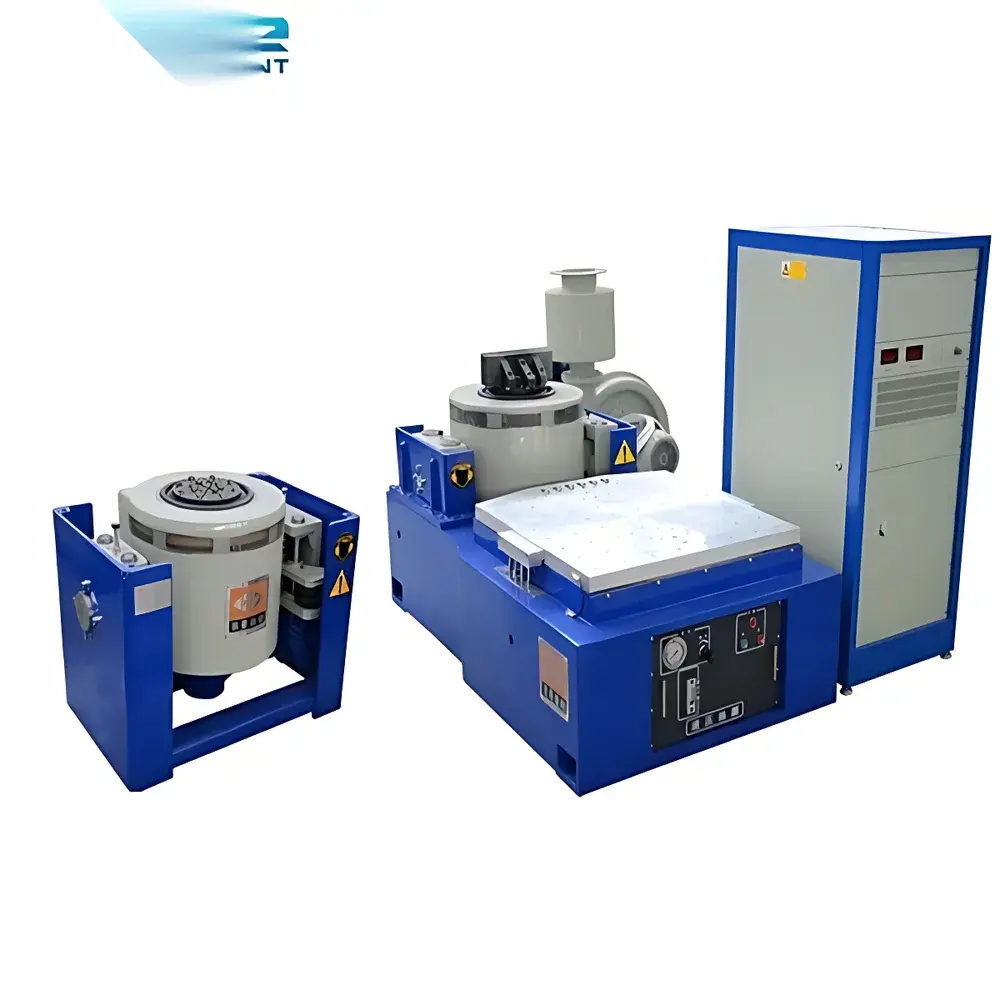
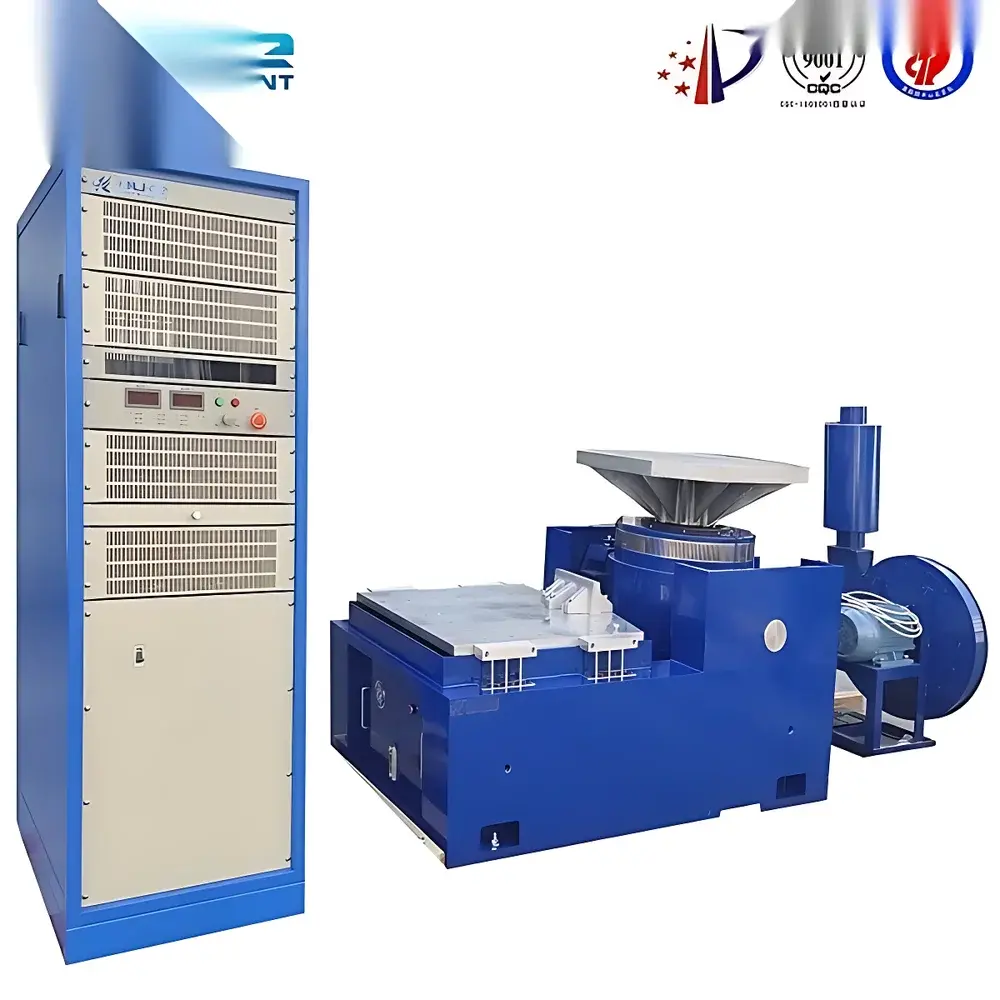
OK-ES-10 Electromechanical Vibration Shaker System
| Brand | Other Brands |
|---|---|
| Origin | Imported |
| Manufacturer Type | Authorized Distributor |
| Frequency Range | 10–100 Hz (equivalent to 600–6,000 rpm) |
| Max. Acceleration | 20 g (peak) |
| Peak-to-Peak Amplitude | 5 mm (adjustable down to 1 mm per frequency constraints) |
| Load Capacity | 50 kg (standard), up to 100 kg with structural reinforcement |
| Effective Table Surface | 1000 × 1000 mm |
| Time Setting Range | 0 s – 99 h 59 min |
| Speed Display Resolution | 0.1 rpm |
| Drive Method | DC Motor with Analog Speed Control |
| Power Supply | 380 V, 50 Hz, 3-phase |
| Dimensions (W×D×H) | 1100 × 1300 × 650 mm |
| Net Weight | ~300 kg |
| Compliance Standards | ASTM D999, ISTA 1A/2A/3A, EN 60068-2-6, ANSI S2.18, UL 60950-1 |
Overview
The OK-ES-10 Electromechanical Vibration Shaker System is a precision-engineered laboratory-grade vibration testing platform designed to replicate real-world mechanical excitation environments for product reliability validation and durability assessment. Operating on electromagnetic drive principles with a robust DC motor and analog speed regulation architecture, the system delivers controlled sinusoidal motion across a defined frequency spectrum (10–100 Hz, equivalent to 600–6,000 rpm). Unlike hydraulic or servo-hydraulic shakers, this electromechanical design offers high reproducibility, low maintenance, and stable low-frequency performance—making it particularly suitable for packaging integrity testing, component fatigue screening, and pre-shipment qualification per international transport standards. The device does not support true random vibration profiles; its operational mode is strictly sinusoidal sweep or fixed-frequency dwell, in accordance with ISO 10816-1 and ASTM D4728 guidelines for deterministic excitation protocols.
Key Features
- DC motor-driven electromechanical actuation with analog closed-loop speed control ensures consistent rotational velocity and minimal harmonic distortion
- Adjustable peak-to-peak amplitude from 1 mm to 5 mm, dynamically constrained by the physical relationship a = 0.002 × f² × D (where a = acceleration in g, f = frequency in Hz, D = displacement in mm), enforcing strict adherence to 20 g maximum acceleration limits
- High-resolution digital display with 0.1 rpm resolution enables precise verification of setpoint fidelity during test execution
- Reinforced aluminum alloy table surface (1000 × 1000 mm) provides flatness tolerance ≤ ±0.1 mm/m and static load capacity of 50 kg standard (up to 100 kg with optional base stiffening)
- Programmable timer with 0-second to 99-hour 59-minute range supports both short-duration shock simulation and extended endurance cycles
- Integrated thermal protection and over-current cutoff circuits comply with IEC 60204-1 safety requirements for industrial machinery
Sample Compatibility & Compliance
The OK-ES-10 accommodates rigid and semi-rigid samples including packaged consumer goods, electronic enclosures, automotive subassemblies, and medical device housings. Mounting is facilitated via M6 threaded inserts distributed across the table surface (grid pitch: 100 mm). The system conforms to multiple internationally recognized test standards: ASTM D999 (vibration testing of shipping containers), ISTA Series 1–3 protocols for packaged-product transport simulation, EN 60068-2-6 (sinusoidal vibration testing), and ANSI S2.18 (methods for measuring vibration response). While not compliant with FDA 21 CFR Part 11 or GLP audit trails out-of-the-box, the system may be integrated into validated workflows when paired with external data acquisition hardware meeting traceability and electronic signature requirements.
Software & Data Management
The OK-ES-10 operates as a standalone analog-controlled instrument without embedded firmware or native PC connectivity. All parameter settings—including frequency, amplitude (via mechanical eccentric weight adjustment), and duration—are configured manually using front-panel dials and digital displays. For traceable data capture, users are advised to interface the unit’s tachometer output (0–10 V DC proportional to RPM) and optional accelerometer feedback (IEPE-compatible) with third-party DAQ systems such as National Instruments CompactDAQ or Dewesoft X. This configuration supports CSV export, time-synchronized waveform logging, and post-test FFT analysis—enabling full alignment with ISO/IEC 17025 documentation practices.
Applications
- Transportation simulation for corrugated boxes, palletized loads, and e-commerce fulfillment units per ISTA 3A and ASTM D4169
- Structural resonance screening of printed circuit board assemblies prior to HALT/HASS deployment
- Mechanical fastener loosening evaluation under sustained low-frequency oscillation
- Quality assurance of adhesive bond integrity in automotive trim components
- Educational demonstration of forced harmonic response and transmissibility curves in mechanical engineering laboratories
FAQ
Can this shaker perform random vibration testing?
No. The OK-ES-10 is exclusively a sinusoidal shaker. Random vibration requires digital signal synthesis, closed-loop feedback control, and power amplification architectures not present in this electromechanical design.
What is the maximum safe operating frequency at 5 mm peak-to-peak amplitude?
Per the acceleration limit equation (a = 0.002 × f² × D), with D = 5 mm and a ≤ 20 g, the upper bound is f ≈ 44.7 Hz. Exceeding this frequency at full amplitude violates mechanical safety margins.
Is calibration certification included with shipment?
Factory calibration data (RPM linearity, timer accuracy, and table flatness) is provided in the user manual. NIST-traceable calibration certificates require separate arrangement with an accredited metrology lab.
Does the unit support 60 Hz power input?
The standard configuration is rated for 380 V / 50 Hz, 3-phase supply. Operation at 60 Hz requires motor rewinding and controller recalibration—contact technical support prior to modification.
Can I mount fixtures directly to the table surface?
Yes. The table features a 100 mm grid of M6 threaded inserts (depth ≥ 12 mm), compatible with standard vibration test fixtures, clamping bars, and custom mounting plates fabricated to ISO 22810 tolerances.



