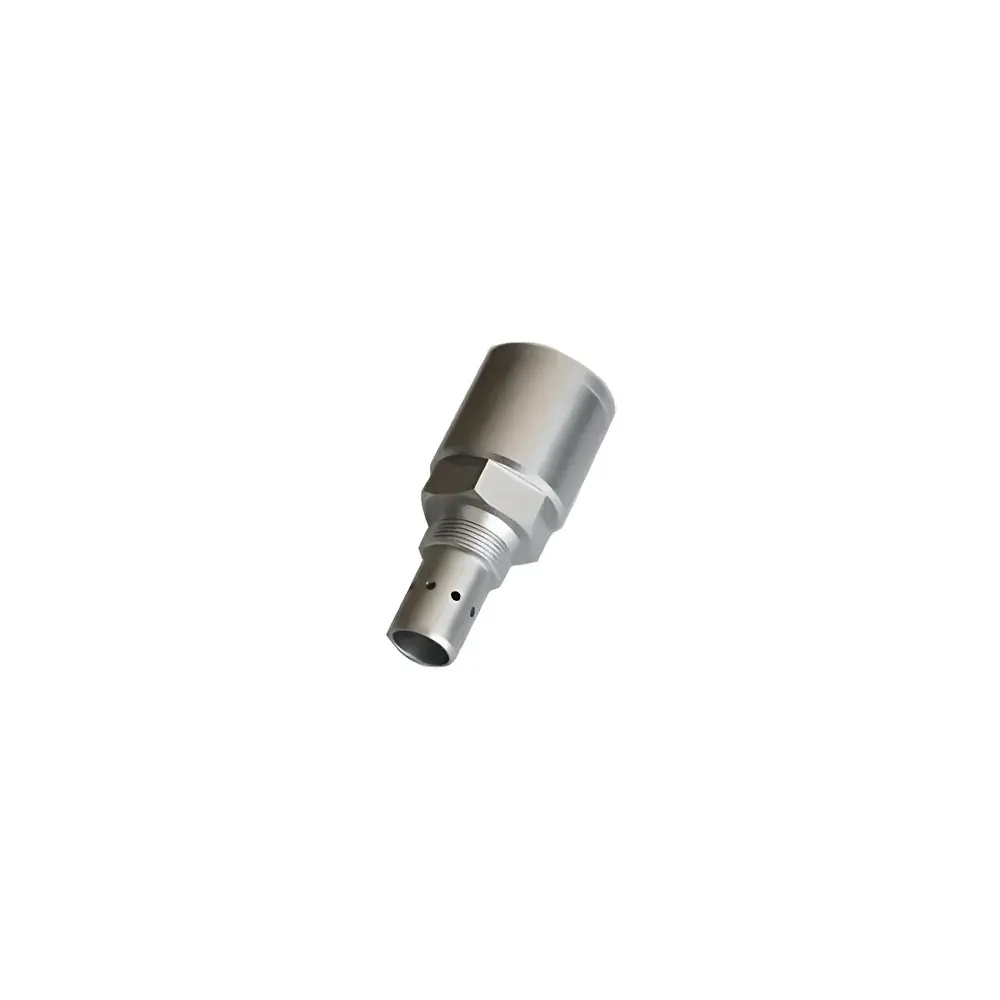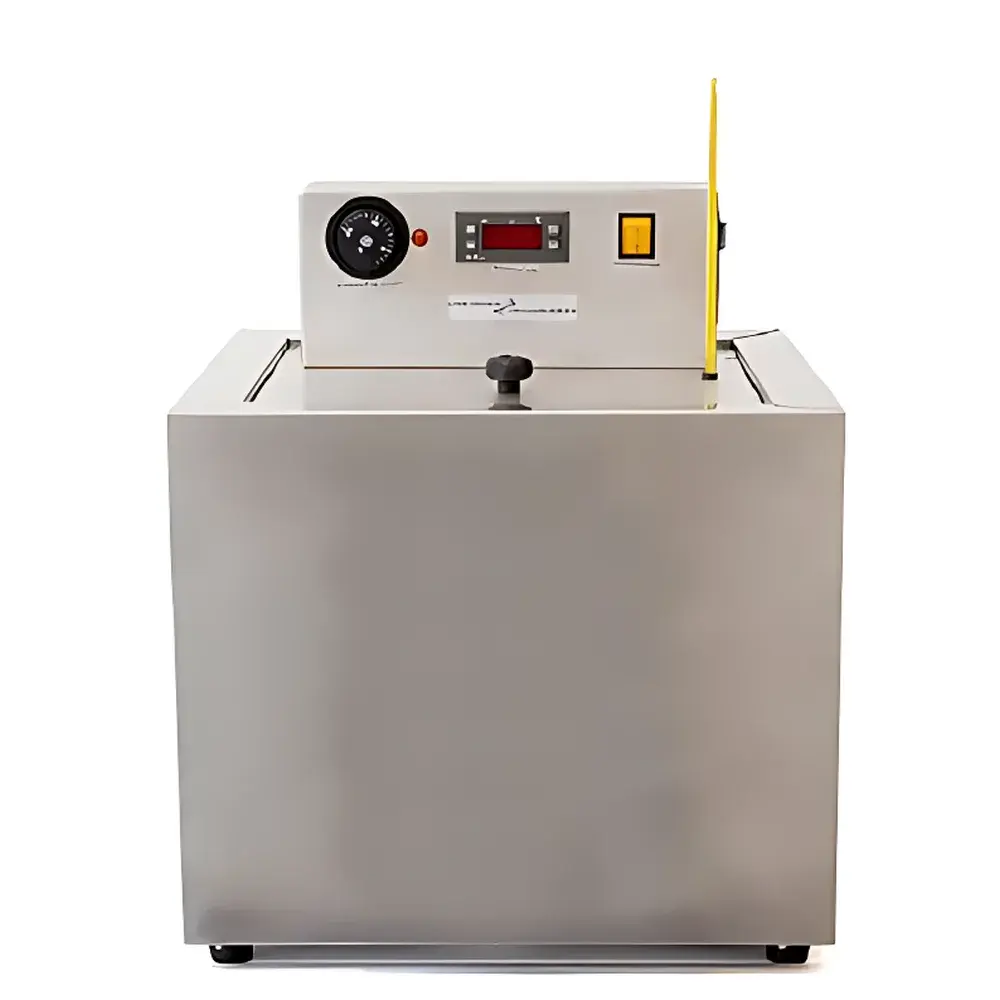
English Product Name
| Origin | Switzerland |
|---|---|
| Manufacturer Type | Authorized Distributor |
| Import Status | Imported |
| Standard Compliance | ASTM D942, DIN 51808, IP 142 |
| Model | D942 |
| Maximum Pressure Rating | 180 psi |
| Sample Capacity | 185 mL |
| Construction Material | Electropolished 18/8 Stainless Steel |
| Temperature Control | Digital PID Controller with PT100 Sensor, Over-Temperature Alarm |
| Bath Insulation | Dual-layer stainless steel housing with integrated heater |
Overview
The Swiss-made D942 Oxygen Bomb Oxidation Stability Tester is a precision-engineered instrument designed to evaluate the oxidative resistance of lubricating greases under accelerated, controlled conditions. Based on the classical oxygen bomb method defined in ASTM D942, this system subjects grease samples to high-purity oxygen at elevated pressure and constant temperature within a sealed, corrosion-resistant stainless-steel bomb vessel. Oxidation is quantified by measuring the pressure drop over time—indicative of oxygen consumption during peroxidation reactions—providing a direct, reproducible metric of inherent antioxidant capacity. Unlike dynamic oxidation tests (e.g., RBOT or PDSC), the D942 method reflects long-term static storage stability, making it especially relevant for aerospace, railway, and heavy-duty industrial greases where extended service life under ambient or mildly elevated temperatures is critical. The instrument’s robust architecture, CE-marked safety certification, and full alignment with ASTM D942, DIN 51808, and IP 142 ensure regulatory acceptability in global quality control laboratories operating under ISO/IEC 17025, API Q1, or OEM technical specifications.
Key Features
- ASTM D942-compliant oxygen bomb assembly constructed from electropolished 18/8 stainless steel, ensuring chemical inertness and long-term resistance to oxidative corrosion.
- Sealed bomb vessel rated to 180 psi (12.4 bar) with precision-machined O-ring sealing interface and torque-controlled screw locking mechanism for leak-free operation.
- Dual-layer insulated oxidation bath with integrated stainless-steel heating element, enabling stable thermal control across the standard test range of 99 ± 0.1 °C (per ASTM D942).
- Digital PID temperature controller featuring PT100 platinum resistance thermometer input, real-time display, programmable setpoint, and independent over-temperature cut-off circuitry.
- Modular accessory ecosystem—including calibrated pressure gauges (0–160 psi, 0.5 psi divisions), Pyrex sample dishes (Ø41 mm), analytical balance support fixtures, and ASTM-certified thermometers (ASTM 22C/F)—ensures full method traceability.
- Optional upgrade path for bath components: field-replaceable digital controllers, static relays, additional PT100 probes, and high-stability silicone oil (25 L, viscosity-graded for thermal uniformity).
Sample Compatibility & Compliance
The D942 tester accommodates standard 185 mL grease samples in inert Pyrex dishes, supporting NLGI grades 00 through 3 without modification. Its design conforms strictly to the dimensional, material, and procedural requirements of ASTM D942 (Standard Test Method for Oxidation Stability of Lubricating Greases by Oxygen Bomb), including bomb geometry, oxygen purity (>99.5% O₂), initial pressure (100 psi), and duration (up to 1000 hours). It also satisfies DIN 51808 (Oxidation Stability of Lubricants – Pressure Vessel Method) and IP 142 (Oxidation Stability of Lubricating Greases – Oxygen Bomb Method). All metallic wetted parts comply with EN 10088-1 for austenitic stainless steels, and electrical components meet IEC 61010-1 for laboratory equipment safety. The system supports GLP documentation workflows, with optional audit-trail-capable data loggers compatible with FDA 21 CFR Part 11 when integrated with validated software platforms.
Software & Data Management
While the base D942 system operates as a stand-alone analog/digital hybrid instrument, it is fully compatible with third-party data acquisition modules (e.g., National Instruments CompactDAQ or Omega iDRN series) for automated pressure and temperature logging. Raw pressure decay curves are exportable in CSV format for post-processing in MATLAB, Excel, or ASTM-compliant analysis tools such as ASTM D942 Annex A1 spreadsheet calculators. Optional firmware upgrades enable RS-485 Modbus RTU communication, permitting integration into centralized LIMS environments. All calibration records—including pressure gauge NIST-traceable certificates, PT100 probe calibration reports, and bath temperature uniformity maps—are maintained per ISO/IEC 17025 Clause 6.4 and can be archived with electronic signatures for regulatory audits.
Applications
- Quality assurance of lithium, calcium-sulfonate, polyurea, and complex-soap greases prior to release.
- Comparative evaluation of antioxidant package efficacy (e.g., hindered phenols vs. aromatic amines) during formulation development.
- Supporting OEM grease qualification protocols for wind turbine pitch bearings, electric vehicle e-axle joints, and rail traction motor applications.
- Failure analysis of field-returned greases exhibiting premature hardening, oil bleed, or acid number rise.
- Regulatory submission testing for API, DIN, or JIS-certified grease registrations requiring ASTM D942 compliance evidence.
FAQ
What is the primary measurement output of the D942 test?
Pressure drop (psi or bar) versus time, recorded manually or via data logger; the time to reach a specified pressure loss (e.g., 10 psi) or total test duration at fixed pressure loss defines oxidation stability.
Is the instrument supplied with calibration certificates?
Yes—pressure gauges include NIST-traceable calibration certificates; PT100 sensors are supplied with as-found/as-left calibration reports per ISO/IEC 17025.
Can the bath accommodate multiple bombs simultaneously?
No—the standard configuration supports one bomb per bath; multi-bomb testing requires parallel bath units or custom-engineered multi-position fixtures (available upon request).
What maintenance intervals are recommended for long-term reliability?
O-rings should be inspected and replaced every 50 test cycles; bath oil is replaced annually or after 2000 operational hours; temperature controller firmware updates are issued biannually via secure distributor portal.
Does the system support automated pass/fail判定 per ASTM D942?
Not natively—the pass/fail decision is method-defined (e.g., “no more than 10 psi drop in 100 h”); however, custom scripting in connected DAQ software can apply user-defined logic to raw data streams.