
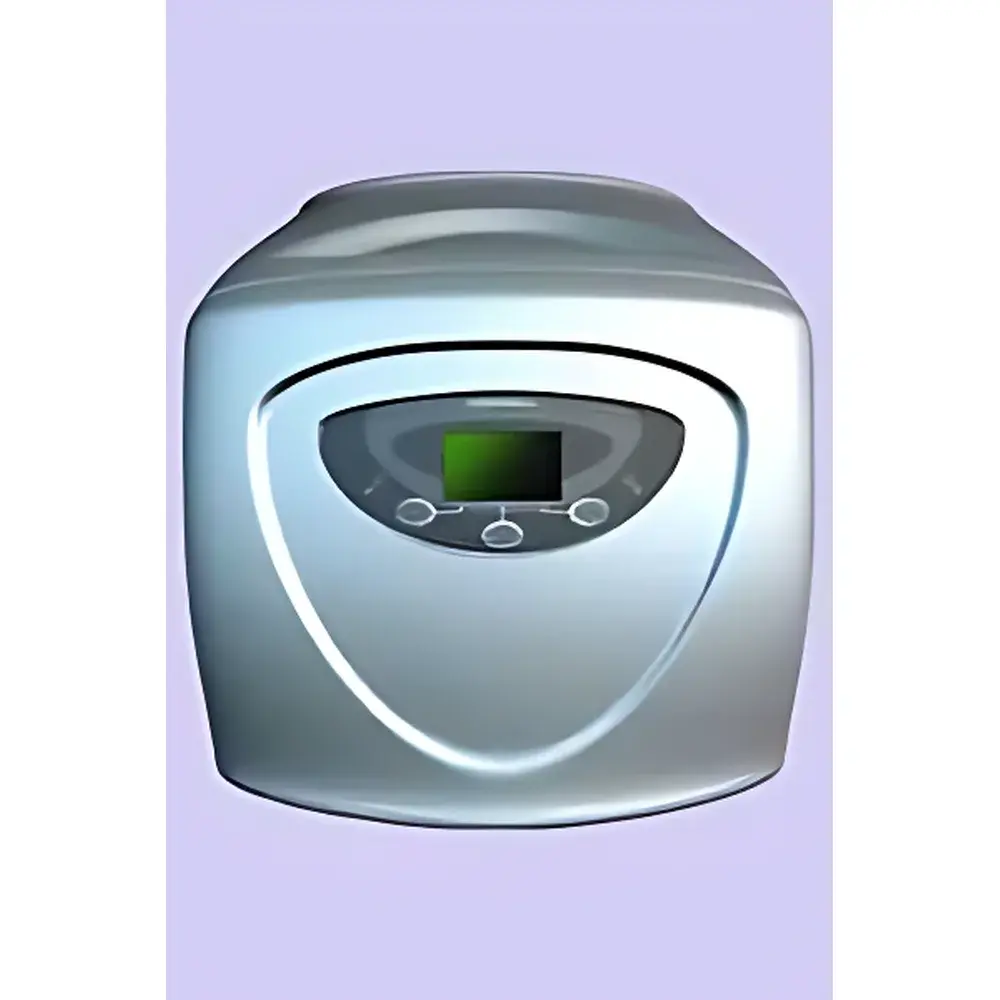
BORA Series PSA Nitrogen Generator
| Origin | Imported |
|---|---|
| Manufacturer Type | Authorized Distributor |
| Model | BORA Series (N2-BORA-500 / N2-BORA-1300) |
| Purity | 99.999%+ (N2-BORA-500) or 99.995% (N2-BORA-1300) |
| Residual O₂ | <10 ppm (N2-BORA-500) or <50 ppm (N2-BORA-1300) |
| Flow Rate | 500 mL/min or 1300 mL/min |
| Integrated Oil-Free Compressor | Yes |
| Compliance | ISO 9001 certified |
| Maintenance Interval | Filter & Silencer replacement every 4,000 operating hours |
| Operating Pressure | Low-pressure ambient system (no high-pressure cylinders or cryogenic storage) |
Overview
The BORA Series PSA Nitrogen Generator is an engineered solution for laboratories requiring a continuous, reliable, and ultra-pure nitrogen supply—specifically tailored for analytical instrumentation such as gas chromatography (GC), LC-MS nitrogen drying gas, FTIR purge applications, and inert atmosphere glove boxes. Utilizing pressure swing adsorption (PSA) technology, the system separates nitrogen from ambient compressed air by selectively retaining oxygen, carbon dioxide, moisture, and trace hydrocarbons on specialized carbon molecular sieve (CMS) beds. This physical separation process operates at near-ambient temperature and low pressure (typically <10 bar), eliminating the safety hazards associated with high-pressure gas cylinders or liquid nitrogen dewars. The BORA system delivers two standardized output configurations: the N2-BORA-500 provides ≥99.999% nitrogen purity with residual oxygen ≤10 ppm at 500 mL/min; the N2-BORA-1300 delivers ≥99.995% purity with residual oxygen ≤50 ppm at 1300 mL/min. Both models integrate a maintenance-free, oil-free scroll compressor—ensuring zero hydrocarbon contamination and compliance with ISO 8573-1 Class 0 air quality standards for instrument-grade gases.
Key Features
- Integrated oil-free scroll compressor eliminates need for external air supply and prevents hydrocarbon carryover into the nitrogen stream
- Two validated purity/flow configurations: N2-BORA-500 (≥99.999%, ≤10 ppm O₂, 500 mL/min) and N2-BORA-1300 (≥99.995%, ≤50 ppm O₂, 1300 mL/min)
- Compact benchtop or under-bench footprint—designed for space-constrained lab environments without sacrificing performance
- Low-noise operation (<55 dBA at 1 m) enables placement in shared analytical labs without acoustic interference
- Intelligent runtime monitoring with front-panel LED alert and internal hour counter—automatically prompts filter/silencer replacement at 4,000-hour intervals
- No high-pressure vessels or cryogenic components—fully compliant with laboratory safety protocols and reducing insurance and handling liabilities
- ISO 9001-certified manufacturing and documented design validation per IEC 61000-6-2/6-4 electromagnetic compatibility standards
Sample Compatibility & Compliance
The BORA generator is compatible with all standard GC carrier gas inlets, mass spectrometer auxiliary gas ports, and inerting manifolds requiring Grade 5 (ISO 8573-1:2010 Class 1.2.1) or higher nitrogen. Its consistent flow stability (±2% regulation) and ultra-low oxygen/moisture residuals meet ASTM D6366-22 specifications for GC carrier gas purity and USP requirements for pharmaceutical inerting applications. While not inherently 21 CFR Part 11 compliant, the system supports integration into GLP/GMP environments via external audit-trail-capable data loggers and can be validated per IQ/OQ protocols using third-party calibration services. All wetted materials—including CMS columns, stainless steel manifolds, and EPDM-free filtration media—are FDA-compliant and leachate-tested per USP .
Software & Data Management
The BORA Series operates as a standalone hardware platform with no embedded firmware or cloud connectivity. All operational parameters—including total runtime, compressor cycle count, and pressure differential across CMS beds—are accessible via the front-panel LCD and mechanical hour meter. For laboratories requiring electronic recordkeeping, analog 0–10 V or 4–20 mA output signals (optional) enable integration with building management systems (BMS) or LIMS via standard industrial I/O modules. Routine maintenance logs—including filter replacement timestamps and CMS bed service history—can be maintained manually in accordance with ISO/IEC 17025 Clause 8.7 documentation requirements.
Applications
- GC carrier gas (especially for ECD, TCD, and high-resolution capillary columns where oxygen-induced column bleed compromises baseline stability)
- LC-MS nitrogen curtain and nebulizer gas (reducing oxidation artifacts and improving ionization efficiency)
- FTIR and Raman spectrometer purge streams to minimize atmospheric CO₂/H₂O absorption bands
- Inert atmosphere control for glove boxes, synthesis reactors, and battery material handling
- Blank gas for TOC analyzers and dissolved oxygen sensors requiring zero-oxygen background
- Replacement of liquid nitrogen in cryo-cooling applications where moderate cooling capacity suffices
FAQ
What is the expected lifetime of the carbon molecular sieve (CMS) beds?
CMS beds are rated for ≥24,000 operating hours under nominal load conditions. Performance verification (O₂ residual and flow consistency) is recommended annually or after 24,000 hours—service includes CMS regeneration or replacement by certified technicians.
Can the BORA generator be used with GC-MS systems requiring ultra-high-purity nitrogen?
Yes—the N2-BORA-500 configuration meets or exceeds ASTM D6366-22 Grade 5 requirements for GC-MS carrier gas when paired with optional post-purification traps (e.g., oxygen/moisture scavengers).
Is external air drying required before feeding ambient air into the unit?
No—the integrated desiccant pre-filter and coalescing stage remove >99.9% of particulates, aerosols, and bulk moisture; however, operation in environments with sustained >80% RH is not recommended without supplemental dehumidification.
How often must consumables be replaced?
The inlet filter and acoustic silencer require replacement every 4,000 operating hours; CMS bed servicing is advised every 24,000 hours. Replacement kits include calibrated pressure gauges and CMS integrity test instructions.
Does the unit support remote monitoring or alarm outputs?
Standard models feature dry-contact fault relays (NC/NO) for low-flow, high-pressure, or thermal shutdown events. Optional analog outputs (0–10 V or 4–20 mA) are available for integration with facility SCADA systems.



