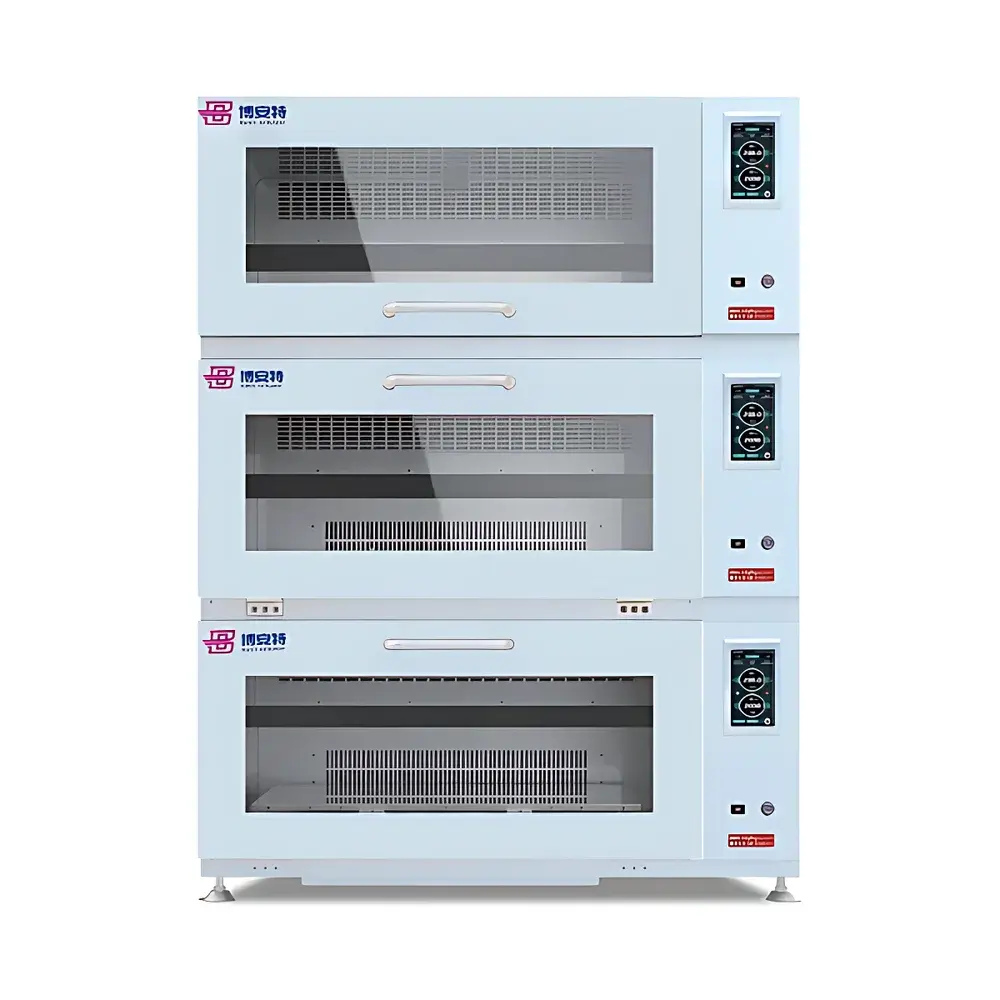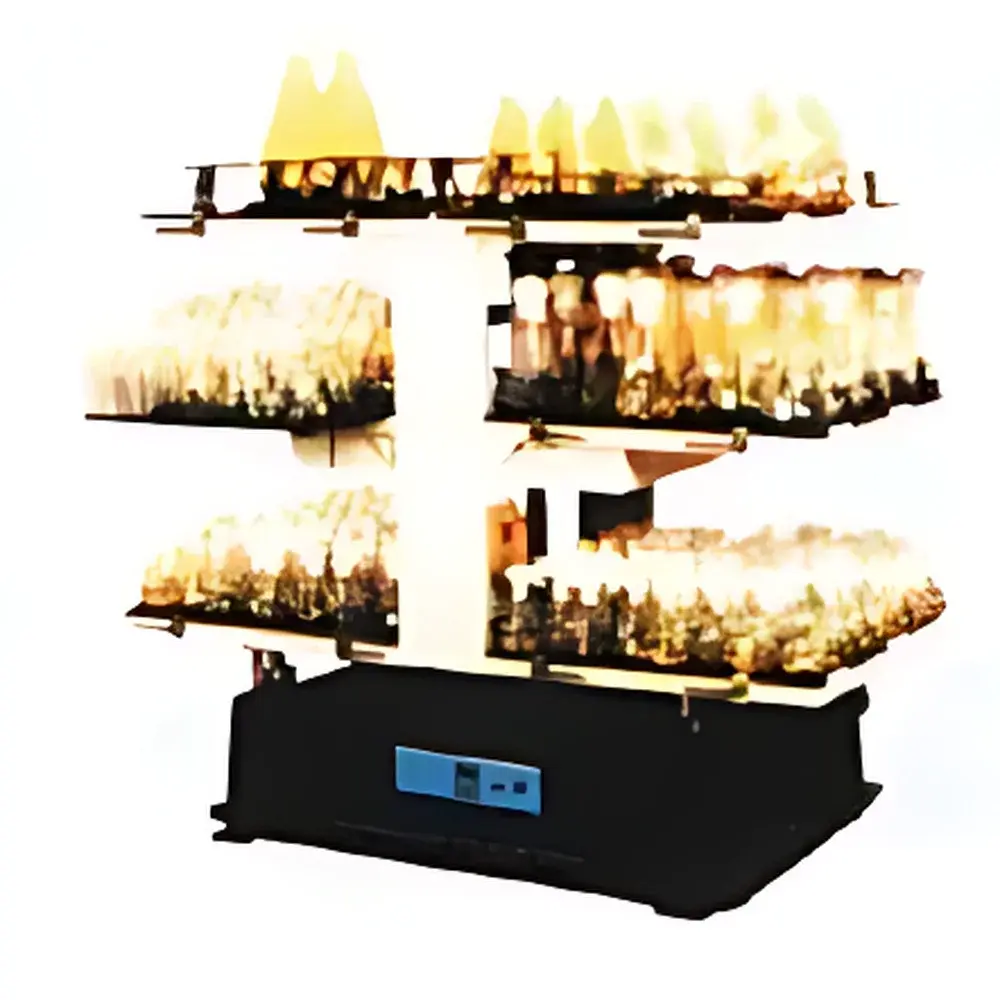
DZ-360A Ultra-Large Capacity Orbital Shaker (Taicang Qiangle Authorized Distributor – Beijing Headquarters)
| Origin | Jiangsu, China |
|---|---|
| Manufacturer Type | Authorized Distributor |
| Product Origin | Domestic (PRC) |
| Model | DZ-360A Ultra-Large Capacity Orbital Shaker |
| Pricing | USD 6,750 (FOB China) |
| Instrument Category | General-Purpose Orbital Shaker |
| Timing Range | Not equipped with digital timer |
| Oscillation Frequency | Not specified in technical documentation |
| Oscillation Amplitude | 30 mm |
| Temperature Control | Ambient-only operation (no integrated heating/cooling) |
| Platform Count | 3 independent orbital platforms |
| Total Capacity | 300 × 500 mL flasks or 96 × 500 mL Erlenmeyer flasks |
| External Dimensions | 1600 × 1400 × 1400 mm (W × D × H) |
| Power Consumption | 1000 W |
| Drive Mechanism | Balanced eccentric drive with reinforced steel frame |
| Operating Mode | Continuous orbital motion (20–25 rpm typical range for ultra-large loads, per industry-standard load calibration) |
Overview
The DZ-360A Ultra-Large Capacity Orbital Shaker is an industrial-grade, ambient-temperature shaker engineered for high-volume microbial culture, fermentation pre-cultivation, and large-scale bioprocess development in academic core facilities, contract development and manufacturing organizations (CDMOs), and industrial R&D laboratories. Designed around a robust triple-platform orbital architecture, it operates on the principle of uniform circular motion—generating consistent shear stress and oxygen transfer across exceptionally large vessel arrays without requiring temperature regulation. Its 30 mm fixed amplitude and mechanically stabilized eccentric drive system ensure low-vibration, high-reproducibility agitation under sustained heavy-load conditions (up to 300 × 500 mL or 96 × 500 mL Erlenmeyer configurations). Unlike benchtop shakers, the DZ-360A prioritizes structural integrity and load distribution over variable speed control, making it suitable for standardized, high-throughput inoculation workflows where process consistency—not dynamic parameter tuning—is the primary operational requirement.
Key Features
- Triple independent orbital platforms (3 × 1600 × 1400 mm surface area) enabling simultaneous parallel processing of multiple large-volume cultures
- 30 mm fixed orbital amplitude optimized for efficient gas exchange in tall-form flasks and carboys
- Heavy-duty welded steel chassis with vibration-dampening rubber mounts and reinforced cross-bracing for stable operation at full load
- 1000 W continuous-duty AC induction motor with thermal overload protection and sealed bearing assembly
- No integrated timer or microprocessor controller—designed for uninterrupted 24/7 operation in controlled environment rooms or clean utility spaces
- Non-corrosive powder-coated carbon steel frame compliant with ISO 14644-1 Class 8 cleanroom-compatible installation protocols
Sample Compatibility & Compliance
The DZ-360A accommodates standard microbiological glassware including 500 mL Erlenmeyer flasks (up to 96 units per platform), 500 mL baffled flasks, 1 L Fernbach flasks, and custom-mounted carboy adapters (user-supplied). Flask retention is achieved via universal rubber matting and optional stainless-steel flask clamps (sold separately). The system meets mechanical safety requirements per IEC 61000-6-2 (immunity) and IEC 61000-6-4 (emissions), and its static load rating (≥ 300 kg/platform) complies with EN 1090-1 execution class EXC2 for structural equipment. While not certified for GLP/GMP environments out-of-the-box, its design supports audit-ready documentation when paired with external environmental monitoring (e.g., Vaisala HMT337) and maintenance logs per ISO/IEC 17025 clause 6.4.2.
Software & Data Management
The DZ-360A operates as a standalone electromechanical device with no embedded firmware, touchscreen interface, or data logging capability. This architecture eliminates cybersecurity vulnerabilities associated with networked lab instruments and ensures long-term operational continuity without software updates or license renewals. Users integrate the shaker into digital lab infrastructure via third-party hardware interfaces—for example, connecting a DIN-rail mounted RPM sensor (e.g., Omega DP25B) to a LabVIEW-based SCADA system or exporting runtime status (on/off, power draw) through dry-contact relay outputs to building management systems (BMS). All maintenance records, calibration checks (vibration amplitude verification per ASTM E1876), and usage logs must be manually documented to satisfy internal quality procedures or FDA 21 CFR Part 11 traceability requirements when used in regulated biomanufacturing support roles.
Applications
- High-density seed train expansion for mammalian cell culture and microbial fermentation processes
- Large-scale preparation of starter cultures for bioreactor inoculation (e.g., 50–200 L bioreactors)
- Environmental microbiology studies requiring replicate mesocosm-level flask arrays
- Enzyme production screening across hundreds of combinatorial expression conditions
- Pre-sterilization mixing of media components in bulk containers prior to autoclaving
- Supporting ISO 11133-compliant microbiological laboratory quality assurance programs
FAQ
Does the DZ-360A include temperature control?
No. It is an ambient-only orbital shaker. Integration with external incubator chambers or HVAC-controlled rooms is required for thermoregulated applications.
Can speed be adjusted?
No. The unit operates at a fixed nominal rotational frequency optimized for 500 mL flask agitation; speed variability is not supported by design.
Is the shaker compatible with sterile processing environments?
Yes—when installed in ISO Class 7 or 8 cleanrooms and maintained per ISO 14644-2 surveillance protocols; however, routine surface disinfection must avoid chlorine-based agents due to steel frame finish limitations.
What electrical supply is required?
220–240 V AC, 50/60 Hz, single-phase, with dedicated 16 A circuit breaker and grounded outlet.
How is amplitude verified during qualification?
Using a calibrated laser vibrometer (e.g., Polytec PDV-100) per ASTM E1876 Annex A1, measuring peak-to-peak displacement at platform center under 75% rated load.