
OK-S-50 Drop Ball Mechanical Impact Tester
| Brand | Other Brands |
|---|---|
| Origin | Imported |
| Manufacturer Type | General Distributor |
| Max Load Capacity | 50 kg |
| Impact Waveforms | Half-sine, Trapezoidal, Post-peak Sawtooth |
| Peak Acceleration Range | Half-sine: 150–6000 m/s² |
| Trapezoidal | 100–1500 m/s² |
| Post-peak Sawtooth | 100–1500 m/s² |
| Pulse Duration | Half-sine: 2–20 ms |
| Trapezoidal | 6–25 ms |
| Post-peak Sawtooth | 4–18 ms |
| Max Drop Height | 1500 mm |
| Secondary Impact Prevention | Pneumatic/Hydraulic/Friction Braking System |
| Table Surface Dimensions | 500 × 500 mm |
| Unit Weight | ~1800 kg |
| Overall Dimensions (L×W×H) | 1200 × 750 × 2750 mm |
| Power Consumption | 2.2 kVA |
| Supply Voltage | Three-phase AC 380 V ±10%, 50 Hz |
| Compliance | GB/T 2423.5, GB/T 2423.6, IEC 60068-2-27, IEC 60068-2-29, GJB 150, JJG 497 |
Overview
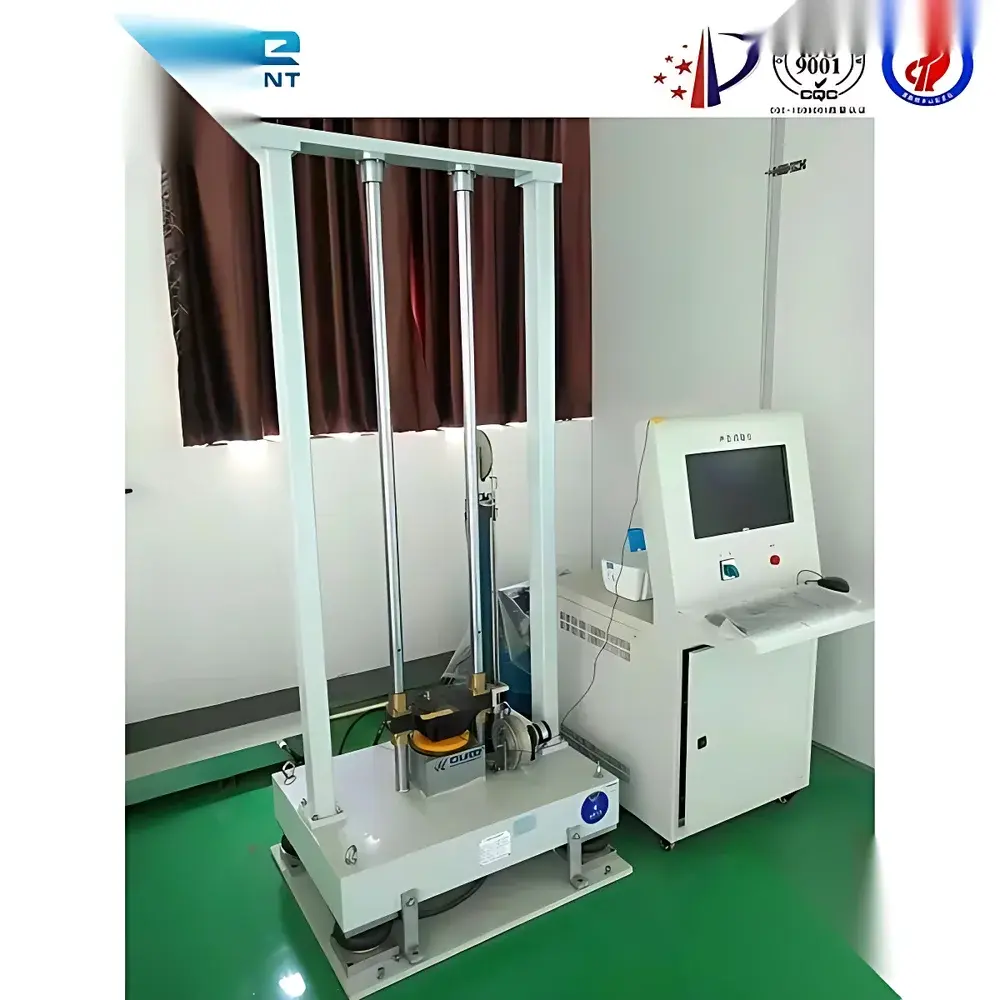
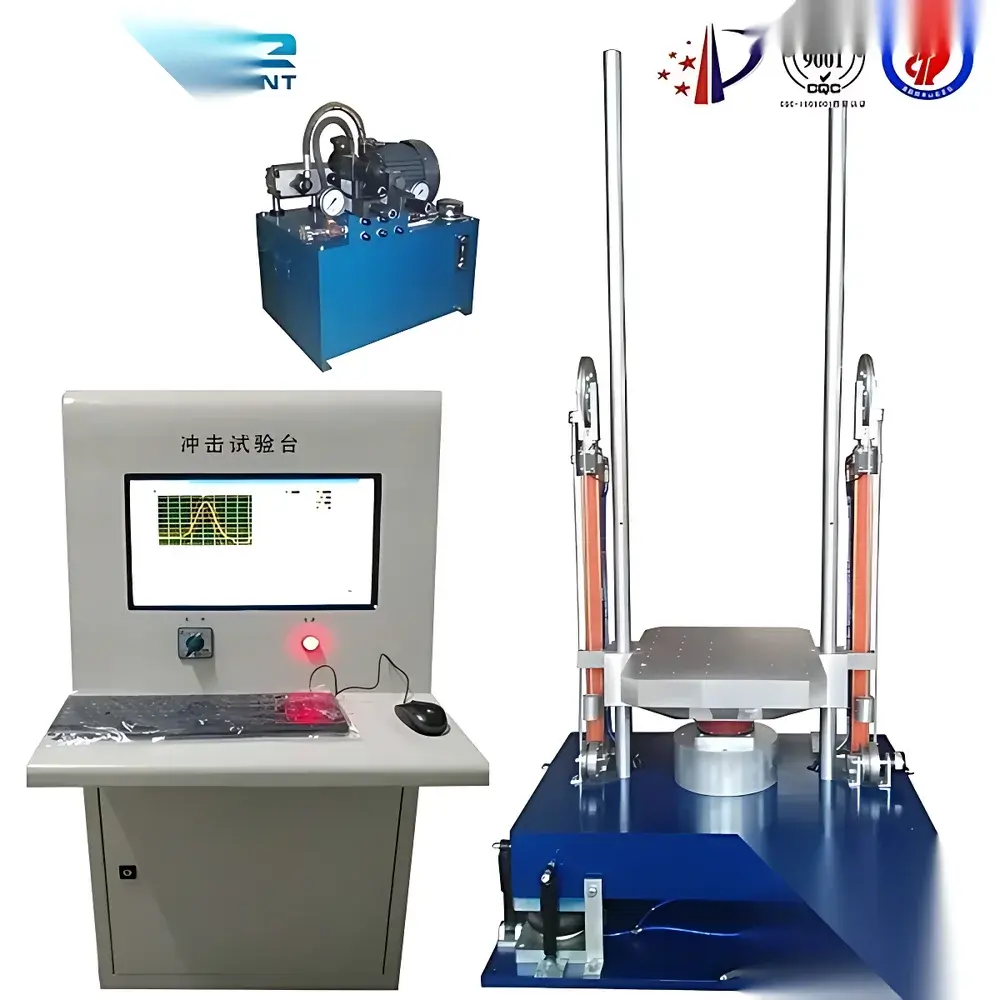
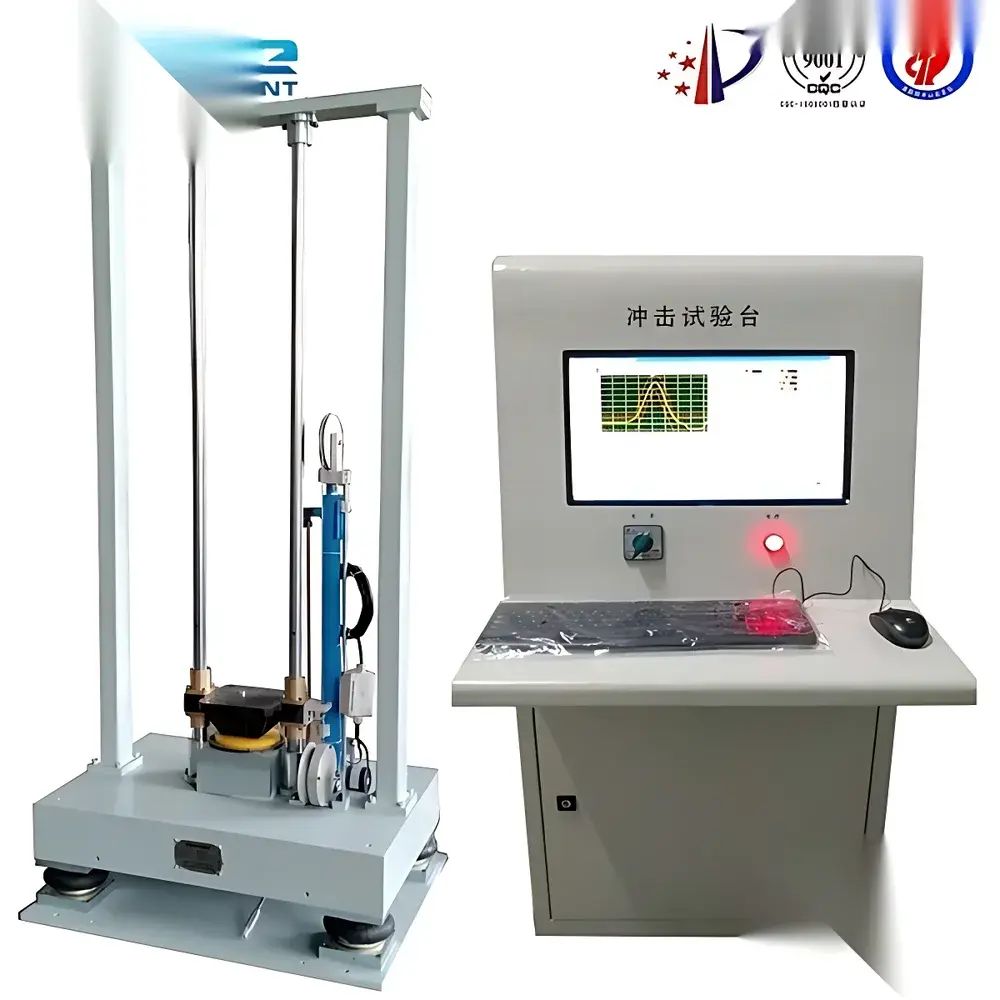
The OK-S-50 Drop Ball Mechanical Impact Tester is a precision-engineered laboratory impact testing system designed to replicate controlled mechanical shock events encountered during transportation, handling, and operational deployment of packaged goods and electronic assemblies. Based on the free-fall principle, it delivers calibrated, repeatable shock pulses by releasing a test specimen—mounted on a rigid platform—from a digitally preset height onto a stationary impact surface or vice versa, depending on configuration. The system operates under principles defined in classical shock mechanics, where acceleration-time profiles (half-sine, trapezoidal, and post-peak sawtooth) are generated through mechanical waveform-shaping interfaces between the falling mass and the anvil. Its robust structural architecture ensures minimal energy dissipation outside the intended test path, enabling high-fidelity reproduction of real-world transient loading conditions for engineering validation and compliance verification.
Key Features
- Digital height setting with servo-controlled vertical positioning: Enables precise, programmable drop heights up to 1500 mm with repeatability better than ±0.5 mm.
- Integrated secondary impact suppression system: Utilizes synchronized pneumatic/hydraulic or friction-based braking to arrest platform rebound immediately after primary impact, eliminating waveform distortion from residual oscillation.
- Modular waveform generation capability: Standard half-sine waveform generator; optional trapezoidal and post-peak sawtooth modules allow tailoring of pulse shape per test standard requirements.
- High-efficiency base isolation system: Comprising tuned mass dampers and elastomeric mounting elements, this subsystem attenuates transmitted vibration energy by >90% at resonance frequencies, protecting adjacent instrumentation and building infrastructure.
- Real-time impact data acquisition and visualization: Integrated piezoelectric accelerometer, signal conditioner, and PC-based analysis software provide live waveform display, peak acceleration capture, pulse duration measurement, and export-ready reports.
- Structural integrity optimized for 50 kg maximum payload: Reinforced steel frame and guided linear motion columns ensure minimal lateral deflection and consistent impact axis alignment across repeated cycles.
Sample Compatibility & Compliance
The OK-S-50 accommodates packaged units, consumer electronics enclosures, automotive ECUs, medical device housings, and aerospace subassemblies mounted on standardized 500 × 500 mm test tables. Its mechanical design and control logic conform to internationally recognized environmental stress screening protocols. It satisfies the physical test execution requirements of GB/T 2423.5 (sinusoidal shock), GB/T 2423.6 (shock response spectrum), IEC 60068-2-27 (shock testing), IEC 60068-2-29 (repetitive shock), GJB 150.18A (military shock), and JJG 497 (calibration verification for shock machines). All waveform parameters—including peak acceleration tolerance (±5%), pulse duration accuracy (±0.2 ms), and rise time consistency—are validated traceably to national metrology institutes per ISO/IEC 17025 guidelines.
Software & Data Management
The included Impact Analysis Suite supports Windows-based operation with intuitive GUI navigation. It provides synchronized dual-channel acquisition (acceleration + displacement reference), automatic waveform classification, pass/fail threshold comparison against user-defined limits, and batch report generation compliant with GLP/GMP documentation standards. Audit trails record operator ID, timestamp, calibration status, and parameter settings for each test run. Export formats include CSV, PDF, and MATLAB-compatible .mat files. Optional integration with LIMS platforms is supported via OPC UA and TCP/IP protocols. Software validation documentation (IQ/OQ/PQ templates) and 21 CFR Part 11-compliant electronic signature modules are available upon request.
Applications
This tester serves critical roles in packaging development laboratories, quality assurance departments, and R&D centers focused on product durability. Typical use cases include evaluating cushioning performance of foam inserts and corrugated boxes; validating structural integrity of handheld devices subjected to accidental drops; assessing solder joint reliability in PCB assemblies under transient load; qualifying battery pack housing designs for EV applications; and supporting failure mode analysis (FMEA) for shock-sensitive optomechanical systems. In regulatory contexts, it supports submissions to notified bodies under CE marking (EN 60068-2-27), UL 62368-1, and MIL-STD-810H Method 516.6.
FAQ
What waveform types can be generated without additional hardware?
The half-sine waveform generator is supplied as standard equipment. Trapezoidal and post-peak sawtooth configurations require optional waveform shaper kits.
Is the system suitable for testing fragile optical components?
Yes—when used with low-mass fixtures and calibrated low-g waveforms (e.g., 150–500 m/s² half-sine), it supports non-destructive shock screening for lenses, sensors, and MEMS devices.
Does the machine include calibration certification?
Each unit ships with a factory calibration certificate traceable to NIM (China National Institute of Metrology), covering accelerometer sensitivity, height encoder linearity, and timing resolution.
Can the system be integrated into an automated test cell?
Yes—digital I/O ports (TTL/RS-485) and Ethernet interface support PLC-triggered operation, remote start/stop commands, and status feedback for industrial automation environments.
What maintenance intervals are recommended?
Brake system inspection every 500 impacts; guide rail lubrication every 1000 cycles; annual full metrological recalibration advised per ISO 17025 requirements.



