
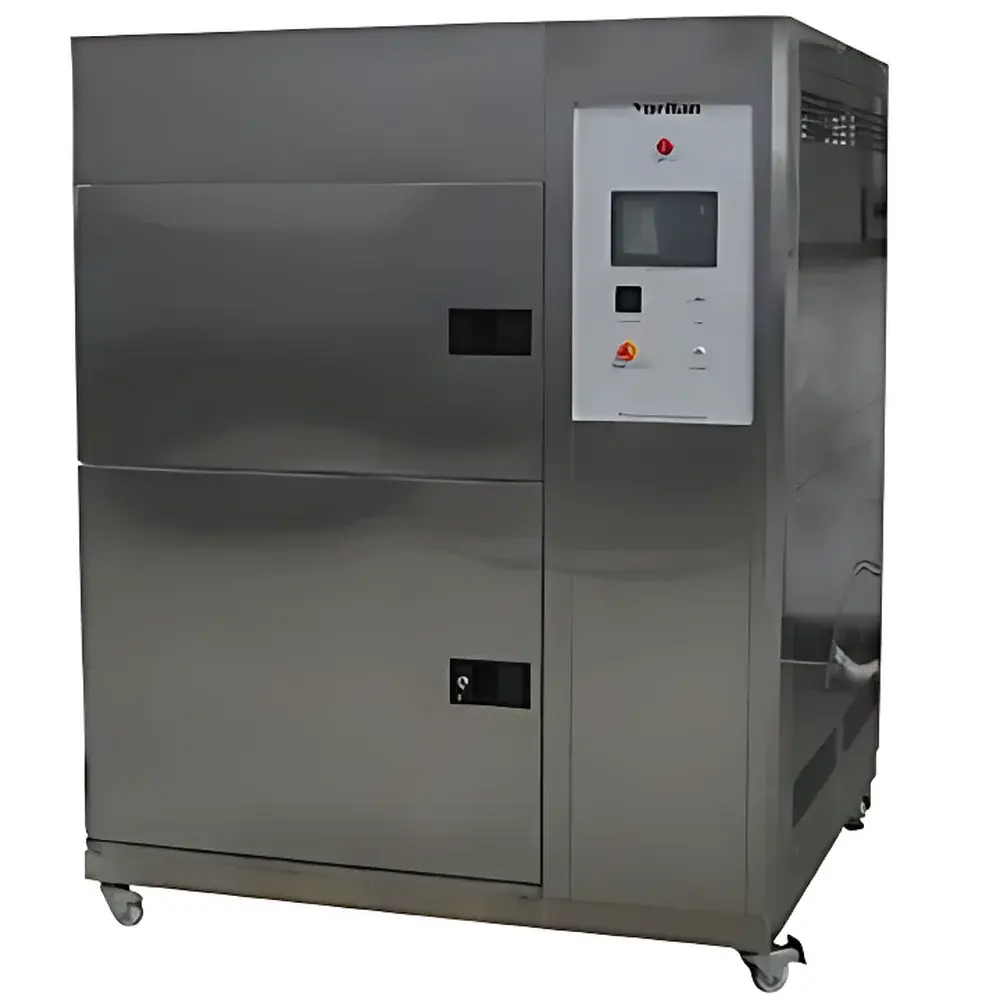
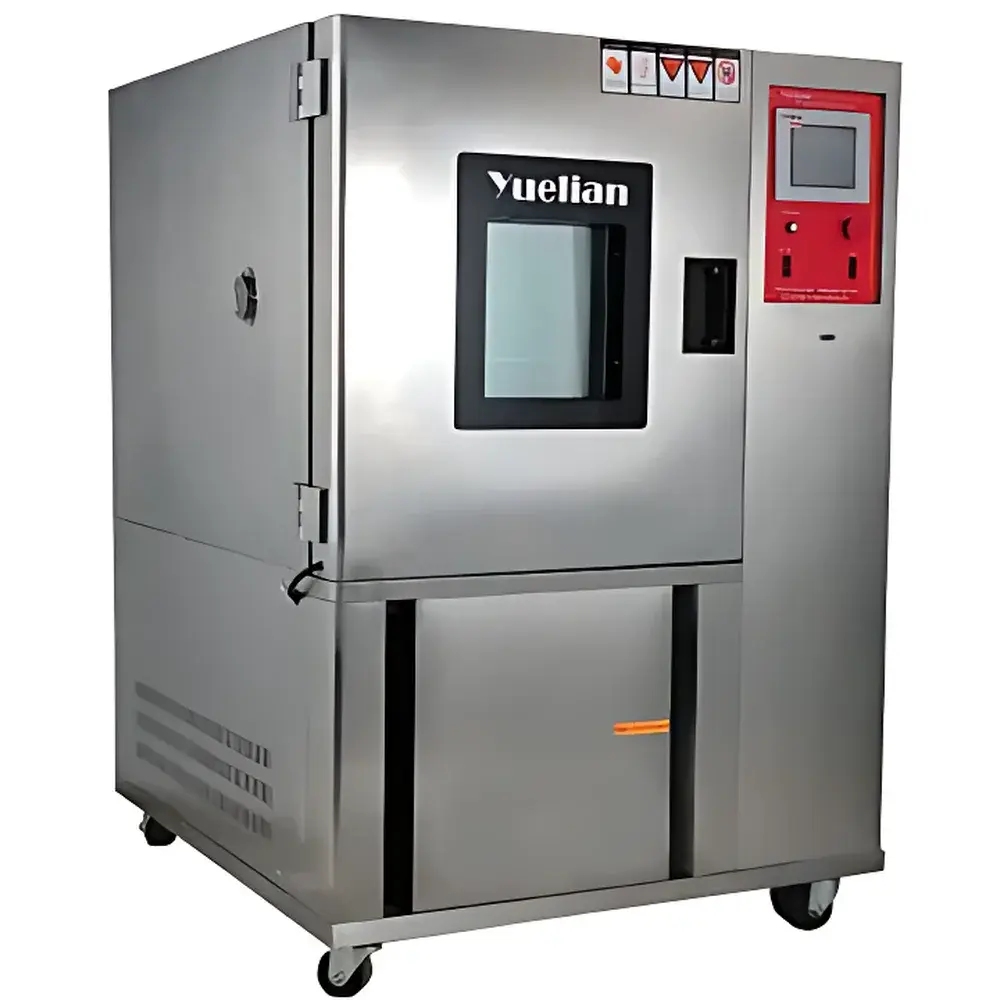
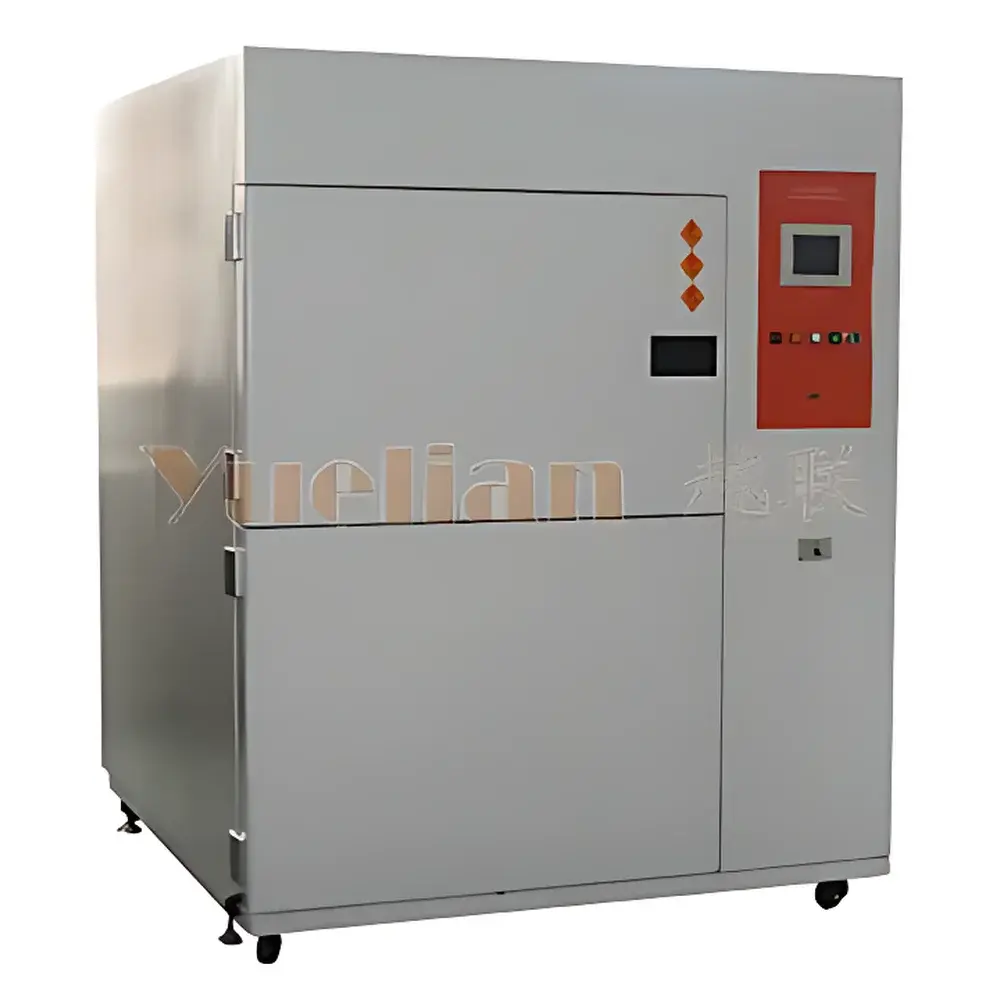
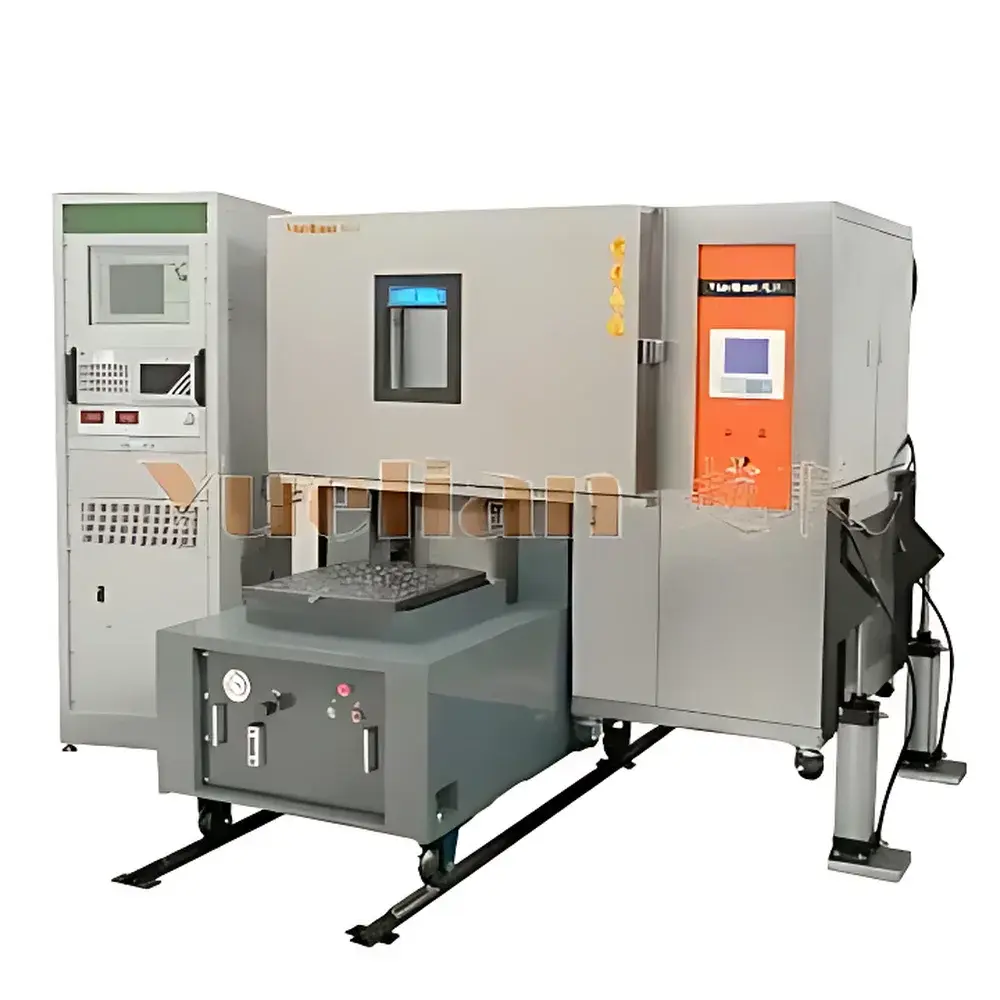
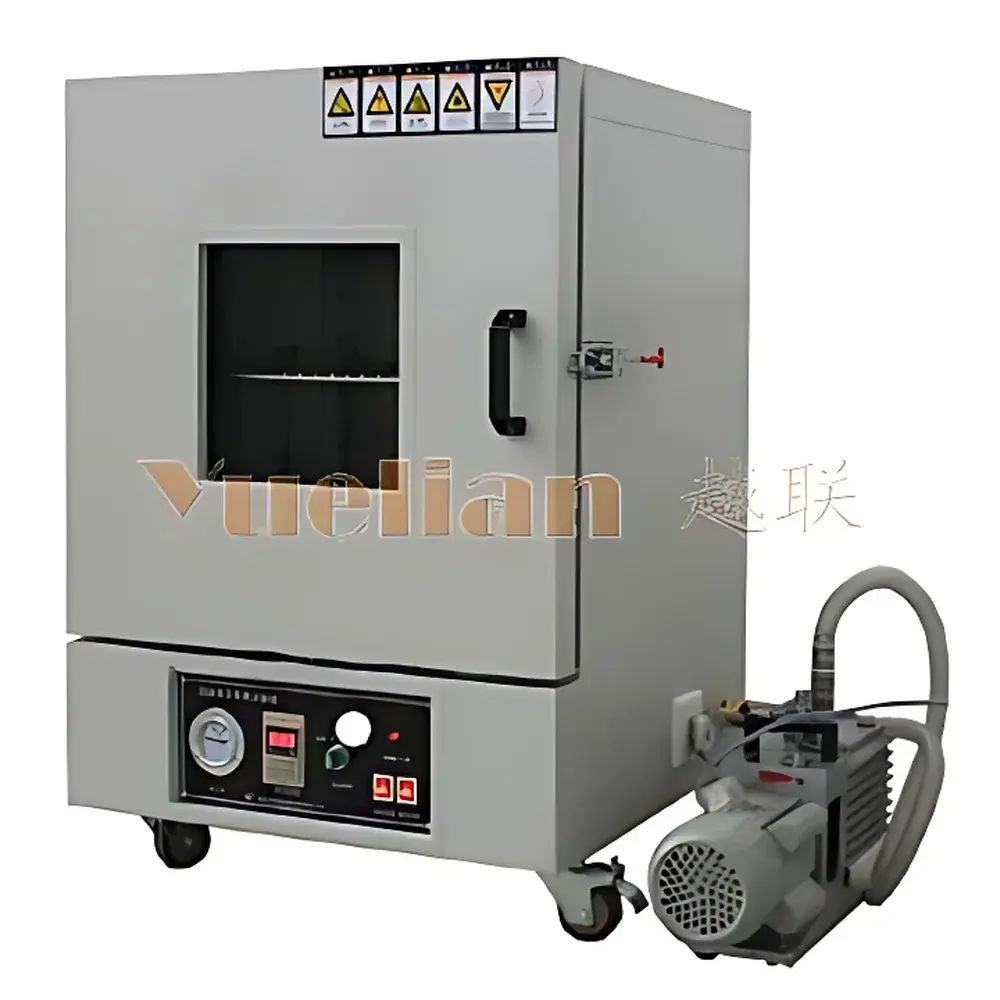
Yuelian YL-2280 Thermal Shock Test Chamber
| Brand | Yuelian |
|---|---|
| Origin | Guangdong, China |
| Model | YL-2280 |
| Temperature Range (High/Low Zones) | +60°C to +200°C / −10°C to −70°C |
| Thermal Shock Transition Time (2-tank mode) | ≤5 min (RT ↔ −65°C or RT ↔ +150°C) |
| Temperature Uniformity | ±2.00°C |
| Construction | Three-zone (pre-heat/pre-cool/test) or two-zone configurable |
| Refrigeration System | Dual-stage cascade refrigeration with eco-friendly refrigerant |
| Control System | OYO-8226 PID controller with 320×240 LCD interface |
| Programmability | 120 stored profiles, up to 9999 cycles, max segment time 999 h 59 min |
| Communication | RS-232 interface with PC software for remote programming, data logging & real-time monitoring |
| Power Supply | AC 3φ 380 V, 50 Hz |
| Compliance | Designed per ASTM D5229, IEC 60068-2-14, MIL-STD-810H Method 503.5, JIS Z 8705 |
Overview
The Yuelian YL-2280 Thermal Shock Test Chamber is an engineered environmental stress screening system designed to evaluate material and component reliability under rapid, repetitive transitions between extreme high and low temperature extremes. It operates on the principle of controlled thermal shock—inducing mechanical stress via differential thermal expansion and contraction across heterogeneous materials, interfaces, or layered structures. Unlike conventional temperature cycling chambers, the YL-2280 employs a physically segregated three-zone architecture (pre-heating chamber, pre-cooling chamber, and test chamber), enabling precise, repeatable, and contamination-free thermal transitions without subjecting specimens to airflow turbulence or condensation during transfer. The system supports both two-zone (hot/cold) and three-zone operational modes, allowing users to configure test protocols aligned with specific qualification standards—including accelerated aging, solder joint integrity assessment, and interfacial delamination analysis in electronics packaging.
Key Features
- Triple-chamber modular design with independent thermal reservoirs ensures minimal cross-contamination and high thermal inertia stability during shock transitions.
- Automated air-baffle switching mechanism achieves cold/hot gas injection into the test zone within ≤10 seconds; temperature recovery to target setpoint completed in ≤5 minutes (per IEC 60068-2-14).
- High-precision T-type thermocouples (×4) mounted directly within the test volume—not at duct inlets—guarantee representative, spatially averaged temperature measurement per ISO/IEC 17025 metrological best practices.
- Dual-stage cascade refrigeration system utilizes environmentally compliant HFC refrigerants and imported compressors from Europe and North America, delivering stable operation down to −70°C without liquid nitrogen dependency.
- OYO-8226 digital controller with 320×240 pixel backlit LCD provides bilingual (English/Chinese) interface, 120 programmable profiles, cycle-based sequencing, and real-time deviation alarm with fault-code diagnostics.
- Integrated power anomaly detection and emergency shutdown logic complies with IEC 61000-4-11 immunity requirements for voltage sag and interruption tolerance.
Sample Compatibility & Compliance
The YL-2280 accommodates rigid and semi-rigid specimens up to 10 kg (model-dependent), including PCB assemblies, molded plastic housings, metal alloy components, elastomeric seals, and ceramic substrates. Its stainless steel (SUS 304) interior and non-condensing airflow path prevent oxidation or moisture-induced degradation during low-temperature phases. The chamber meets structural and procedural requirements of multiple international test standards: ASTM D5229 (low-temperature impact resistance), IEC 60068-2-14 (change of temperature), MIL-STD-810H Method 503.5 (temperature shock), and JIS Z 8705 (thermal cycling for electronic devices). Optional validation packages support IQ/OQ documentation per GMP Annex 15 and FDA 21 CFR Part 11-compliant audit trails when paired with certified data acquisition software.
Software & Data Management
Equipped with standard RS-232 serial communication, the YL-2280 integrates seamlessly with Windows-based configuration and monitoring software. Users may define multi-step thermal shock sequences—including dwell times, ramp rates, cycle counts, and start-point selection (hot-first or cold-first)—directly from a PC workstation. Real-time temperature curves are logged at user-selectable intervals (1–60 sec resolution) and exported in CSV or Excel format for post-test statistical process control (SPC) analysis. All parameter changes, alarm events, and system status logs are timestamped and stored internally for ≥30 days, satisfying GLP traceability mandates. Optional Ethernet or USB-to-RS232 adapters enable networked deployment in centralized lab management systems.
Applications
This thermal shock tester serves critical roles in R&D validation, incoming QC, and production lot release testing across aerospace, automotive electronics, medical device manufacturing, and semiconductor packaging. Typical use cases include: evaluation of coefficient-of-thermal-expansion (CTE) mismatch in multilayer ceramic capacitors (MLCCs); verification of conformal coating adhesion under thermal fatigue; qualification of lead-free solder joints (e.g., SAC305) per JEDEC J-STD-020; accelerated life testing of MEMS sensors exposed to outdoor ambient extremes; and assessment of optical lens bond integrity in laser diode modules. Its ability to execute −10°C thermal shock cycles also supports tin whisker growth studies per IPC-TR-579 and NASA-HDBK-8709.19.
FAQ
What is the difference between two-zone and three-zone thermal shock operation?
In two-zone mode, the specimen remains stationary while hot and cold air streams are alternately directed into the test chamber. In three-zone mode, the specimen stays fixed in the central test zone while adjacent pre-heated and pre-cooled chambers supply conditioned air—eliminating mechanical transfer mechanisms and improving repeatability.
Does the YL-2280 support automated dew point control during low-temperature phases?
No. The system relies on physical isolation and dry-air purge capability (optional) to suppress condensation; active humidity control is not integrated, as thermal shock testing per IEC 60068-2-14 specifies dry-air conditions.
Can the controller store calibration offsets for individual thermocouple channels?
Yes. The OYO-8226 allows per-channel zero and span correction values to be entered and retained, supporting periodic metrological verification without firmware modification.
Is remote firmware update supported via RS-232?
No. Firmware updates require local USB or SD card access per manufacturer security policy; remote updates are disabled to maintain regulatory compliance integrity.
What maintenance intervals are recommended for the cascade refrigeration system?
Compressor oil and filter-drier replacement every 24 months; annual inspection of refrigerant charge integrity and heat exchanger cleanliness per ASHRAE Guideline 3-2021.



