
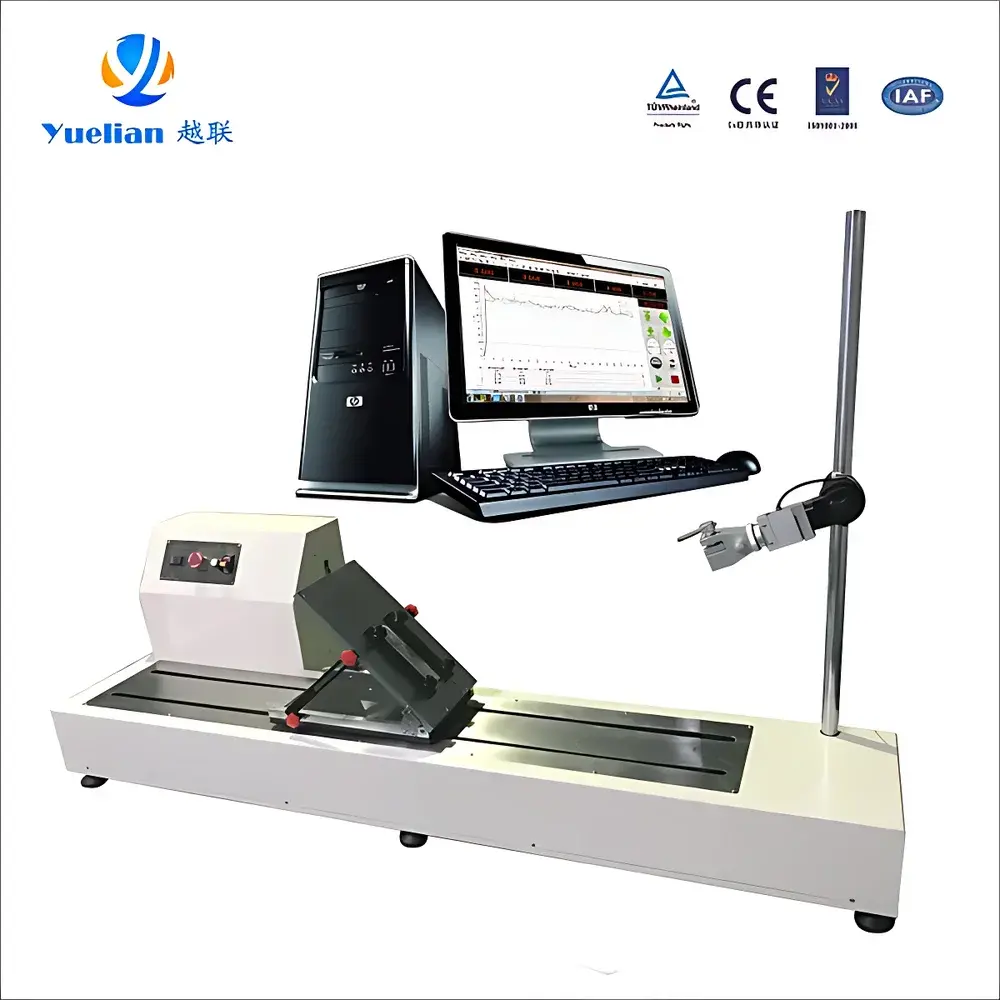
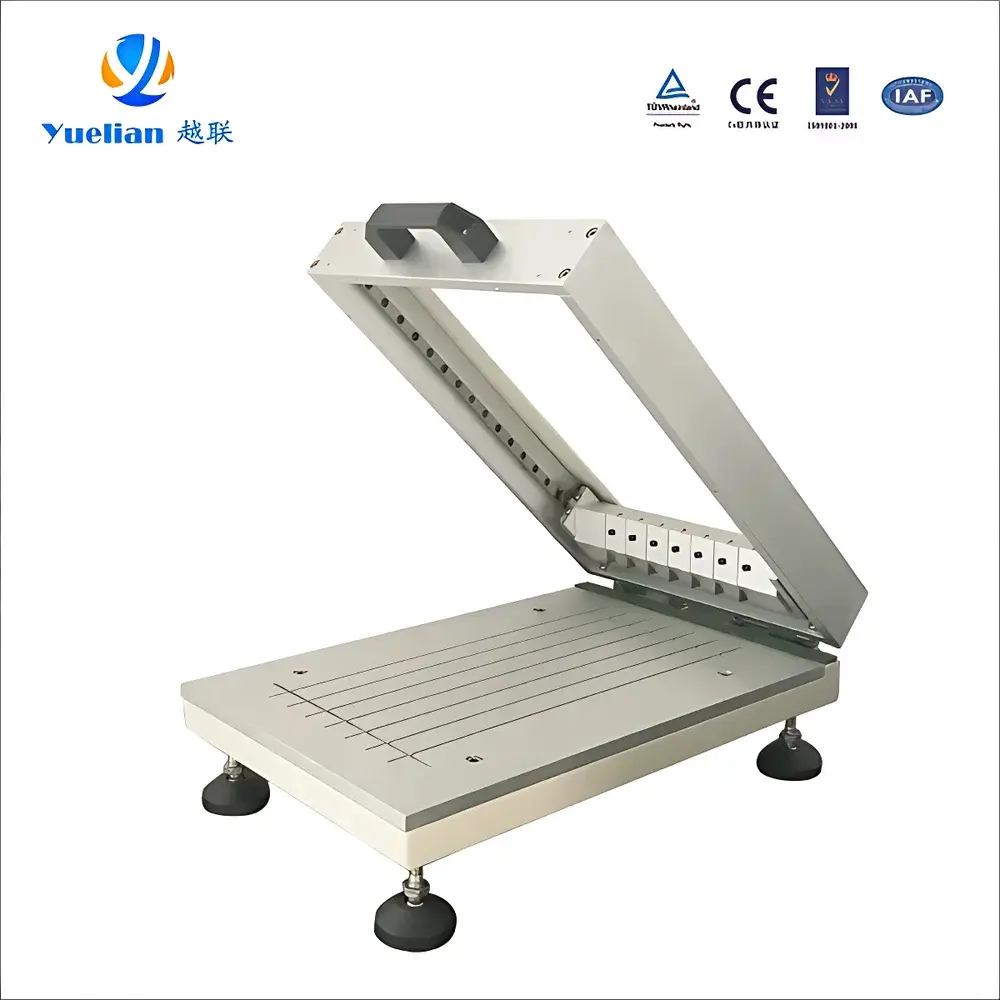
PW-90 Syringe Plunger Force and Needle Penetration Tester
| Brand | PW |
|---|---|
| Origin | Guangdong, China |
| Manufacturer Type | Authorized Distributor |
| Country of Origin | China |
| Model | PW-90 |
| Price Range | USD 2,800–4,200 (FOB) |
| Max Test Load | 5 kN |
| Platen Spacing | 100 mm |
| Platen Dimensions | 100 mm × 100 mm |
| Load Capacity Options | 10 N, 20 N, 50 N, 100 N, 200 N, 500 N, 1 kN (dual-range configuration available) |
| Force Resolution | 1/500,000 full scale |
| Force Accuracy | ≤ ±0.5% FS |
| Stroke Resolution | 0.005 mm |
| Stroke Travel | 500 mm |
| Test Width | Ø55 mm |
| Speed Range | 5–500 mm/min (software-controlled) |
| Power Supply | 220 V, 50/60 Hz, 10 A |
| Motor Drive | Stepper motor with timing belt and precision ball screw transmission |
| Power Consumption | 180 W |
| Net Weight | ~28 kg |
| Dimensions (W×D×H) | 400 × 300 × 700 mm |
| Standard Accessories | One set of syringe-specific fixtures, PC-based testing software, USB communication cable |
| Compliance | ISO 11608-3:2022, ISO 10555-1:2013, ISO 10555-5:2013, ISO 10993-11, ISO 10993-17, ISO 11040-4/5/6/8, ISO 11607-1, ISO 13926-1/2/3, ISO 21881, ISO 7864:2016, ISO 80369-7, ISO 8872, ISO 9626:2016 |
Overview
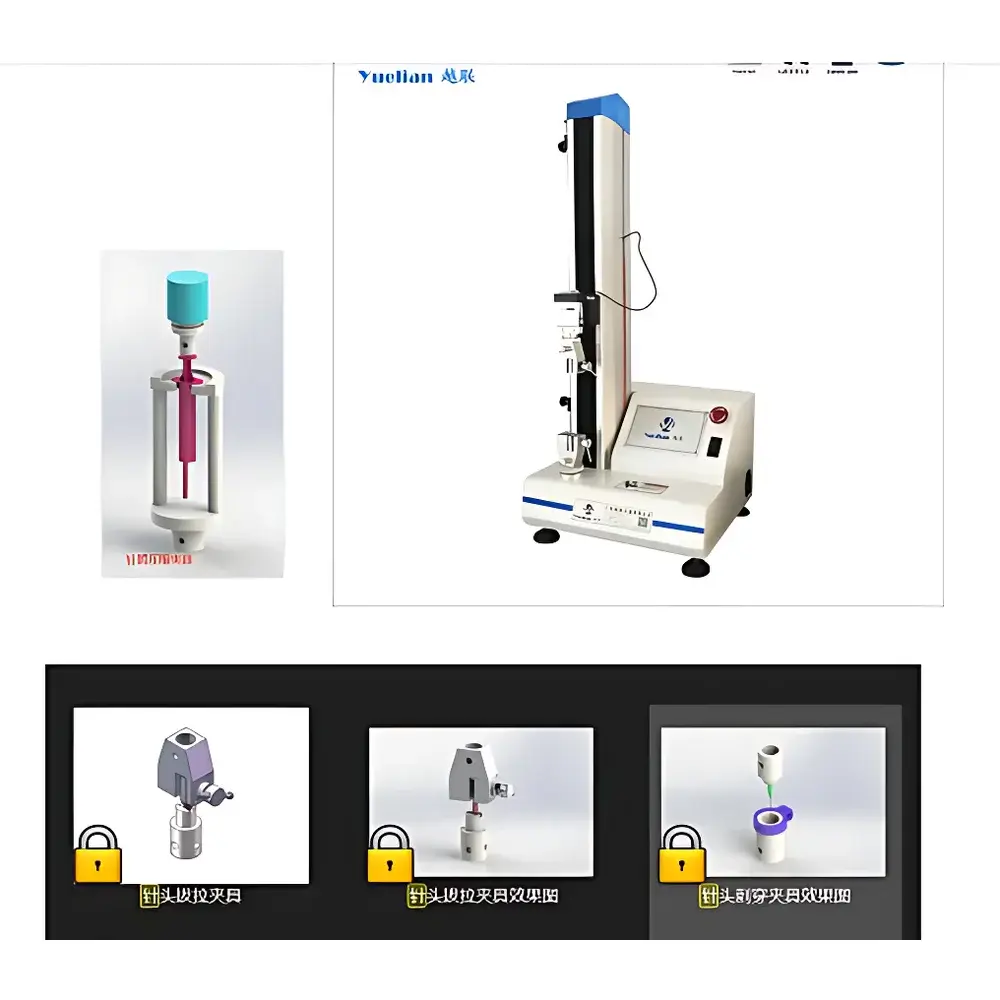
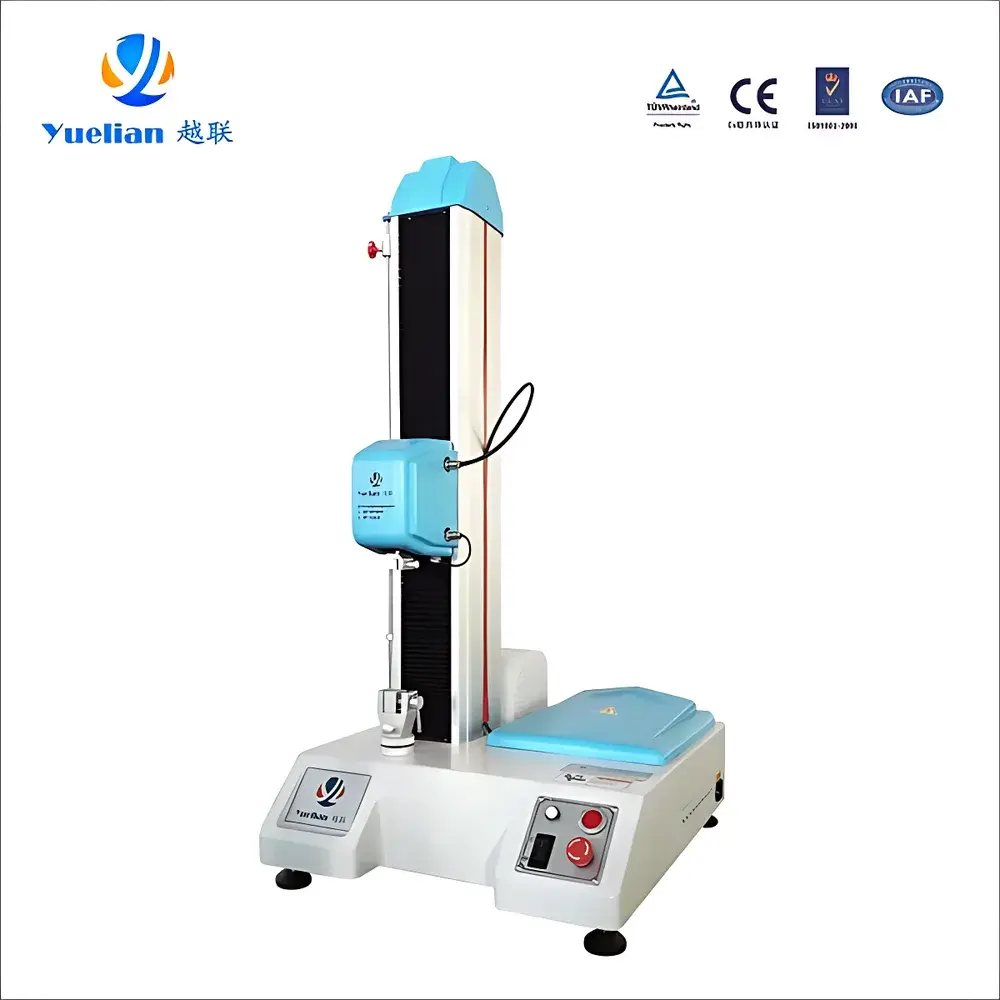
The PW-90 Syringe Plunger Force and Needle Penetration Tester is a dedicated electromechanical testing system engineered for precise, repeatable measurement of mechanical performance parameters critical to single-use injectable devices. It operates on the principle of controlled uniaxial compression and tension, utilizing a high-resolution stepper motor-driven actuator coupled with a precision ball screw transmission system. The instrument quantifies plunger glide force, needle penetration resistance, barrel seal integrity, and syringe tip cap removal force—parameters directly linked to clinical usability, patient safety, and regulatory conformance. Designed for compliance-driven quality control laboratories in medical device manufacturing, contract testing organizations (CTOs), and R&D facilities, the PW-90 delivers traceable, auditable test data aligned with international pharmacopoeial and biocompatibility standards.
Key Features
- Modular fixture architecture supporting interchangeable syringe-specific tooling: plunger push/pull fixtures, needle penetration jigs, Luer lock torque adapters, and tip cap removal clamps.
- Full PC-based control interface with real-time force–displacement curve visualization, automatic peak detection, and programmable test profiles (pre-set speed ramps, dwell segments, multi-cycle sequences).
- Dual-range load cell configuration option enables high-resolution measurement across low-force (e.g., 10 N needle puncture) and high-force (e.g., 5 kN barrel compression) regimes without manual sensor swapping.
- Integrated hardware safety interlocks: overload cutoff, emergency stop button, specimen rupture auto-halt, upper/lower travel limit switches, and automatic return-to-home function.
- High-precision motion control: 0.005 mm stroke resolution, 5–500 mm/min adjustable speed range, and synchronized position feedback via optical encoder for sub-micron repeatability.
- Comprehensive unit conversion engine supporting N, kgf, lbf, g, ton, and MPa—essential for cross-regional reporting and comparative analysis against legacy datasets.
Sample Compatibility & Compliance
The PW-90 accommodates standard syringe formats from 0.5 mL to 60 mL, including glass and polymer barrels, stainless steel and coated hypodermic needles (23G–30G), and integrated safety mechanisms (e.g., auto-retractable needles, shielded tips). Fixture adaptability extends to prefilled syringes, cartridge systems, and pen injectors per ISO 80369-7 dimensional specifications. All test protocols are structured to satisfy the mechanical verification requirements of ISO 11608-3:2022 (injectable delivery systems — Part 3: Requirements and test methods for syringes for use with cartridges), as well as supporting clauses in ISO 10555 series (sterile single-use syringes), ISO 11040 (glass syringes), and ISO 13926 (syringes for insulin delivery). Biocompatibility-related mechanical assessments align with ISO 10993-11 (cytotoxicity) and ISO 10993-17 (allowable limits for leachable substances), where force-induced material deformation or particulate generation must be quantified under standardized loading conditions.
Software & Data Management
The embedded Windows-based software suite supports GLP/GMP-compliant operation through role-based user access control, electronic signature capability, and full audit trail logging (per FDA 21 CFR Part 11 requirements). Each test generates an encrypted .CSV and PDF report containing raw time–force–displacement data, statistical summaries (mean, SD, CV%), pass/fail status against user-defined specification limits, and graphical overlays for batch-to-batch comparison. Data export conforms to ASTM E1447 and ISO/IEC 17025 documentation standards. Software updates are delivered via secure HTTPS channel with version-controlled release notes and validation support packages for laboratory accreditation audits.
Applications
- Plunger rod friction force profiling during full-stroke injection simulation (ISO 11608-3 §6.3.1)
- Needle penetration force measurement through silicone septa or rubber stoppers (ISO 11608-3 §6.3.2)
- Barrel compression strength assessment to verify structural integrity under overpressure (ISO 13926-2 §5.4)
- Luer lock connection retention force evaluation under axial pull (ISO 80369-7 Annex B)
- Tip cap removal force validation for child-resistant packaging (ISO 11608-1:2022 §7.5)
- Pre-filled syringe stopper glide force mapping across temperature and humidity gradients (supporting ICH Q5C stability protocols)
FAQ
Does the PW-90 comply with ISO 11608-3:2022 for syringe performance verification?
Yes—the system implements all mandatory test configurations defined in Clause 6 of ISO 11608-3:2022, including plunger force, needle penetration, and barrel compression, with fixture geometry and actuation parameters validated against the standard’s dimensional and procedural requirements.
Can the PW-90 be integrated into an existing LIMS or MES environment?
Yes—via configurable OPC UA or TCP/IP API endpoints, enabling bidirectional data exchange with laboratory information management systems (LIMS) and manufacturing execution systems (MES) for automated result ingestion and electronic batch record (EBR) linkage.
Is calibration traceability provided with the instrument?
Each unit ships with a UKAS-accredited certificate of calibration (traceable to NIST and BIPM standards) covering force, displacement, and velocity channels, valid for 12 months under normal operating conditions.
What maintenance intervals are recommended for long-term accuracy?
Preventive maintenance is advised every 6 months, including ball screw lubrication, fixture wear inspection, load cell zero-drift verification, and encoder alignment check—documented in the included maintenance logbook and supported by remote diagnostics via optional service subscription.
Are custom fixtures available for non-standard syringe designs?
Yes—PW offers engineering consultation and rapid prototyping services for application-specific fixtures, with mechanical drawings reviewed against ISO 11040-4 and ISO 80369-7 tolerancing requirements prior to CNC fabrication.
Related Products



