
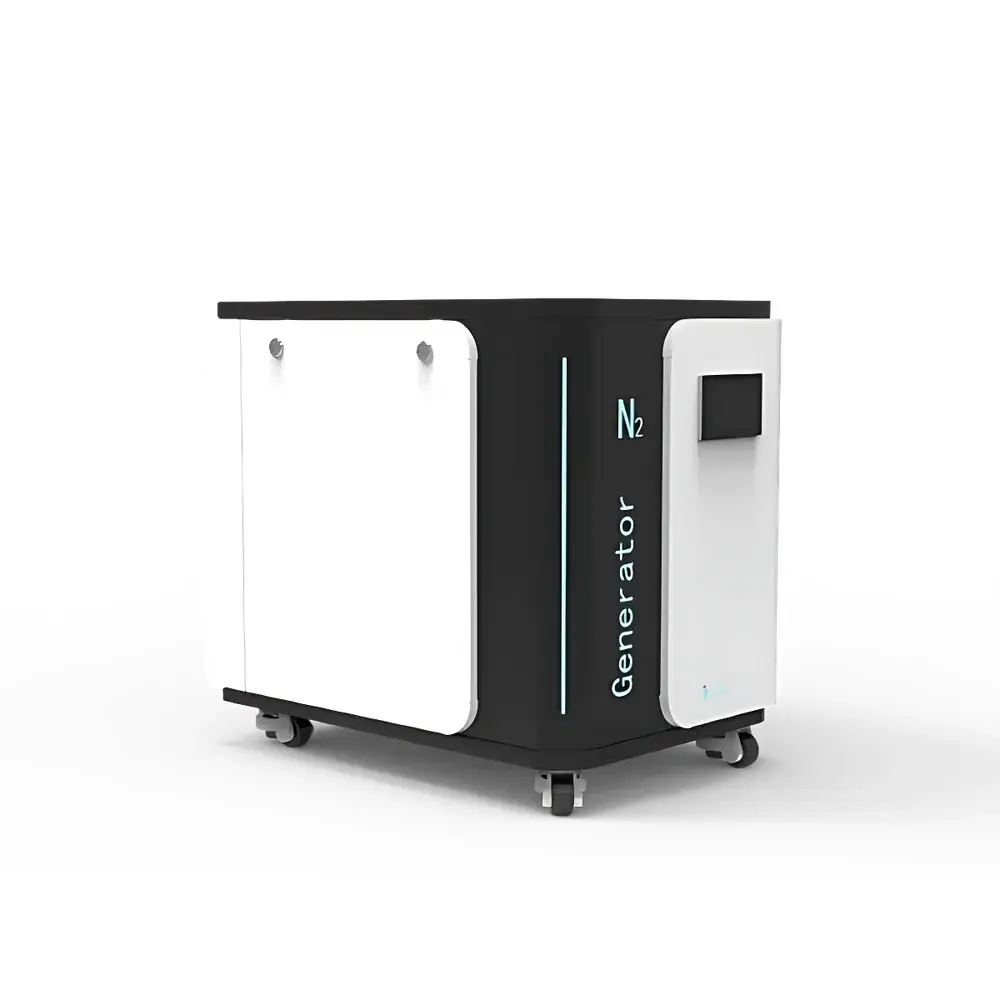
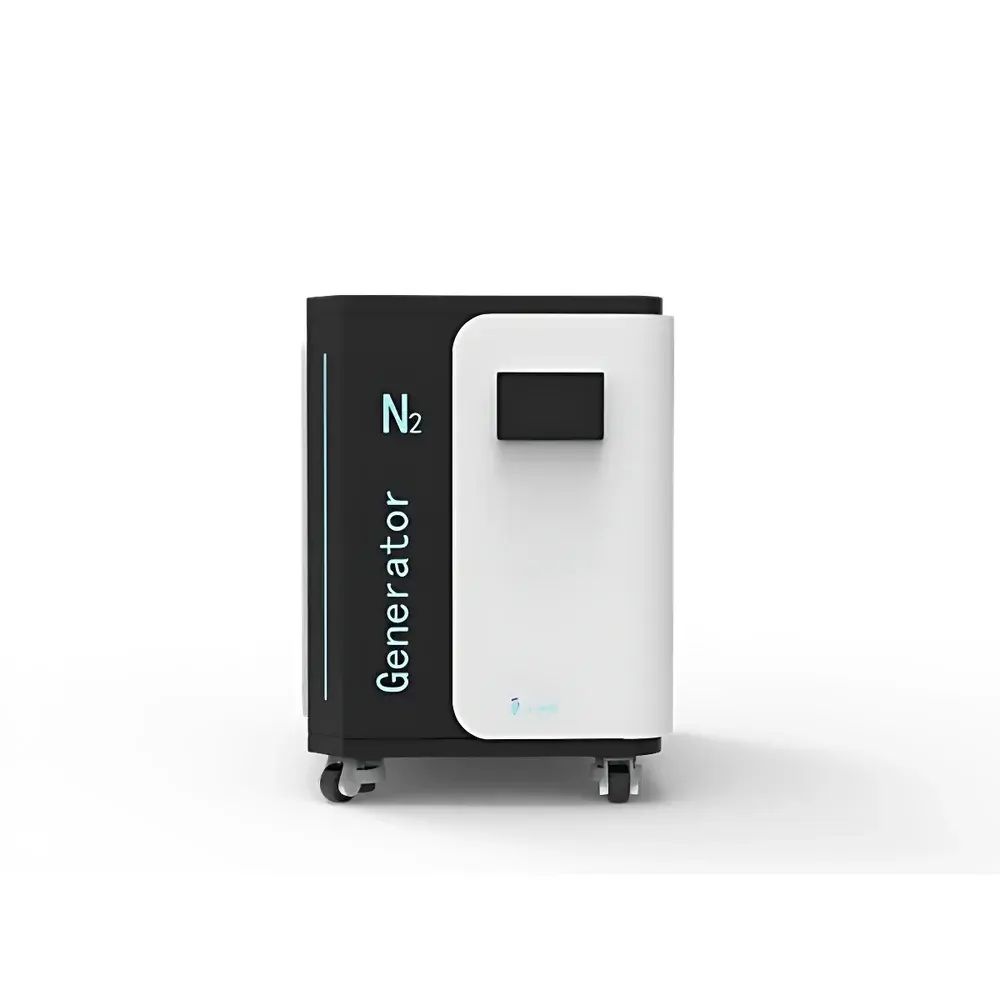
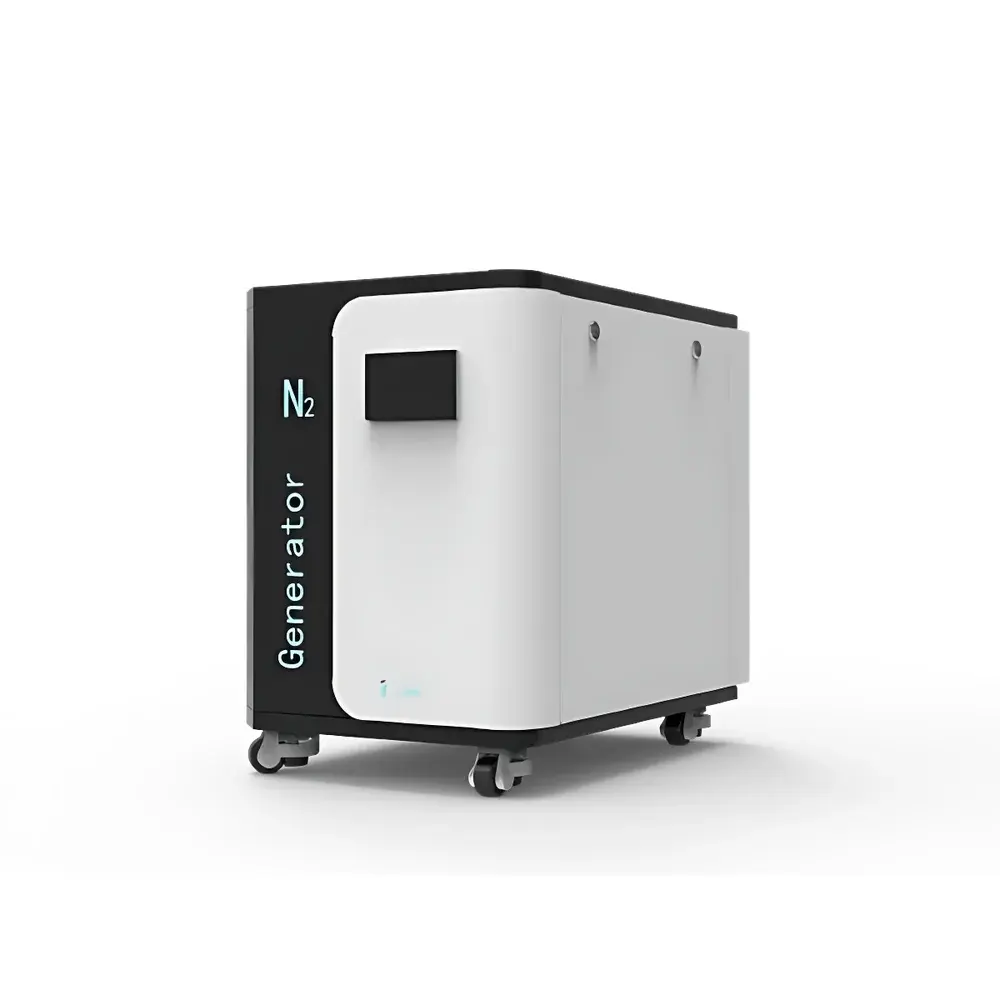
i-Lab UHN1-1 Ultra-High-Purity Nitrogen Generator
| Brand | i-Lab |
|---|---|
| Origin | Shanghai, China |
| Manufacturer Type | OEM Manufacturer |
| Product Category | Domestic |
| Model | UHN1-1 |
| Instrument Type | Nitrogen Generator |
| Nitrogen Generation Principle | Pressure Swing Adsorption (PSA) with Carbon Molecular Sieve (CMS) |
| Output Flow Rate | 1.2 L/min |
| Output Pressure Range | 0–7 bar |
| Nitrogen Purity | 99.999% |
| Noise Level | <45 dB(A) |
| Control Interface | Full-color TFT touchscreen |
| Connectivity | Embedded IoT module for remote monitoring and status reporting |
| Compliance | Designed to meet ISO 8573-1 Class 1 compressed air quality requirements for nitrogen supply to analytical instruments |
Overview
The i-Lab UHN1-1 Ultra-High-Purity Nitrogen Generator is an engineered solution for laboratories requiring continuous, on-demand nitrogen gas at ≥99.999% purity (≤1 ppm O₂, ≤1 ppm H₂O) for sensitive analytical instrumentation. It employs a dual-bed Pressure Swing Adsorption (PSA) system utilizing high-selectivity carbon molecular sieve (CMS) media to separate nitrogen from ambient air. Unlike membrane-based or cryogenic alternatives, PSA technology delivers consistent purity across variable flow demands without requiring liquid nitrogen logistics or high-energy cooling cycles. The UHN1-1 is purpose-built for integration with gas chromatography (GC), GC-MS, electron capture detectors (ECD), and other applications where trace oxygen and moisture can compromise column integrity, detector sensitivity, or baseline stability. Its compact footprint (W360 × D420 × H580 mm), low thermal load, and plug-and-play installation make it suitable for benchtop deployment in regulated laboratory environments.
Key Features
- Split Flow Purification (SFP) Technology: A proprietary gas routing architecture that directs a portion of the feed air through parallel purification stages during startup and transient load conditions—reducing initial stabilization time to under 15 minutes while minimizing CMS bed contamination and extending service life beyond 20,000 operating hours.
- Precision Flow & Pressure Regulation: Integrated mass flow control (MFC) and servo-driven pressure regulation maintain output stability within ±0.02 bar and ±2% of setpoint flow, even during rapid instrument demand changes typical in GC oven ramping or MS source purging cycles.
- Acoustic Optimization: Multi-stage noise suppression—including vibration-dampened CMS housings, acoustic insulation lining, and low-turbulence air intake ducting—ensures operational sound pressure levels remain below 45 dB(A) at 1 m distance, compliant with WHO guidelines for quiet laboratory workspaces.
- Intelligent Human-Machine Interface: 7-inch capacitive touchscreen with real-time visualization of O₂ sensor readings, CMS bed differential pressure, system temperature, and cumulative runtime. Supports multi-language UI (English, German, French, Japanese) and configurable alarm thresholds.
- Embedded IoT Architecture: Built-in Ethernet/Wi-Fi connectivity enables secure TLS 1.2 communication with local network infrastructure. Device telemetry—including uptime, purity verification logs, and predictive maintenance alerts—is accessible via RESTful API or i-Lab’s cloud dashboard (GDPR-compliant data handling).
Sample Compatibility & Compliance
The UHN1-1 is validated for continuous operation with all major GC and GC-MS platforms, including Agilent, Thermo Fisher Scientific, Shimadzu, and PerkinElmer systems requiring Grade 5 (ISO 8573-1:2010 Class 1) nitrogen. Its output meets ASTM D6349-22 specifications for carrier gas purity in hydrocarbon analysis and satisfies USP requirements for residual solvent testing. All firmware and data logging modules are designed in accordance with FDA 21 CFR Part 11 principles—supporting electronic signatures, audit trails, and role-based access control when deployed in GLP/GMP-regulated environments. Electrical safety complies with IEC 61010-1:2010; EMC performance conforms to EN 61326-1:2013.
Software & Data Management
Firmware v3.2 includes embedded data logging with 32 MB non-volatile memory capable of storing >12 months of timestamped operational records (flow, pressure, O₂ ppm, temperature). Export formats include CSV and PDF reports compatible with LIMS integration. Remote diagnostics allow authorized service engineers to initiate CMS regeneration cycles or perform calibration validation checks without physical access. Optional i-Lab LabConnect™ software provides centralized fleet management for multi-unit deployments, including predictive CMS replacement scheduling based on cumulative adsorption cycles and real-time purity drift trending.
Applications
- Carrier gas supply for capillary GC and GC×GC systems
- Make-up and purge gas for ECD, NPD, and TCD detectors
- Collision/reaction gas for triple-quadrupole and Q-TOF mass spectrometers
- Inert blanketing in sample preparation hoods and autosampler trays
- Mobile lab and field-deployable GC-MS units requiring self-contained gas generation
- Pharmaceutical stability testing chambers requiring ultra-dry inert atmospheres
FAQ
What is the expected service life of the carbon molecular sieve (CMS) beds?
Under typical laboratory usage (8–10 hrs/day, 5 days/week), CMS beds maintain ≥99.999% purity for ≥5 years or 20,000 operating hours—verified by annual third-party purity validation per ISO 8573-7 Annex B.
Does the UHN1-1 require external cooling water or exhaust ventilation?
No. The unit operates passively cooled via convection and requires only standard 230 VAC / 50 Hz power input; no external utilities or dedicated exhaust ducting are needed.
Can the generator be integrated into an existing laboratory building management system (BMS)?
Yes. Modbus TCP and optional BACnet/IP gateways enable interoperability with major BMS platforms for centralized environmental and utility monitoring.
Is the touchscreen interface compliant with accessibility standards (e.g., WCAG 2.1)?
The UI supports high-contrast mode, adjustable font scaling up to 200%, and keyboard navigation—meeting WCAG 2.1 AA criteria for assistive technology compatibility.
How is nitrogen purity verified during routine operation?
An electrochemical O₂ sensor (0–10 ppm range, ±0.1 ppm accuracy) and chilled-mirror dew point sensor (−70 °C to +20 °C, ±0.5 °C) provide continuous, traceable purity monitoring with automatic logging and alarm triggering at user-defined thresholds.
Related Products



