
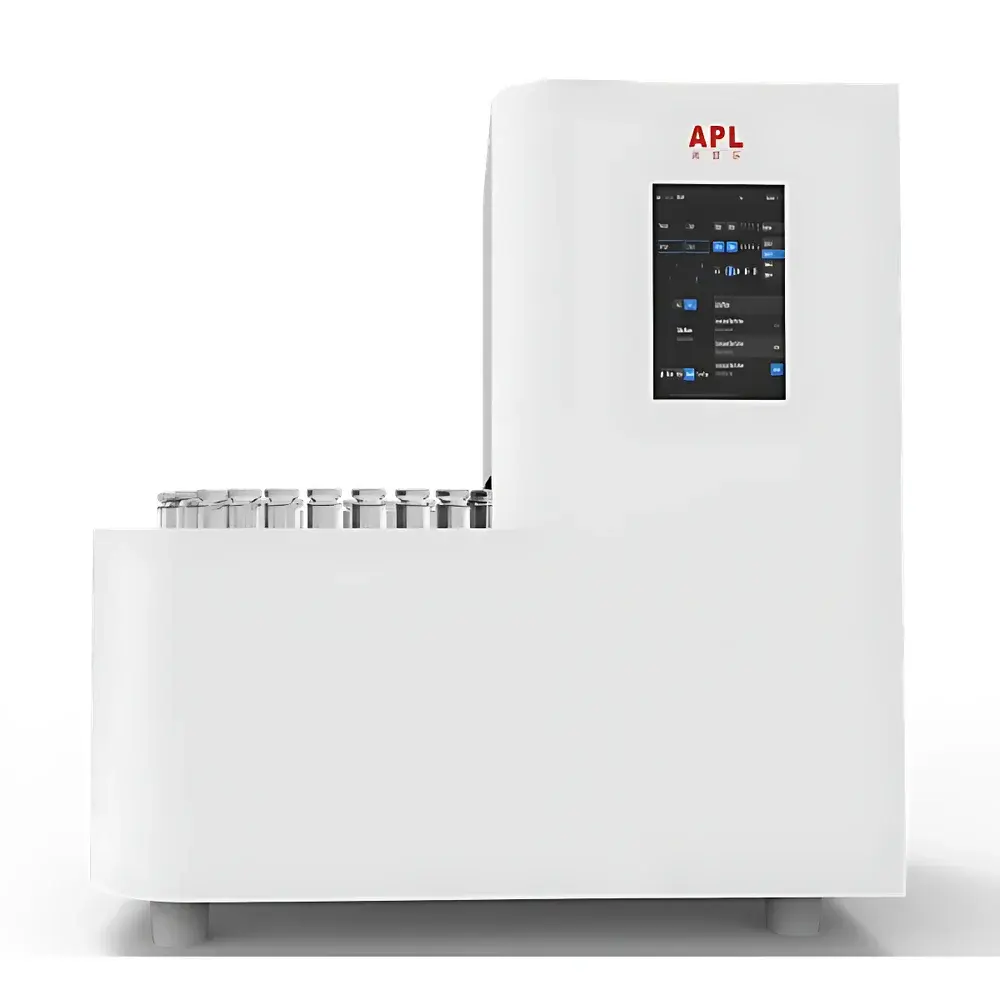
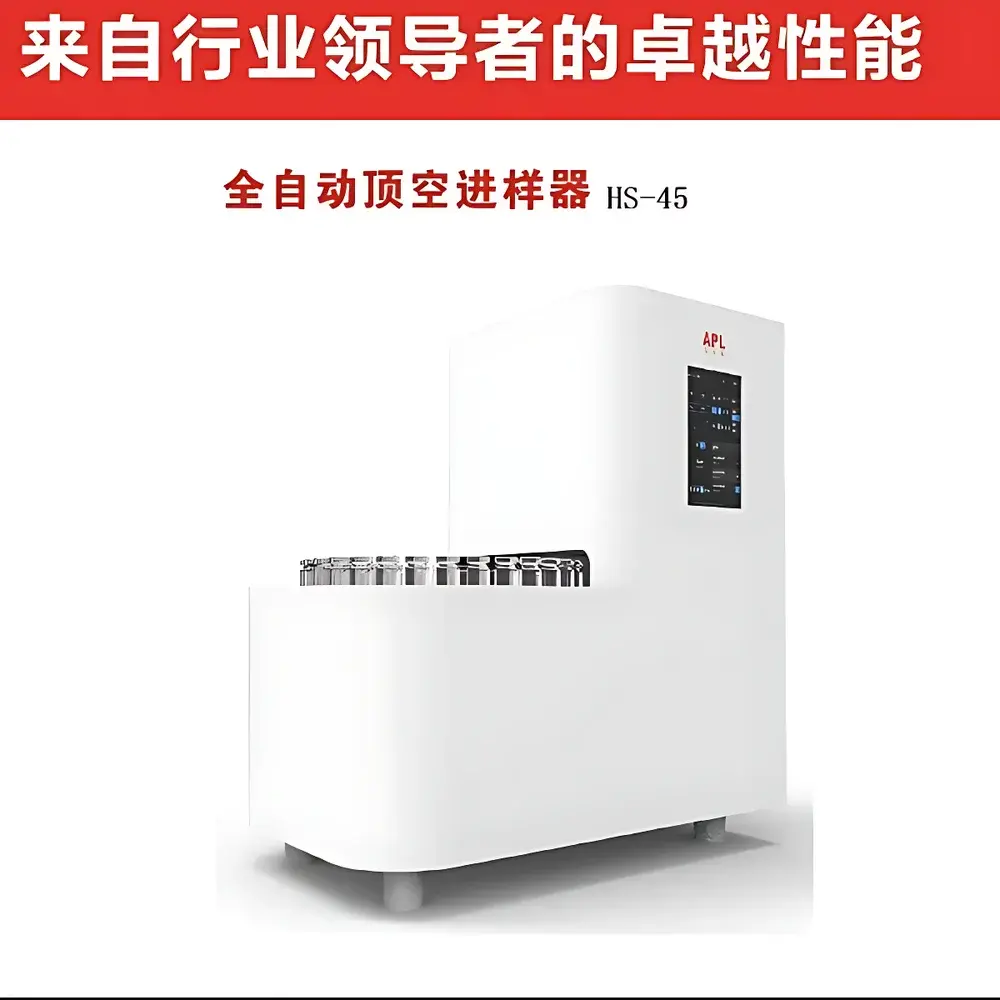
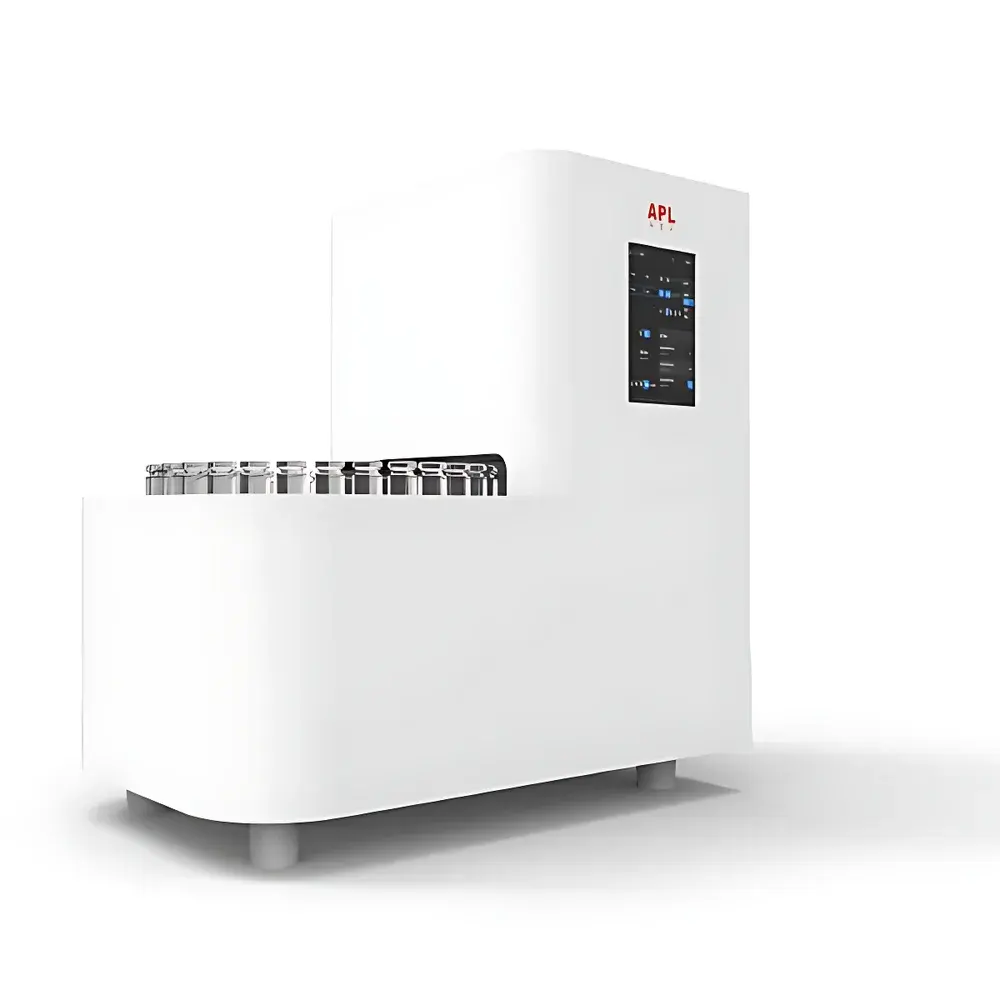
APL HS-45 Fully Automated Static Headspace Sampler
| Brand | APL |
|---|---|
| Origin | Sichuan, China |
| Manufacturer Type | Direct Manufacturer |
| Origin Category | Domestic (China) |
| Model | HS-45 |
| Instrument Type | Static Headspace Sampler |
| Automation Level | Fully Automated |
| Vial Heating Range | Ambient to 260 °C (1 °C increments) |
| Valve Temperature Control Range | Ambient to 240 °C (1 °C increments) |
| Sample Loop Volume | 1 mL |
| Temperature Control Accuracy | ±0.1 °C |
| Vial Capacity | 45 positions |
| Compatible Vial Sizes | 10 mL and 20 mL |
Overview
The APL HS-45 Fully Automated Static Headspace Sampler is an engineered solution for high-throughput, reproducible volatile organic compound (VOC) analysis in compliance-critical environments. Based on the principle of static headspace equilibrium—where analytes partition between a liquid or solid sample matrix and its overlying gas phase—the HS-45 enables precise, thermally controlled extraction of headspace vapors prior to injection into gas chromatography (GC) or GC–MS systems. Designed for unattended operation over extended sequences, it supports regulated laboratory workflows requiring trace-level detection, method robustness, and full auditability. Its triple-zone independent heating architecture (sample vial block, injection valve, and transfer line), combined with real-time thermal monitoring and inertized flow path design, minimizes analyte loss, adsorption, and carryover—critical for applications ranging from residual solvent testing per ICH Q3C to environmental VOC profiling aligned with EPA Method 502.2 and 8260.
Key Features
- Fully automated 45-position sample carousel with intelligent vial indexing and positional self-calibration upon power-up
- Triple independent temperature zones: vial block (ambient–260 °C), injection valve (ambient–240 °C), and transfer line—all monitored and displayed in real time on the 7-inch capacitive touchscreen
- Programmable vial agitation (oscillation speed adjustable) to accelerate phase equilibrium, improve sensitivity, and enhance inter-run reproducibility
- Heated syringe needle with quick-release mechanism compatible with major GC inlet configurations (Agilent, Thermo Fisher, Shimadzu, PerkinElmer)
- Chemically inert, silanized sample pathway—including 1 mL quantitative loop—followed by post-injection inert gas purge to eliminate cross-contamination
- Real-time GC status feedback via AFM (Advanced Flow Monitoring) interface: carrier gas pressure, pressurization gas pressure, and system readiness indicators
- Dynamic sample queue management: new vials may be added mid-sequence without interrupting ongoing analysis or altering run order
- Auto-repositioning logic returns vials to their original heated positions post-injection, preserving thermal history and minimizing cycle time
- Comprehensive fault diagnostics: vial misplacement detection, heater deviation alerts, valve timing verification, and hardware self-test at startup
Sample Compatibility & Compliance
The HS-45 accommodates standard 10 mL and 20 mL crimp-top or screw-cap headspace vials, supporting both aqueous and non-aqueous matrices including pharmaceutical formulations, polymer extracts, food homogenates, soil slurries, and wastewater samples. All wetted surfaces are passivated via silanization to prevent active site adsorption of polar or reactive VOCs (e.g., aldehydes, amines, low-molecular-weight acids). The system meets essential requirements for GLP and GMP environments: full method parameter logging, time-stamped event records, user-accessible audit trails, and electronic signature-ready operation when integrated with compliant LIMS or CDS platforms. While not pre-certified to 21 CFR Part 11, its architecture supports validation protocols for electronic records and signatures under FDA, EMA, and PMDA regulatory frameworks.
Software & Data Management
Controlled via an embedded industrial-grade microprocessor with bilingual (English/Chinese) touch interface, the HS-45 stores up to 100 user-defined methods with full parameter granularity: equilibration time, pressurization duration, loop fill time, injection volume, oven ramp profiles, and post-analysis purge cycles. All method parameters, runtime events, temperature logs, and error codes are timestamped and exportable as CSV files. The system interfaces seamlessly with third-party chromatography data systems (CDS) via standard RS-232 or Ethernet TCP/IP protocols, enabling synchronized GC start triggers, sequence handoff, and status polling. No proprietary software installation is required on the host PC—only standard serial or network configuration.
Applications
- Residual solvent analysis in APIs and finished pharmaceutical dosage forms (ICH Q3C compliant)
- Volatile impurity profiling in polymers, adhesives, and packaging materials (ASTM D3559, ISO 11843)
- Flavor and fragrance compound quantification in beverages and dairy products
- BTEX, chlorinated hydrocarbon, and petroleum hydrocarbon screening in environmental water and soil extracts
- Head-space analysis of fermentation volatiles in bioprocess monitoring and QC
- Quality control of ethanol content in disinfectants and hand sanitizers (USP & Ph. Eur. methods)
FAQ
Is the HS-45 compatible with my existing GC or GC–MS system?
Yes—the HS-45 provides universal hardware and communication compatibility via analog trigger output, RS-232, and Ethernet interfaces. It supports synchronization with all major GC platforms without proprietary drivers.
Does the system support method validation for regulated laboratories?
The HS-45 provides full parameter traceability, time-stamped operational logs, and deterministic thermal control—enabling IQ/OQ/PQ documentation. Integration with validated CDS software satisfies 21 CFR Part 11 requirements for electronic records.
Can I use 20 mL vials without modification?
Yes—both 10 mL and 20 mL vials are supported natively; no adapter kits or mechanical adjustments are required.
What maintenance is required for long-term reliability?
Routine maintenance includes periodic inspection of septa, syringe needle cleanliness, and verification of vial cap sealing integrity. The silanized flow path and inert gas purge minimize routine cleaning needs.
How does the oscillation function improve analytical performance?
Controlled vial agitation enhances mass transfer kinetics at the sample–headspace interface, reducing equilibration time by up to 40% and improving precision (RSD < 1.5% for replicate injections) across heterogeneous or viscous matrices.






